
Opera Baltimore has been filling the opera void in Baltimore for 17 years this month. It has grown from its beginning as Baltimore Concert Opera to its present format of presenting both staged and concert operas. Its concert operas are held in the Engineers Club in Mount Vernon. I first learned of and wrote about Baltimore Concert Opera in 2016 and attended my first opera there in 2017. I became a fan. Opera Baltimore, especially in their performances in the Engineers Club, makes opera fun – a friendly, welcoming atmosphere, palatial-in-appointments, a small-in-size concert ballroom, beverages that can be consumed at your seats, and opera sung live, only a few feet from the audience! It is a very special experience which explains why I have been attending and reporting on this company’s performances ever since my first visit. My attendance for Wednesday night’s excellent and fun semi-staged performance of Donizetti’s Lucretia Borgia started with a special feeling. I felt like I had been away for a while and was returning home.
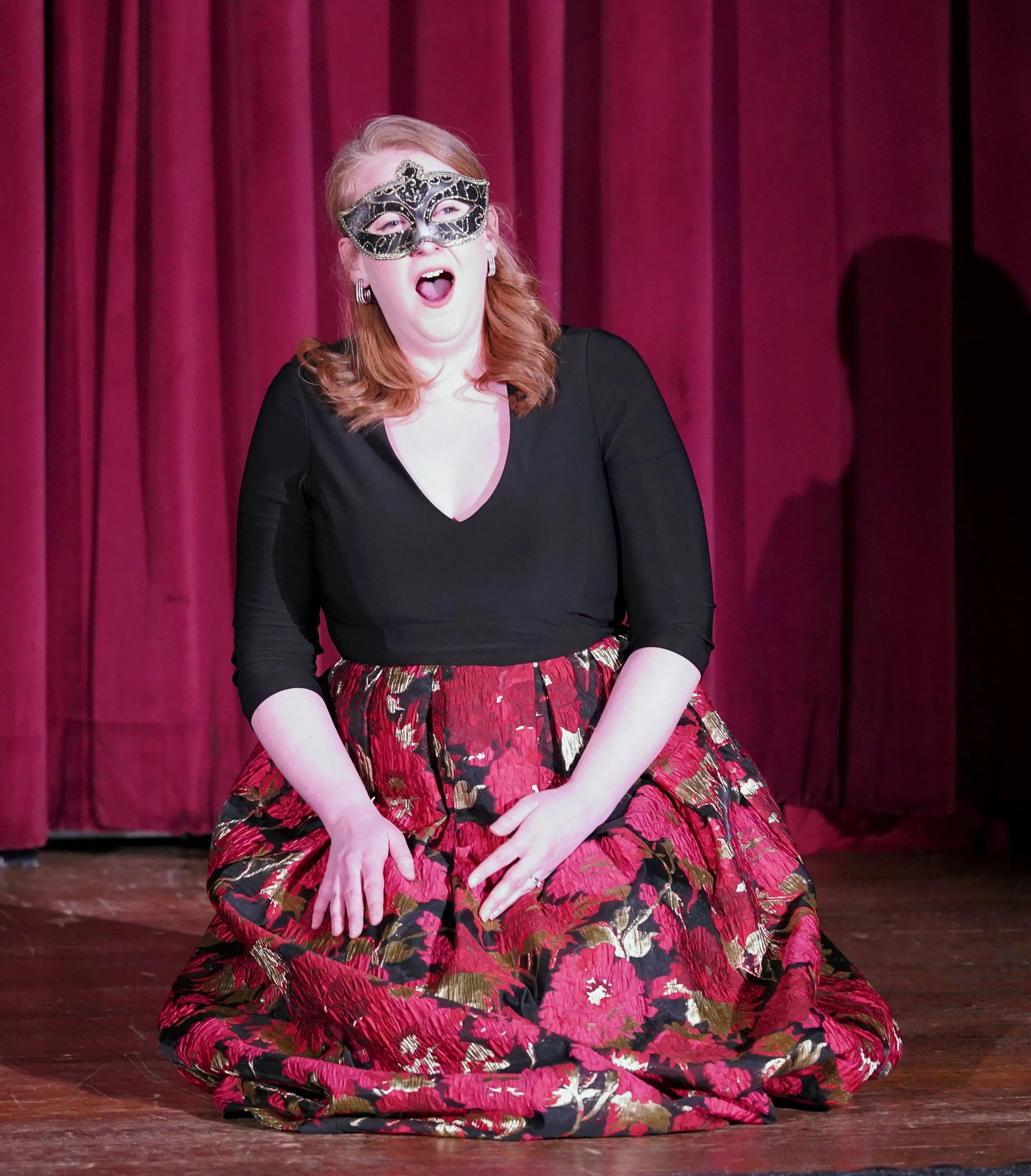
Caitlin Crabill as Lucrezia Borgia. Photo by Bart Debicki; courtesy of Opera Baltimore.
Composer Gaetano Donizetti and librettist Felice Romani’s Lucrezia Borgia premiered in 1833. The opera is produced much less often than Donizetti’s more famous bel canto operas, such as Lucia di Lammermoor and L’elisir d’amore. I kept thinking that Shakespeare must have inspired this opera – so many people die- but the story is based on an eponymous play by Victor Hugo. Beyond the fact that Lucrezia Borgia was a real person in a powerful family during the Renaissance, the plots of the play and the opera are fiction and do the woman a disservice, just as the film “Amadeus” unjustly impugned Salieri. Historical records portray the real Lucrezia Borgia as a capable administrator who became a patron of the arts. She became a subject of controversy because she was the illegitimate daughter of Pope Alexander VI, and he was rumored to have engaged her in an incestuous relationship. Reports of her villainy as a murderer who favored poisons were made up to slander her and the family, and then became fodder for sensational rumors and storytelling. Hugo’s play about love, honor, and karmic villainy gave Donizetti and Romani the idea for a dramatic opera showing a character capable of both great villainy and great love. No big deal today, but then, it was scandalous, and the creators had to joust with the censors.
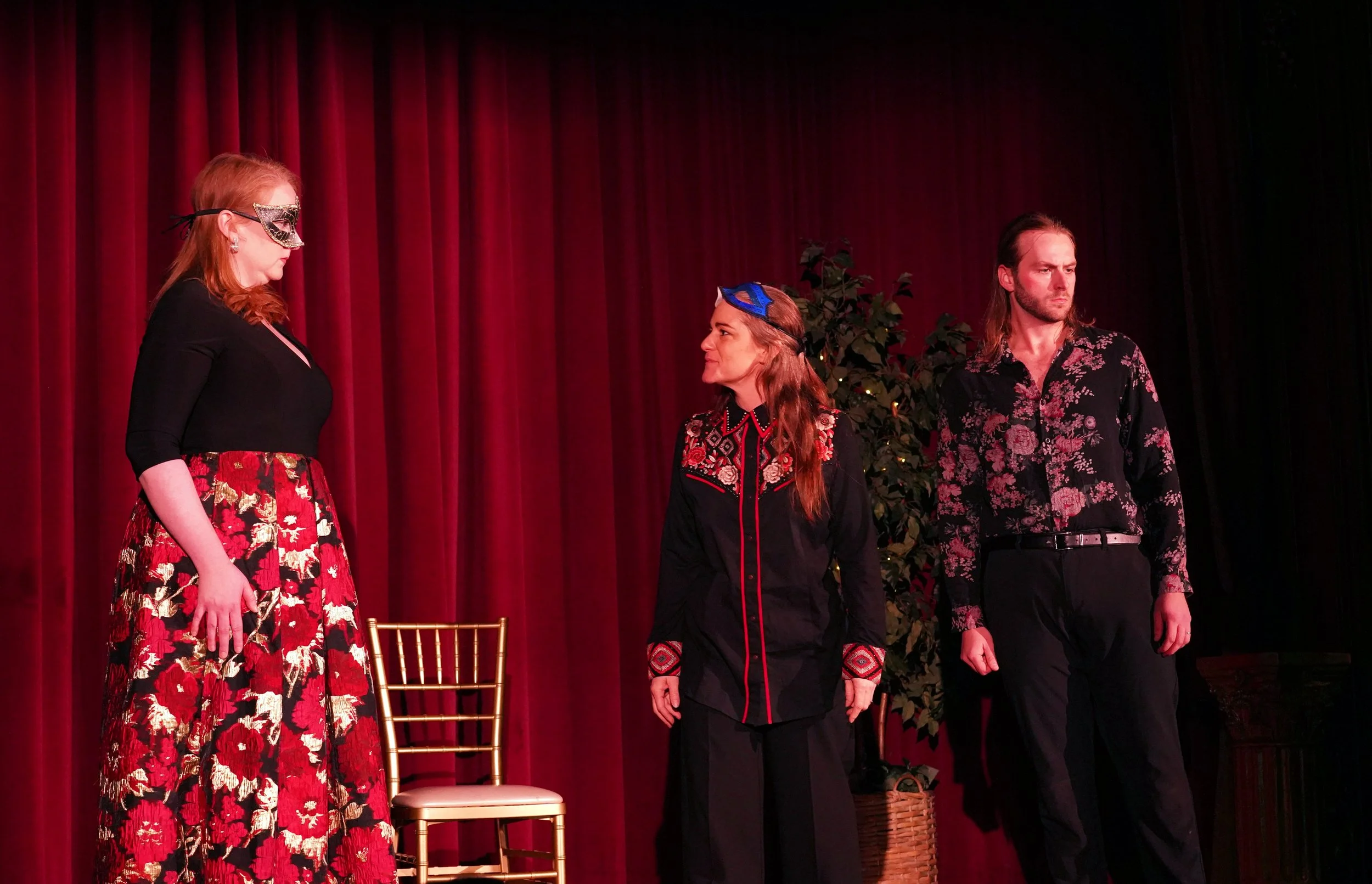
Lucrezia (Caitlin Crabill) is confronted by Orsini (Megan Marino) as Gennaro (Hayden Smith) stands by. Photo by Bart Debicki; courtesy of Opera Baltimore.
The plot is worth relating, beginning with the prologue: (spoilers now) a young man, an honorable warrior captain named Gennaro, sleeps while his friends continue to party. A woman comes upon him who clearly has strong feelings for him. He awakes, and seeing her kind face, feels a deep attachment to her. She does not reveal who she is. His friends return and reveal she is the villainous, hated Lucretia Borgia. She leaves as Gennaro stands vexed. Act I: A few days later, back at her husband, the duke’s palace, she is demanding that he put to death whoever had defaced the family name on the palace, turning BORGIA into ORGIA, meaning orgy in Italian. He, knowing of the time she has spent with the perpetrator and suspecting he is a love interest, readily agrees. When she is told that the villain is Gennaro, she tries emphatically to retract her request, but the duke only lets her choose the method of execution (starting to sound like “Game of Thrones”?). She chooses poison over the sword, but then secretly slips the young man an antidote, telling him to flee, which he does. Act II: Gennaro’s young friends have been partying in a palace room and Lucrezia had them served poisoned wine. She has the room sealed off and declares that five will die. Gennaro has also had the wine and steps forward saying it will be six as he chooses to die with his friends; he refuses her offer of the remainder of the antidote. Lucrezia reveals to him she is his mother just before he dies and he accepts her embrace; then she dies, grief-stricken. Yet, for all its outrageousness, I enjoyed this opera. Shakespeare would have been proud, and Turandot would have claimed a sister. My son once told me that, only in opera do we get love stories about mass murderers. Or in modern terminology, it’s complicated.
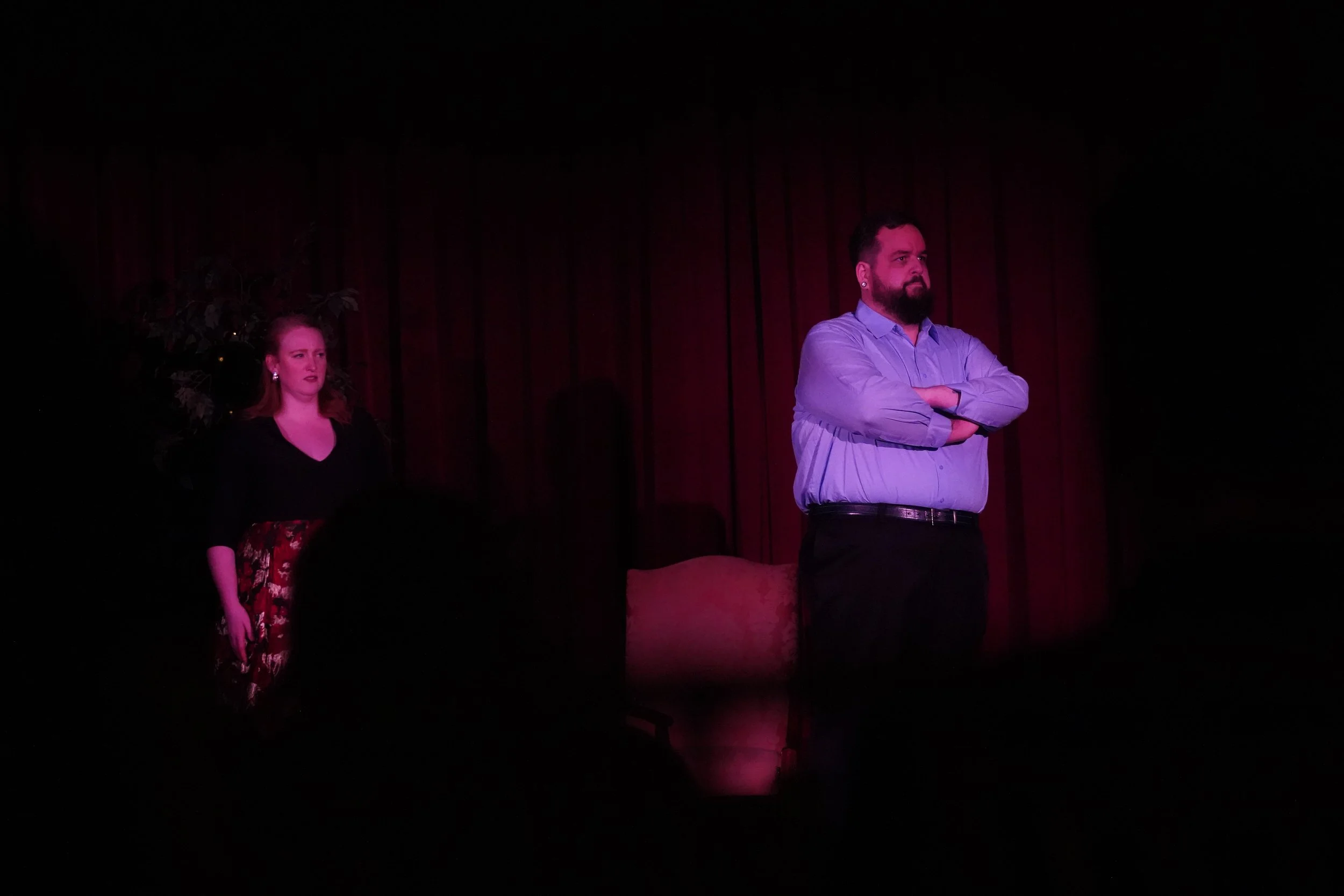
Lucrezia (Caitlin Crabill) pleads with her husband, the duke (Samuel Weiser), for Gennaro’s life. Photo by Bart Debicki; courtesy of Opera Baltimore.
The story benefits greatly from Donizetti being at the height of his creative powers. Lucrezia came after L’elisir D’amore and before Lucia di Lammermoor. It contains his beautiful melodies and gorgeous bel canto vocals, and acting challenged by the tense drama presented. For this concert version, the singing was accompanied by piano played expertly by pianist and conductor Husan Chun-Novak. The semi-staging, mainly directing interactions by the characters and adding a few props, was well conceived by stage director and dramaturg Mary Elizabeth Williams. For concert opera, the plot’s visual cues from the setting and action are omitted, so I read the synopsis before attending; the details in the story can be better made when fully acted, and I missed some in this performance, such as whether the ending of Lucrezia’s life foretold in her ending vocal was real or metaphorical.
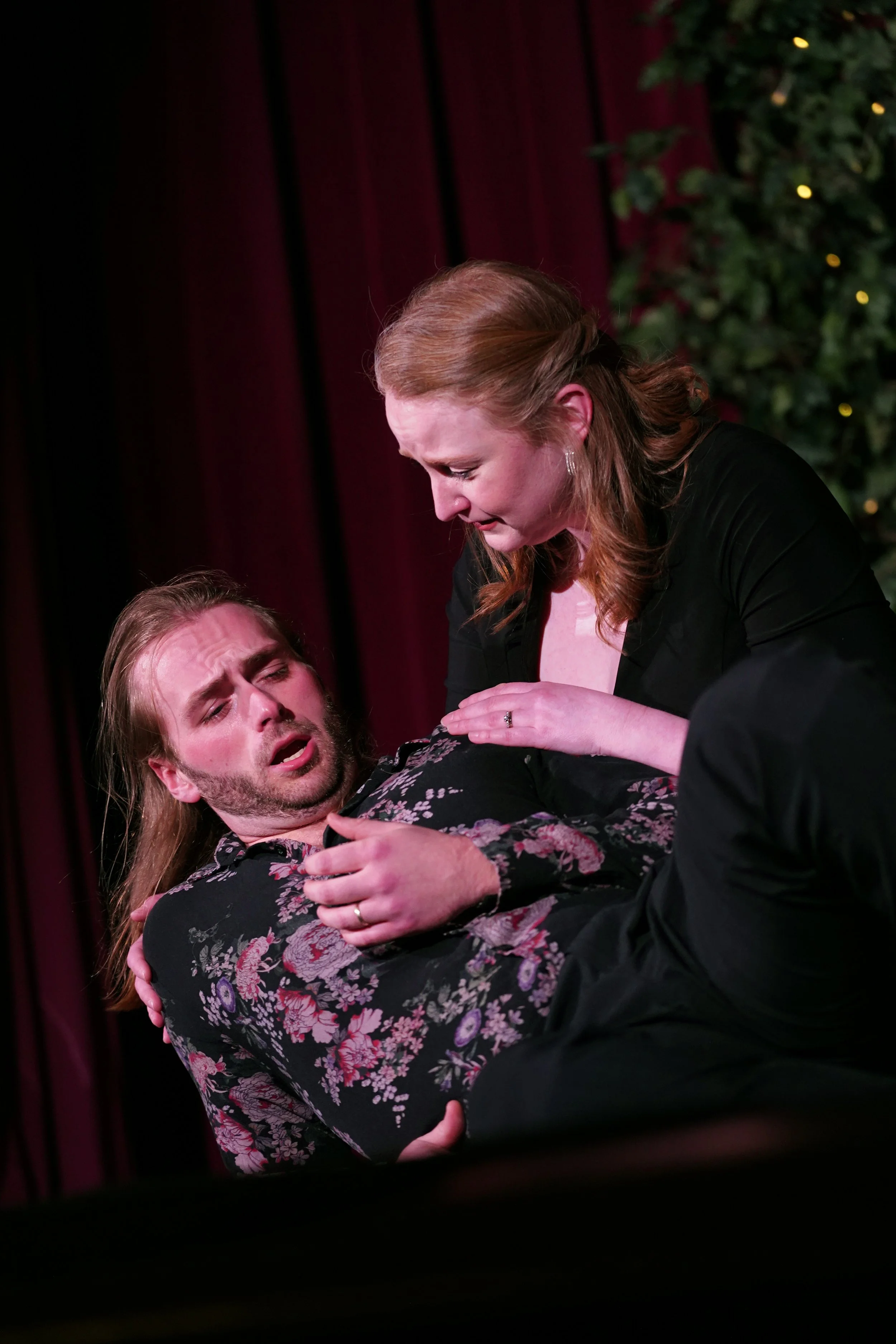
Lucrezia (Caitlin Crabill) reveals the truth to Gennaro (Hayden Smith). Photo by Bart Debicki; courtesy of Opera Baltimore.
Whether the message of human complexity, that even a villain can be a loving mother, is better served by fully staged or concert opera, let’s keep in mind that the focus of concert opera is the voice. Relieved of detailed acting needs, the singers can concentrate more on their vocals, though in the semi-staged versions, they sing from memory without the score on stands in front of them. Here is an element of the fun part provided by Opera Baltimore: the singing was really good! For Lucrezia, there are four principal roles, and OB filled them with four excellent singers. The role of Lucretia is considered a star vehicle for a soprano, and OB’s choice soprano, Caitlin Crabill, did not disappoint. She is an accomplished young artist whose trajectory is ascending; she has already appeared with several regional opera companies, including a role in OB’s Maria Stuarda last year. Her approach to the role emphasized the dramatic and emotional richness of her singing rather than frequent bel canto embellishments. One of her arias near the end displayed the most fireworks vocally, and she delivered it beautifully. It was an affecting performance overall.
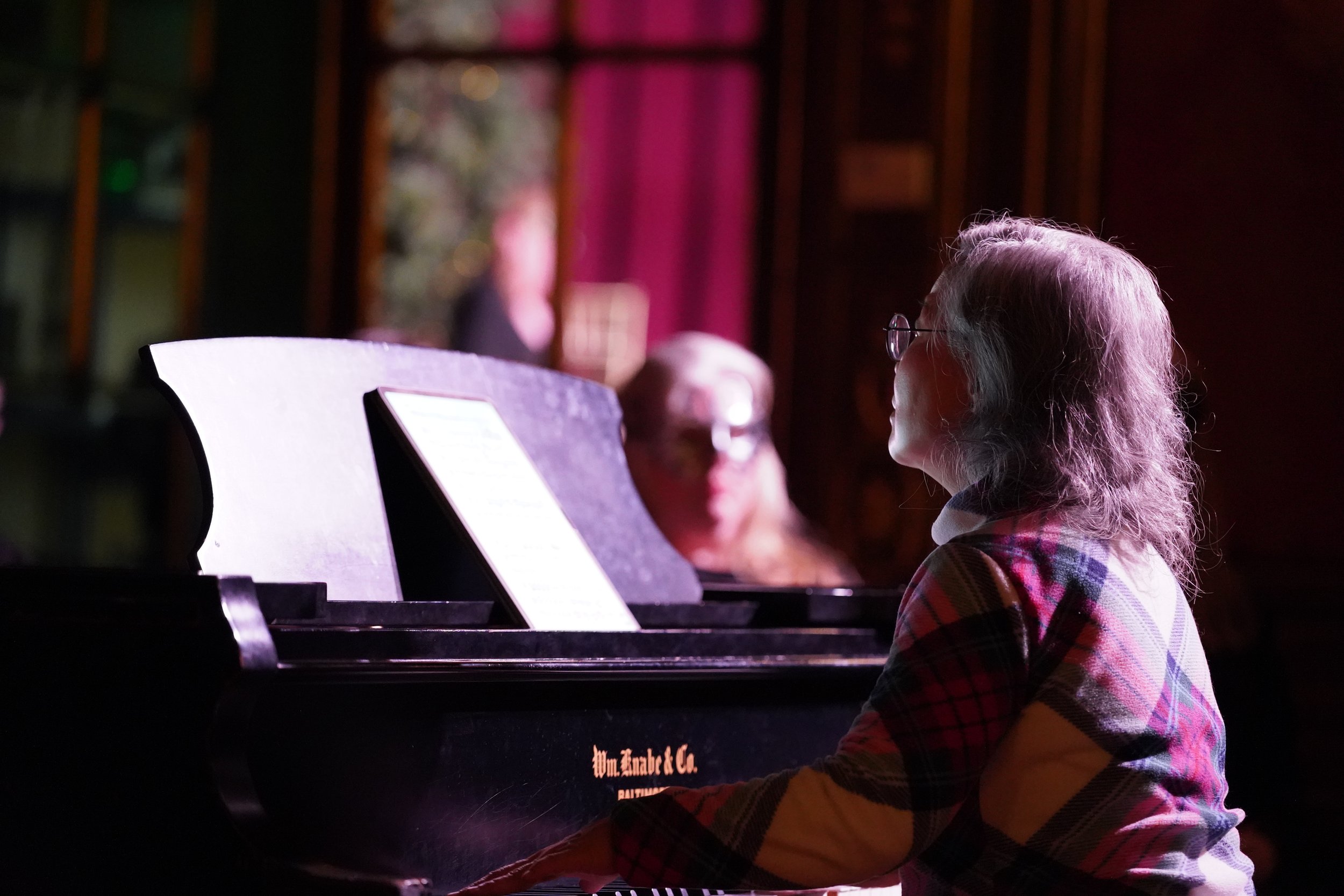
Conductor and Pianist Husan Chun-Novak. Photo by Bart Debicki; courtesy of Opera Baltimore.
Gennaro was played by tenor Hayden Smith. The quality of his voice pleasantly surprised me. He was a Studio Artist with Wolf Trap Opera and has appeared in several regional productions to this point. He gave a performance that was pleasing throughout, with passionate singing and a compelling portrayal of Lucrezia’s perplexed son. Samuel Weiser, who sang the role of the duke, has been praised for his stentorian bass-baritone voice, including by me, for his portrayal of Leporello in last season’s Don Giovanni from Annapolis Opera; he also spent three seasons as a Cafritz Young Artist with Washington National Opera. He sang well and gave us a regally confident duke imposing his punishment on his wife. The singer who sang the role of Orsini, Gennaro’s closest friend and ally, a pants role was mezzo-soprano Megan Marino. Again, it was a sit-up-and-take-notice performance from her entrance down the aisle, singing all the way. Her singing and the quality of her voice were impressive. I took special note of the smoothness of her singing in her lower register. Her portrayal was so convincing it took me a few minutes to decide if the long hair was signaling a female in the role.
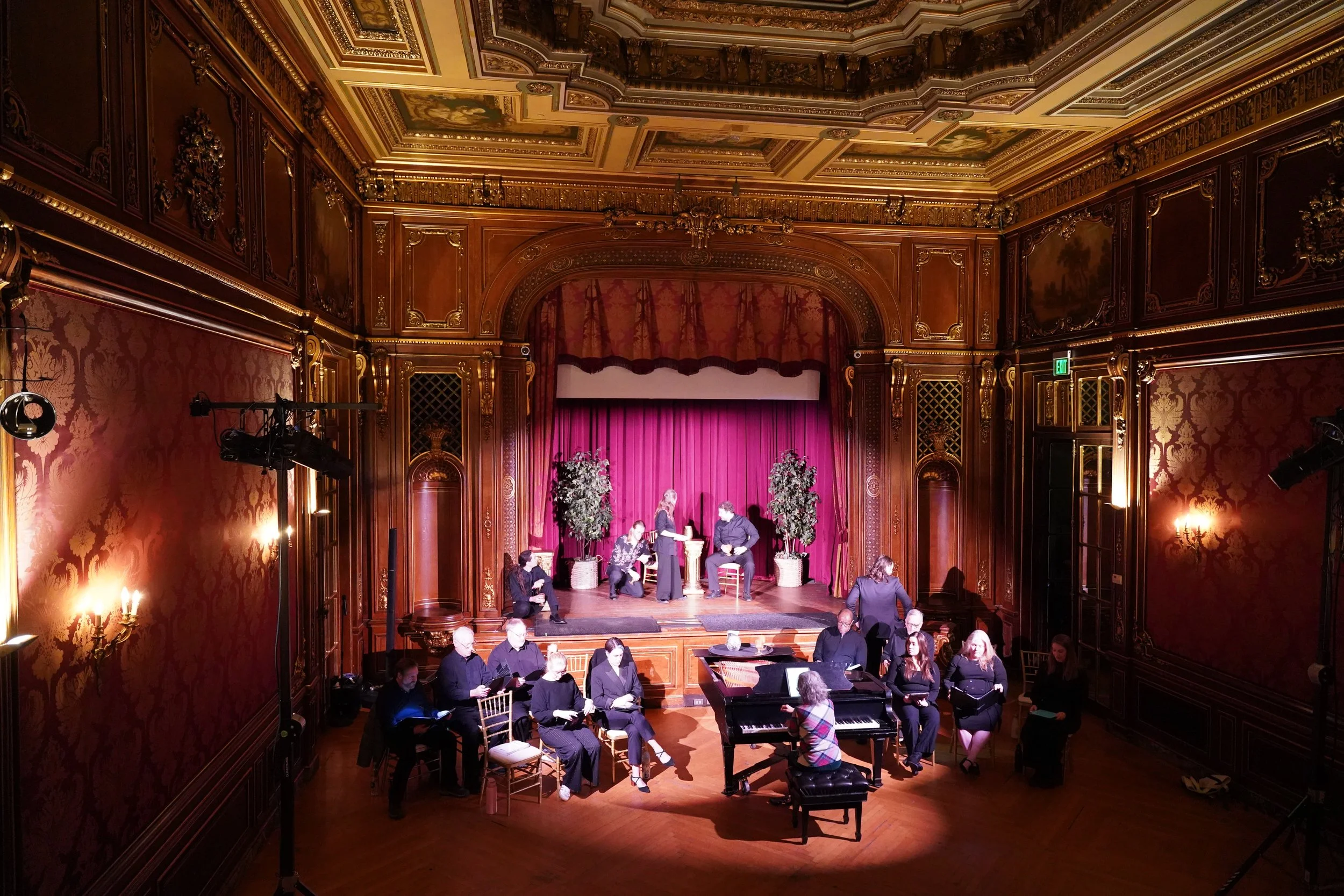
A cast photo in the royal concert ballroom of the Engineers Club. Photo by Bart Debicki; courtesy of Opera Baltimore.
Opera Baltimore’s group of principal performers was remarkably talented. They were aided and abetted by a talented supporting cast, including Zinnia Frank, Timothy Kjer, Norwood Robinson, Benjamin Ross, and Peter Juengs, who all added to the quality of the performance, especially the pleasing vocals. The opera also benefited noticeably from a fifteen-member chorus that sang beautifully.
My bottom line – This performance was lifted by extraordinary singers. I liked it and would enjoy seeing and hearing this performance again. I am now also interested in seeing a fully staged version of Lucrezia Borgia, which had little interest for me before Wednesday night. Opera Baltimore wants their concert opera performances to be a gateway drug.
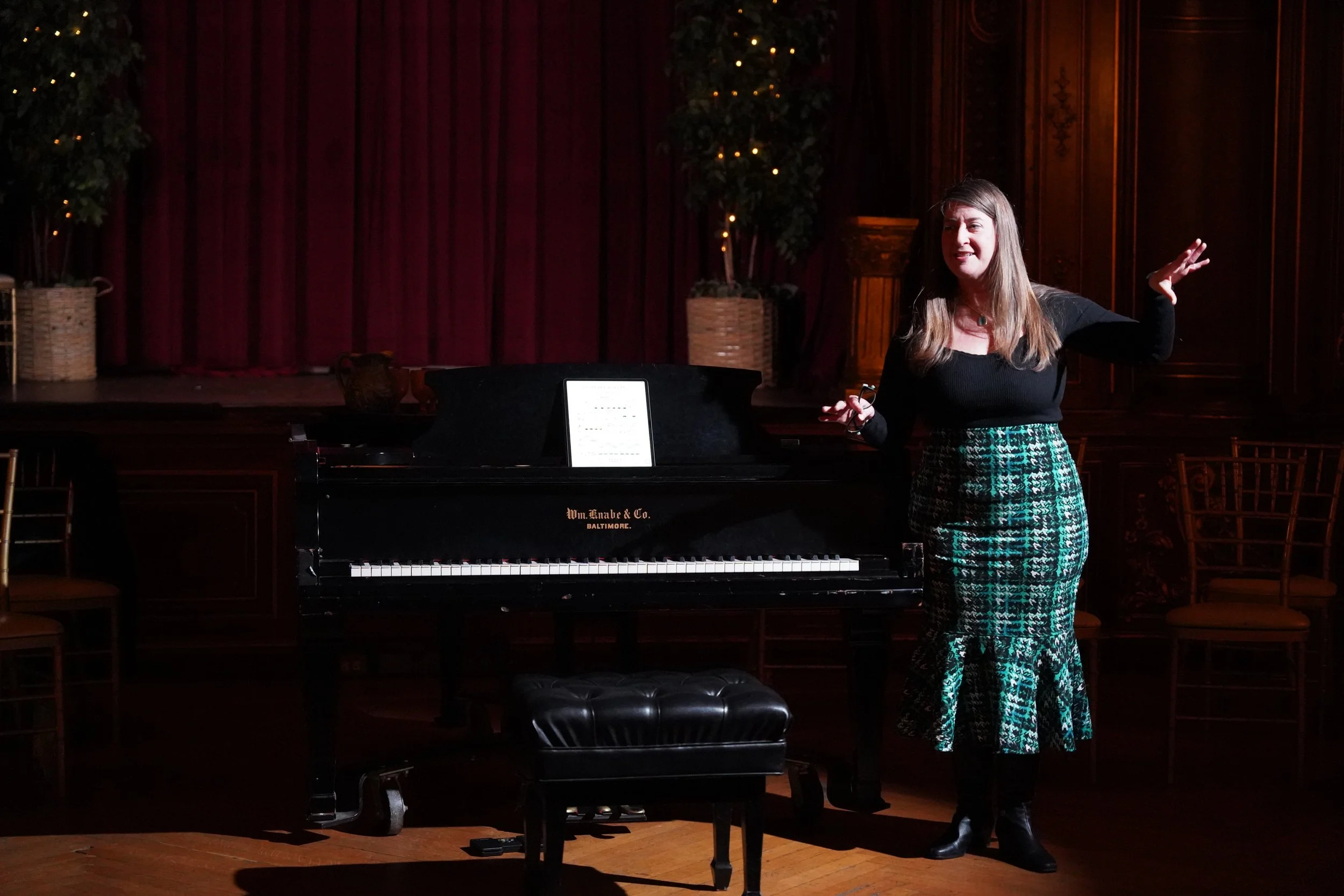
Opera Baltimore’s President and General Director Julia Cooke. Photo by Bart Debicki; courtesy of Opera Baltimore.
Baltimore Opera’s bottom line, from President and General Director Julia Cooke in her program notes: “To gather for live music, to choose beauty and emotional honesty, is not indulgence: it is affirmation.”
The Fan Experience: Performances of Lucrezia Borgia were scheduled for March 4, 6, and 8 in the Engineers Club. The opera was sung in Italian with supertitles shown on a screen overhead. The opera lasted about an two hours and a half, including a fifteen-minute intermission.
Dr. Aaron Ziegel, OB’s Scholar-in-Residence, provides a pre-opera talk one hour before each performance. He also provides three or four one-hour, highly informative Zoom classes called Opera Insight for ticket holders on each upcoming opera, which are later posted on YouTube. These not only discuss the opera to be presented but also offer a deeper dive into opera itself. In the series for Lucrezia Borgia, I especially enjoyed hearing his explanation of Donizetti’s use of double arias.
Opera Baltimore has one more opera this season, another concert opera in the Engineers Club. Pelléas et Mélisande is scheduled for April 22, 24, and 26. Their website, operabaltimore.org, is very detailed with useful information for planning your visit, including parking options. The open bar serves a variety of beers and cocktails, which can be taken into the theater. I don’t usually have alcoholic beverages when attending operas I will report on, but for this opera, I would have recommended they offer a cocktail named Poisonous Wine.
Also on the website, check out the large range of community outreach programs that OB offers for Baltimore and the large number of other opera-related offerings, such as Thirsty Thursdays. A relatively new program that caught my eye was their Generation Opera program, whereby you sponsor a student to attend an opera, and they will be seated next to you at the performance.