
Both the Washington National Opera and Scott Joplin’s opera, Treemonisha, were reborn Saturday night with a resoundingly successful performance. In their 70th season, and first production since leaving a 55-year association with the Kennedy Center, every element of the opera was imbued with the riches of talent. The opera’s messages of empowerment through truth and education, moral purpose, the need for forgiveness, and community support, delivered with a spoonful of sugar and a bit of ragtime music, resonated strongly with the audience. The performance received an enthusiastic standing ovation at the end, and so did WNO General Director Timothy O’Leary and Artistic Director Francesca Zambello when they tried to begin their opening comments. A lot of love was shared Saturday night.
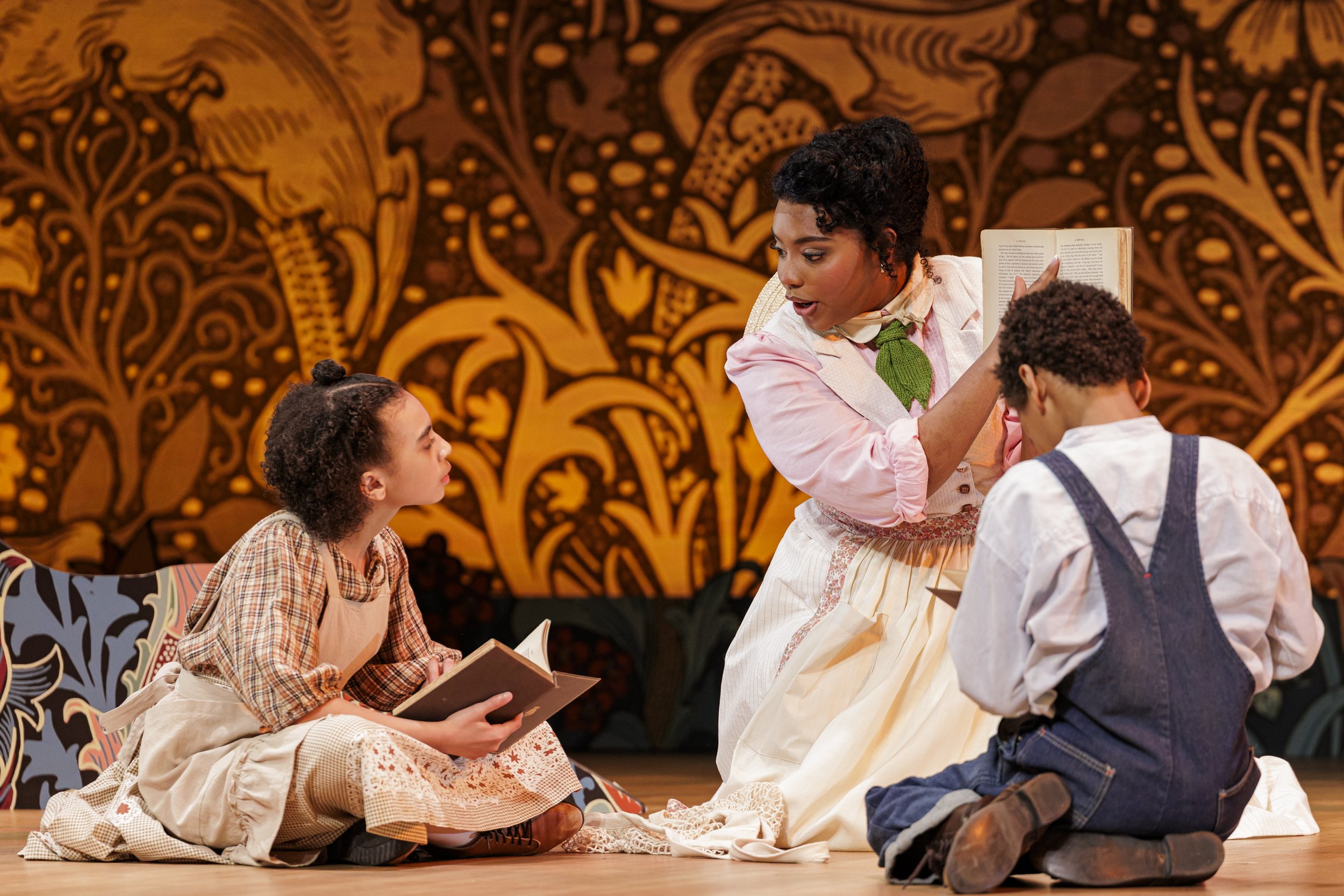
Treemonisha (Viviana Goodwin) assumes the role of teacher in her community. Photo by Elman Studio; courtesy of Washington National Opera.
Scott Joplin (1867-1917), who became famous for his brilliant ragtime compositions, wrote one surviving opera, Treemonisha, and one lost to history. He published the piano score and libretto in 1911, but the fully staged opera was never performed in his lifetime; any orchestrations were lost to history. The usual opera funding issues, the avant-garde nature of blending ragtime and classical music forms, the prejudice and strict segregation of his day, and his untimely death at age 49, conspired against its production. For perspective, a few examples: The first black singer to appear at the Met Opera was Marian Anderson in 1955. The first black composer to have an opera staged there was Terence Blanchard in 2021 with Fire Shut Up in My Bones. Locally, Morgiane, ou Le sultan d'Ispahan, an opera by black composer Edmond Dédé from 1887, received its first performance ever in 2025 by DC’s Opera Lafayette.
Joplin’s music enjoyed a surge of popularity in the 1970s, especially after being featured in the soundtrack for 1973’s “The Sting”. A fully staged performance of Treemonisha in 1972, a joint production by the Atlanta Symphony Orchestra and the Morehouse College Music Department, is credited as the first fully staged production. Subsequent productions have often featured different composers and librettists to fashion their offerings. In 2023, Opera Theatre of St. Louis performed an adaptation with orchestration by composer Damian Sneed and libretto modifications by Karen Chilton. WNO’s production is a second adaptation by composer Sneed, expanded to include additional Joplin music, with dialogue and additional lyrics by Ken Bass. Joplin’s libretto has received some criticism, but I rather liked the libretto in several of the songs and wished I had a copy of the libretto that WNO used.
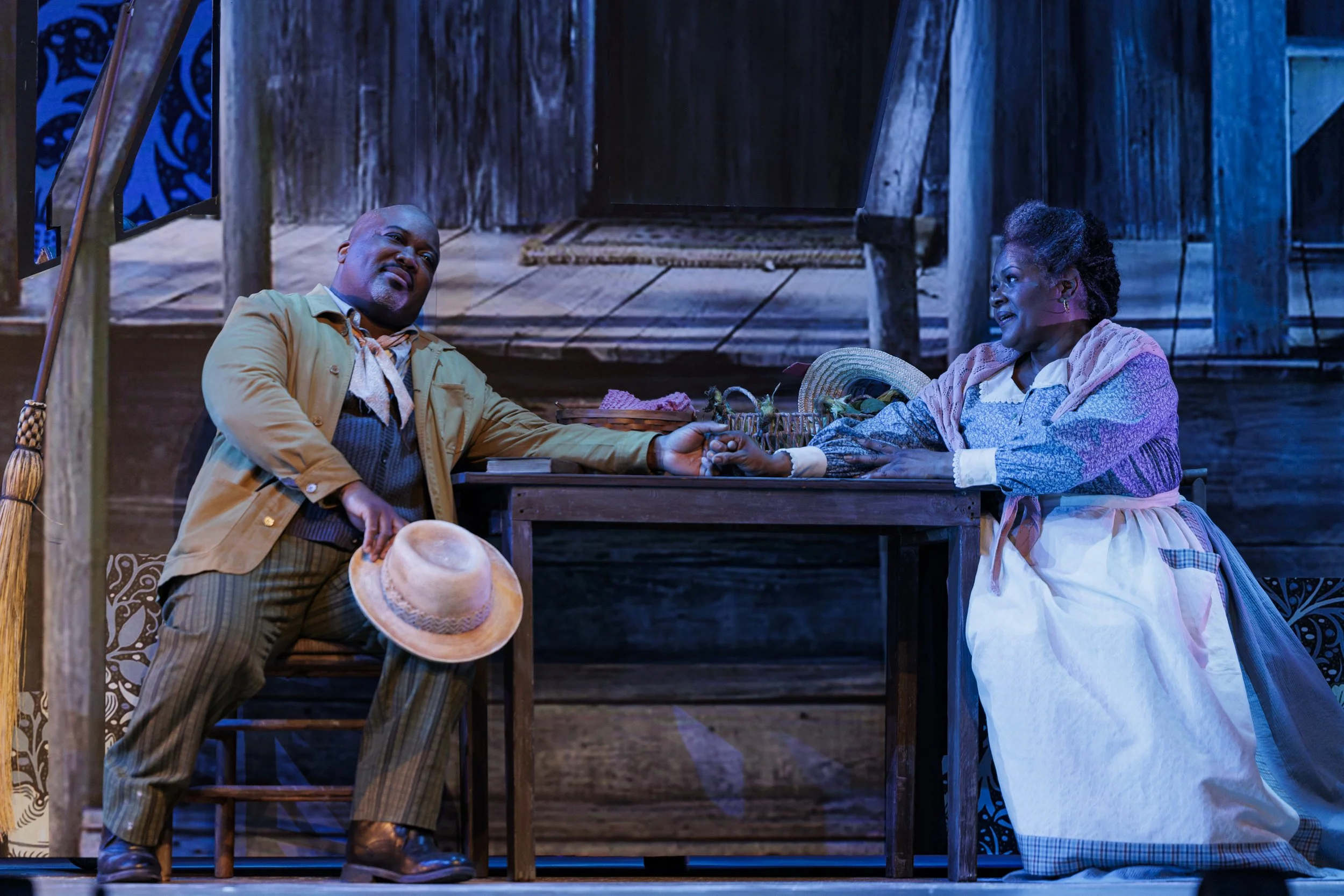
Treemonisha’s adoptive parents, Ned (Kevin Short) and Monisha (Tichina Vaughn). Photo by Elman Studio; courtesy of Washington National Opera.
The plot, set in the late nineteenth century and designed to deliver Joplin’s messages, revolves around Treemonisha, who was discovered as a baby, under a tree, by Monisha. Monisha and her husband, Ned, chose to take her in and raise her as their own. They worked to have their daughter taught reading and writing by a white woman. Treemonisha becomes a teacher in their black community, but encounters attacks from the conjurers, a group promoting superstitions and magical beliefs. She is abducted by Zodzetrick and his band of conjurers who plan to punish her with torture. She is rescued by Remus who has been sweet on her for some time. Her community plans to punish the conjurers they have captured, but Treemonisha pleads for forgiveness and unity instead. The community accedes to her wishes, and she is recruited by both the women and the men of her village to be their leader.
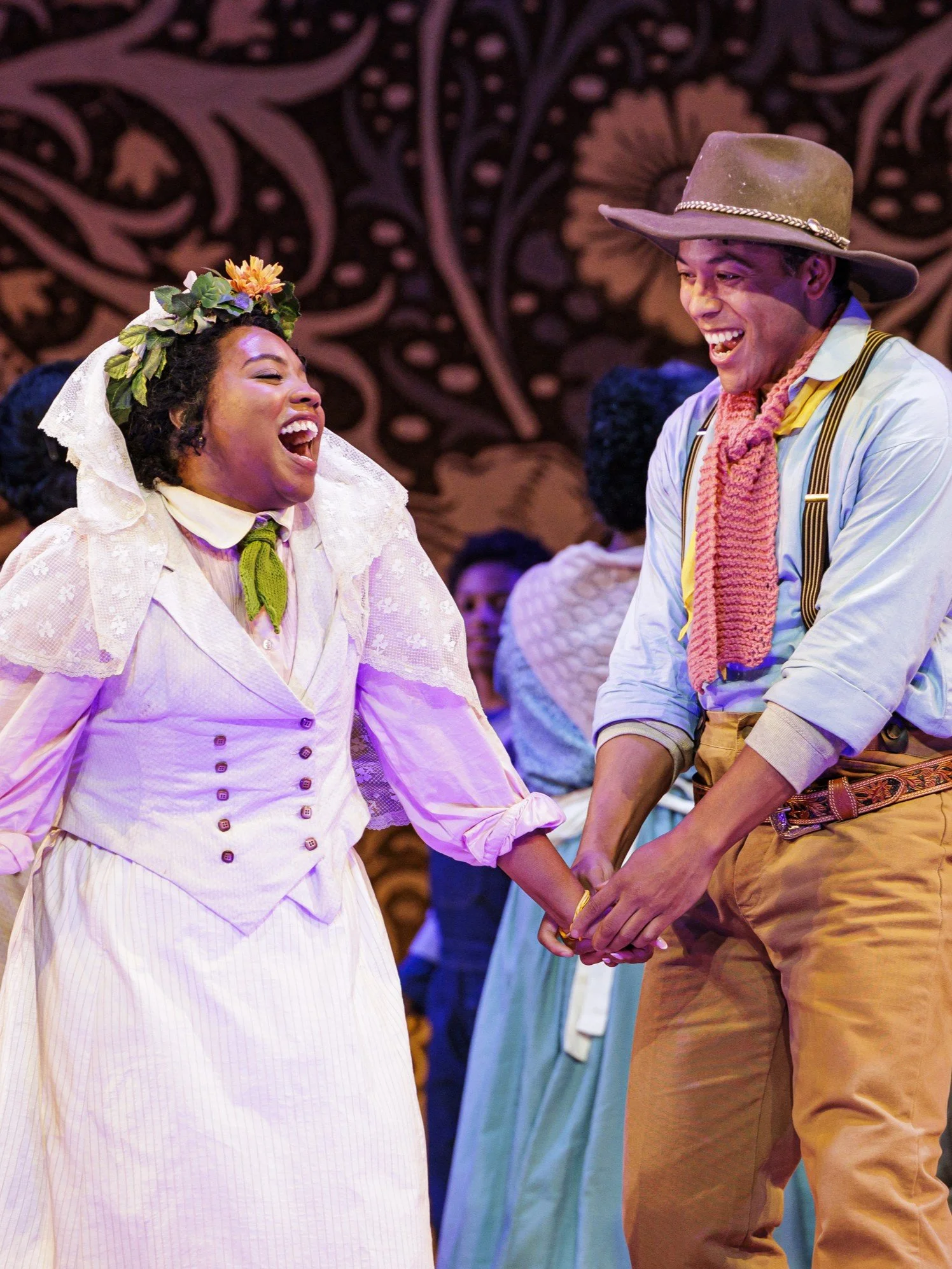
Treemonisha (Viviana Goodwin) and her beau Remus (Justin Austin). Photo by Elman Studio; courtesy of Washington National Opera.
Be seated, it’s time for a personal testimony to help you understand why this opera resonated so strongly with me, despite weaknesses that I don’t want to mention (a story lightweight in terms of dramatic force for opera and pleasing music that might have been even richer had the composer been given the encouragement of a chance to try it). I grew up in Columbus, Georgia, in the sixties and seventies with my adoptive parents who were economically poor. My parents insisted that I study hard. It seems like my dad told me a hundred times to get my education; he would say, “It’s the only thing they can’t take away from you.” My mother had the strong moral purpose. As a result, I graduated from high school, college, and obtained a PhD. I also grew up with Dr. Martin Luther King, Jr.’s message of peace, love, and nonviolent resistance to oppression, which resonated strongly with me in those days, and still does. My response to Treemonisha is shaded by my personal history.
Let’s talk about this performance of Treemonisha and how its surfeit of talent made it work so well, beginning with the director, Denyce Graves. You may know her for her career as an international star mezzo-soprano. She began directing opera in 2022 with Minnesota Opera, and Treemonisha is her seventh opera in that role. For her direction of Virginia Opera’s Loving v. Virginia in 2025, I reported that “…this is one of the best organized performances of an opera that I have seen; early on I thought the action had a Broadway show vibrancy”. The same is true of this production. I would also add that the talented performers imbued almost every scene with sparkle. Director Graves had a rather large cast to move around, especially on the stage for Lisner Auditorium, smallish for a fully staged opera and made every aspect of the performance work for both storytelling and entertainment.
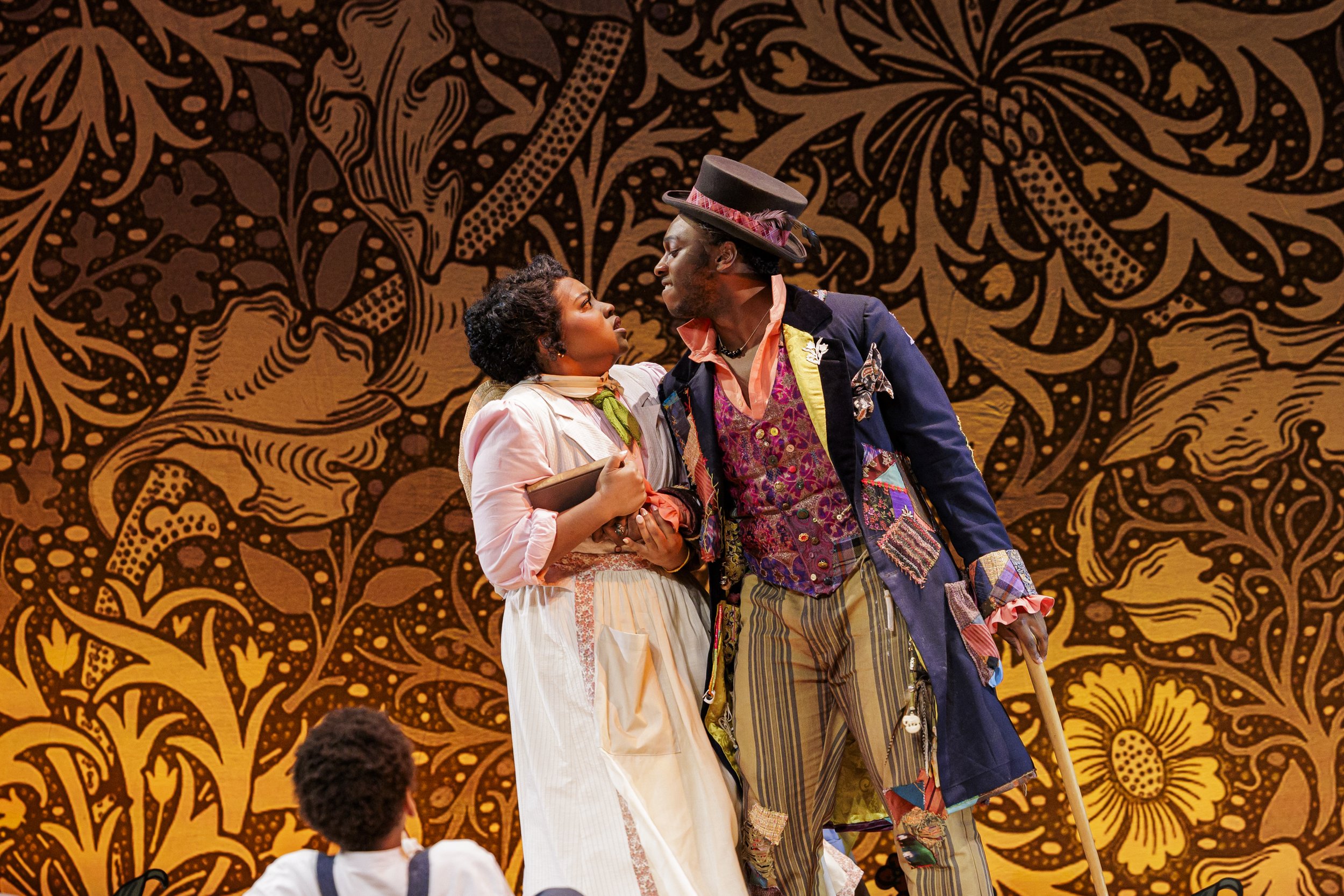
Treemonisha (Viviana Goodwin) is threatened by Zodzetrick (Jonathan Pierce Rhodes). Photo by Elman Studio; courtesy of Washington National Opera.
When I first sat down, I was surprised to see the stage framed by an eye-catching façade, which seemed more appropriate for a children’s opera. Yet somehow, the proscenium—bright with a colorful floral pattern—suited the production perfectly, framing what unfolded like a joyful adult fairy tale. Little more was added to the set than a few props and a decorated cutout of a large tree, and one for a partial view of an unpainted, small frame house. The move from the Kennedy Center Opera House to the somewhat smaller Lisner Auditorium stage and orchestra pit undoubtedly placed some limitations on the staging. The creative team made it work; it’s worth noting that WNO’s first performance seventy years ago was in Lisner Auditorium.
The set was designed by Lawrence E. Moten III, who must be a genius. Kudos also for the contribution of Lighting Designer Jason Lynch whose changes in lighting complemented the changes in scenes. Special kudos also to Costume Designer Lynly A. Saunders, whose brightly colored costumes seemed to foretell a happy ending, and Choreographer Eboni Adams, whose dance creations were a performance highlight.
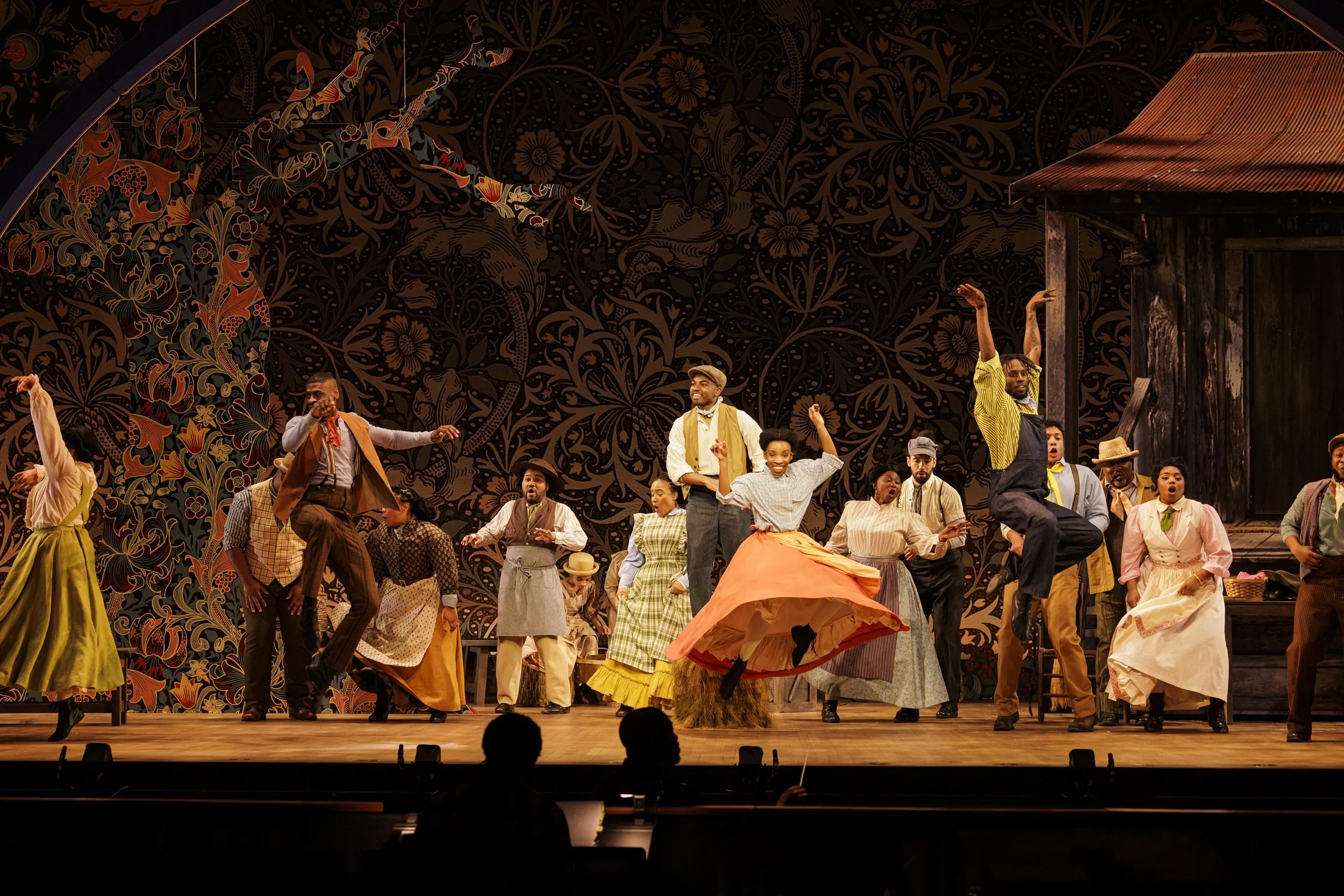
Cast photo of the joyful dancers in Washington National Opera’s Treemonisha. Photo by Elman Studio; courtesy of Washington National Opera.
I counted fourteen named performers for this production, and all but one are veterans of WNO productions. This was a talented cast overall, and the performers seemed to relish putting on a show that night; it was infectious. The role of Treemonisha was sung by soprano Viviana Goodwin, a Cafritz Young Artist whom I have previously praised for her vocals as Clara in WNO’s Porgy and Bess. She has a beautiful, expressive voice and was an excellent choice for the role. Very likable, her vocals in the more lyrical numbers were emotionally charged and pretty. The lone newbie for WNO was mezzo-soprano Tichina Vaughn who has performed in major opera houses around the world. She was enjoyable both in her vocals and in her portrayal of a caring mother. Her revelation of Treemonisha’s naming was a highlight. Treemonisha’s love interest and rescuer was Remus, played by tenor Justin Austin whom I saw in a WNO American Opera Initiative production in 2021; he has gone on to a stellar career in opera houses across the country. Distinguished singer Kevin Short played Ned, demonstrating his attention-garnering bass-baritone voice, which I have enjoyed on many occasions. He appeared several times with both the Washington National Opera and the Metropolitan Opera. The would-be scene stealer was tenor Jonathan Pierce Rhodes who played Zodzetrick. He sang well, giving us an amusing and then threatening leader of the conjurers. He has appeared as a Cafritz Young Artist in several WNO productions; he is a promising young singer who seems born for the stage. All artists on the stage were part of the fine chorus for this production and were a strong point of the performance.
The Washington National Opera Orchestra for this production was led by distinguished Conductor Kedrick Armstrong, Music Director for the Oakland Symphony, in his WNO debut. The mix of ragtime rhythms with classical opera-style music, adding a bit of spiritual vibes and a barbershop quartet element, was pleasingly played by the ensemble. Added on stage was Composer Damien Sneed playing piano, a treat, and another treat was banjo player par excellence DeAnte Haggerty-Willis, who started things off with a lively tune, so ingratiating I wished he had been featured more. The music in the first half of the opera was different and pleasant, though not exceptional. The second half upped the ante musically, much more interesting with some excellent arias. Overall, composer Sneed’s orchestrations beautifully captured Joplin’s music.
Treemonisha, a truly American opera, was presented in a fun and joyful fashion, fully conveying Scott Joplin’s uplifting and inspiring messages, still and more than ever, very much needed in today’s America. Composer Joplin was ahead of his time in presenting a young woman as a leader, and I think he foreshadowed the inspiring and hopeful messages of Dr. King. This was a splendid team effort that launched Washington National Opera’s next chapter with great success.
The Fan Experience: Washington National Opera scheduled performances of Treemonisha on March 7, 8, and 15 in Lisner Auditorium. The opera is sung in English with English supertitles shown on a screen overhead. The opera lasted about two hours with one fifteen-minute intermission. A pre-opera talk is given one hour before the performance.
Washington National Opera will continue the second season with an American opera lineup celebrating America’s 250th anniversary with March performances of The Crucible in Lisner Auditorium and West Side Story in May to be performed in both the Lyric Baltimore and the Music Center at Strathmore.
In my experience, all the seats in Lisner Auditorium are fine for viewing the performance, but the sound is probably better towards the center of the auditorium. The seats in Lisner Auditorium were relatively recently upgraded with more legroom for the orchestra section and more comfort for all. However, be aware, the side terrace seats continue to have very limited legroom. Parking on the street around the auditorium is catch as catch can; be sure to read the signs! There is a pay parking lot on H Street across from Lisner. Beverages for sale are offered at bars upstairs and downstairs.