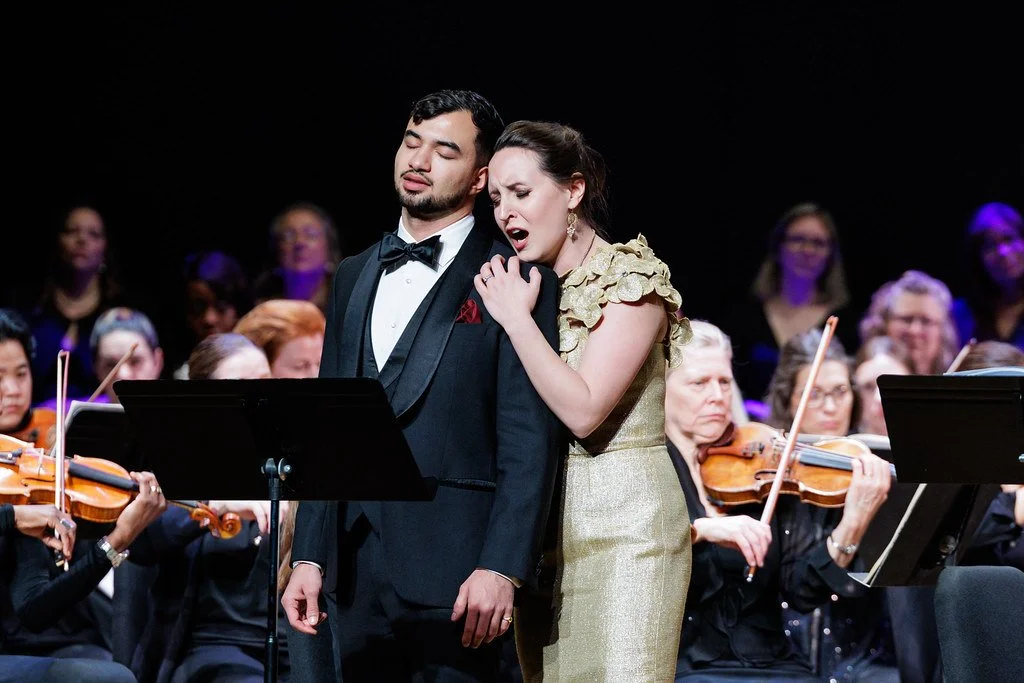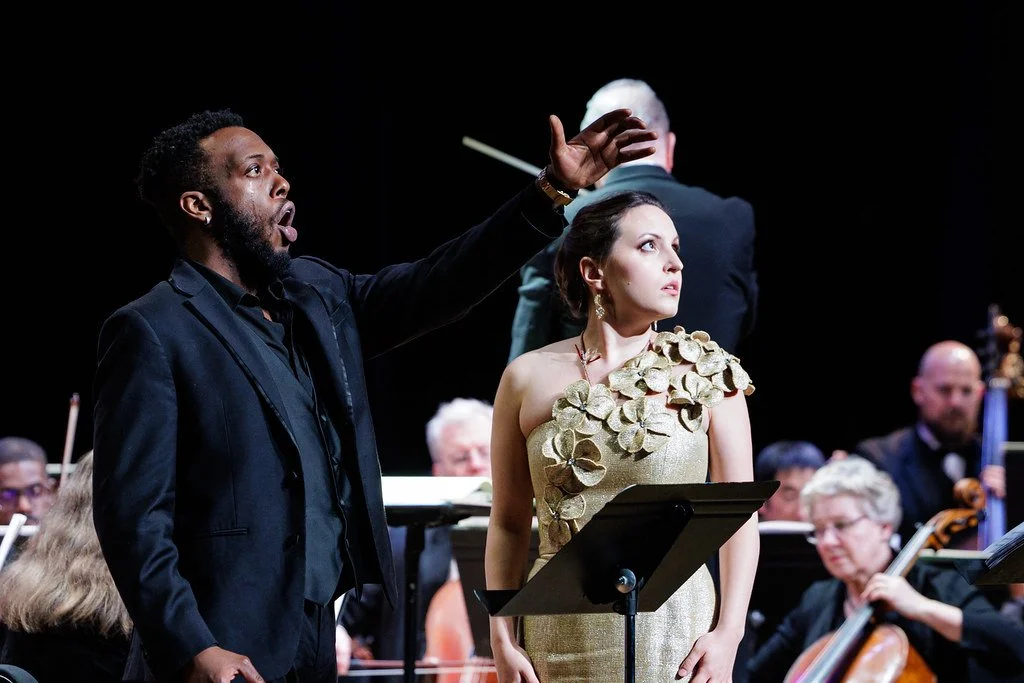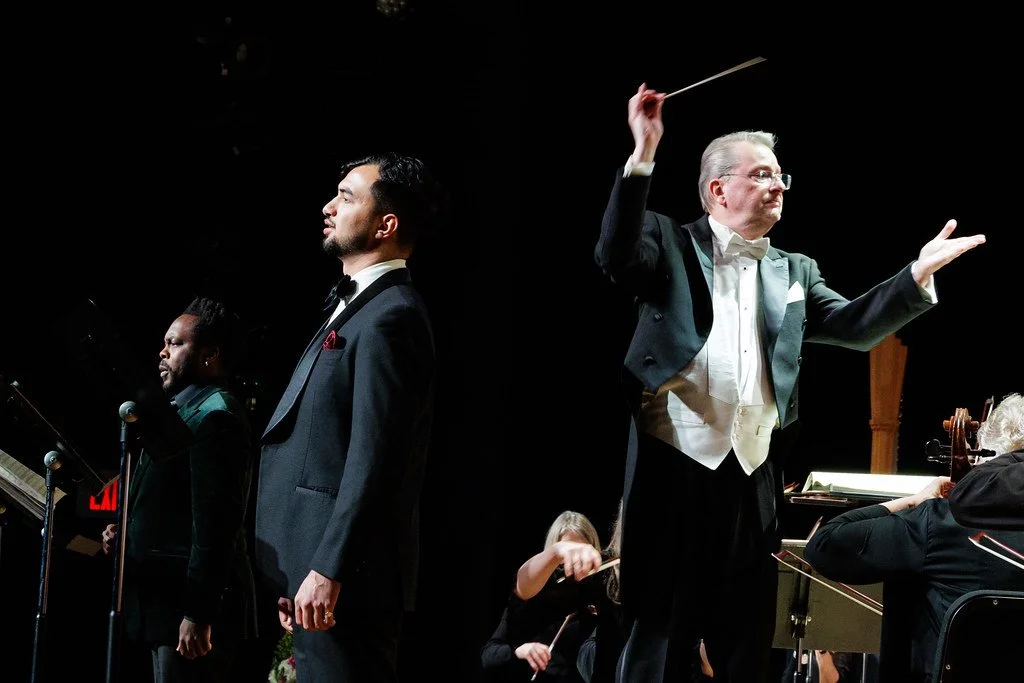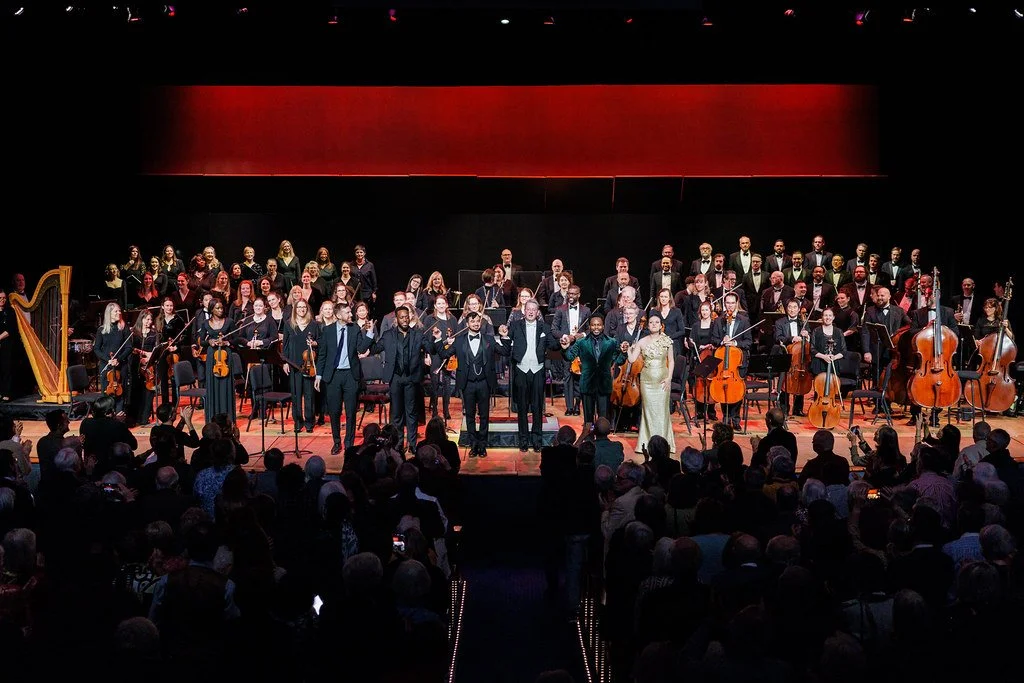
I love Opera Philadelphia. I love Mozart. I really like the two together. I really liked OP’s production of Mitridate, re di Ponto quite a lot, right up to the point, the last minute, when it wasn’t Mozart’s anymore. Admittedly, I wanted to see what Mozart could do writing his first real opera…as a kid…at the age of 14…his second year as a teenager. I got that and more, but at the very end, OP’s production departed from opera seria’s required happy ending to give us reality. In the current state of the world, I wanted the happy ending; let me live in my private bubble for a little while. That said, the staging was intriguing and fun until the last minute or so; Mozart’s music was beautiful and enjoyable, sometimes thrilling.
Mozart was visiting Italy in 1769-1771 to learn opera craftsmanship in the birthplace of opera. In Mitridate, re di Ponto (1770), his first opera, his craftsmanship and creativity shone even while following the opera format in Italy and his commission, when the singers were the thing, and composers obliged to craft arias to play to the strengths of the singers involved. OP’s cast served up kid Mozart’s vocals in exemplary fashion: the singing and acting were on the very high end of the outstanding scale. If you don’t want to know the ending, read no further. If it is any comfort, my wife thought the ending was brilliant.
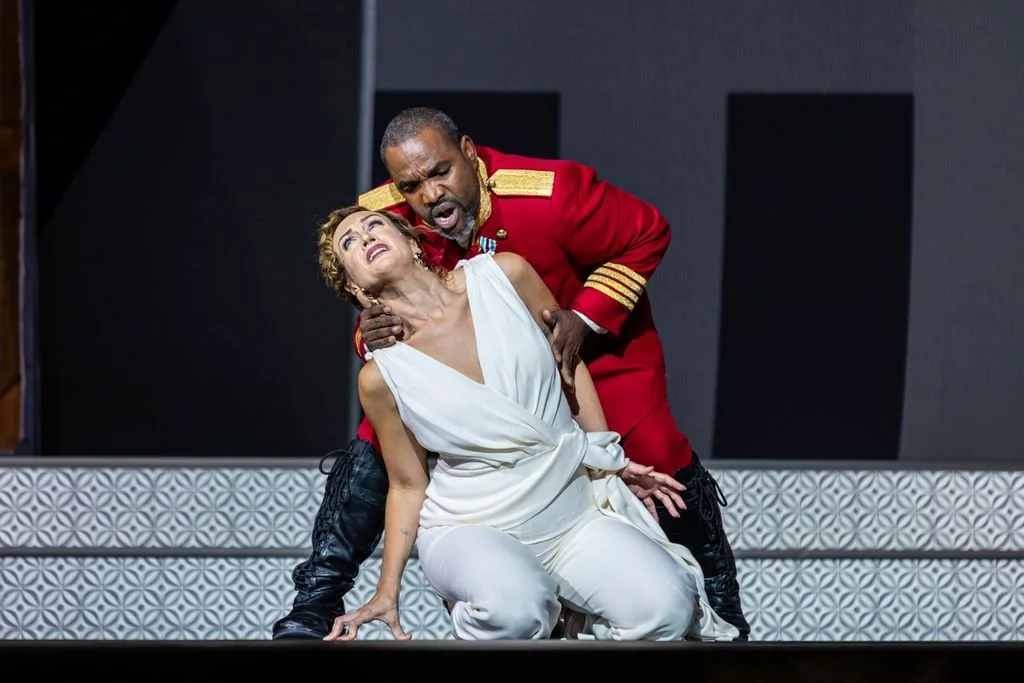
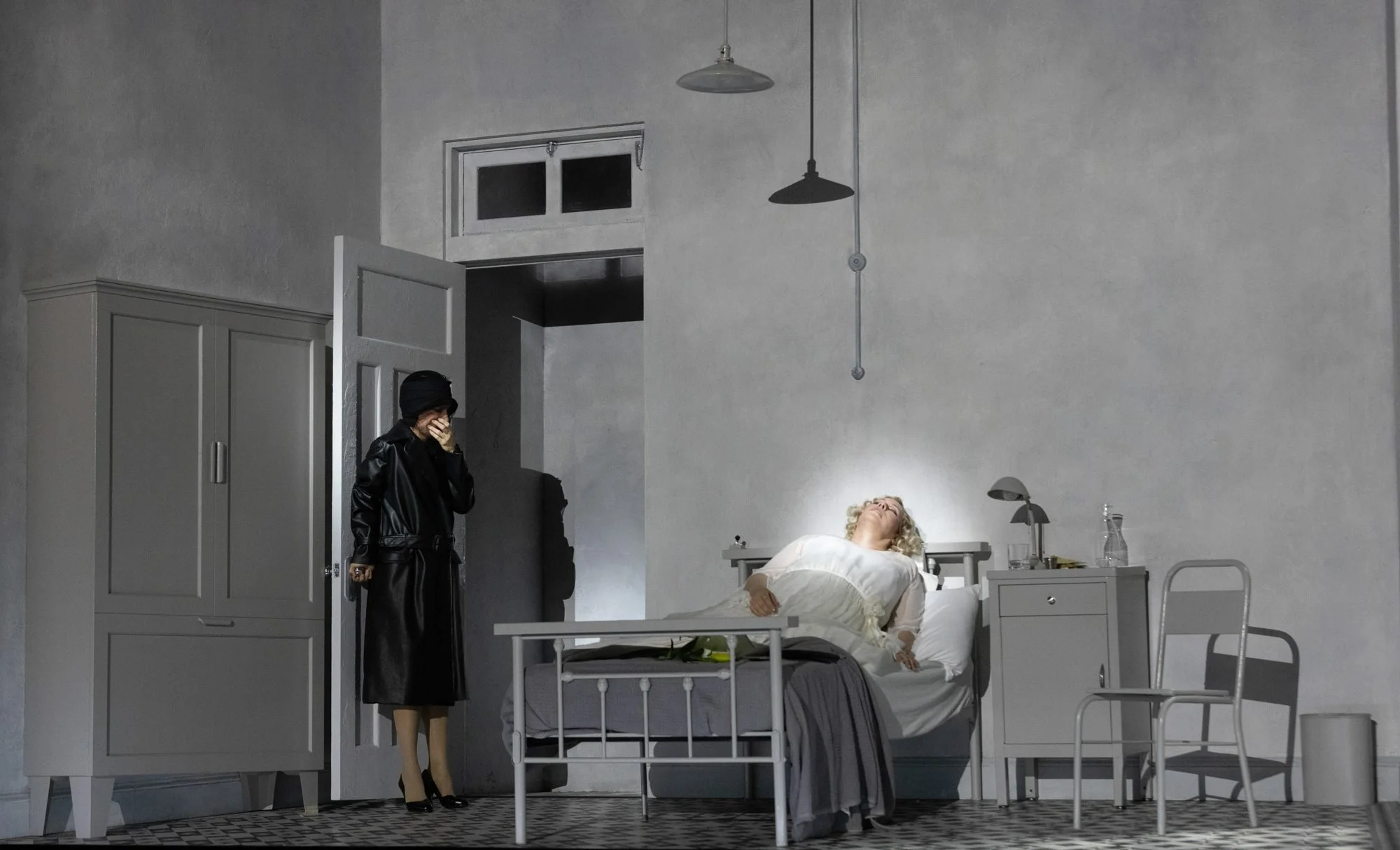
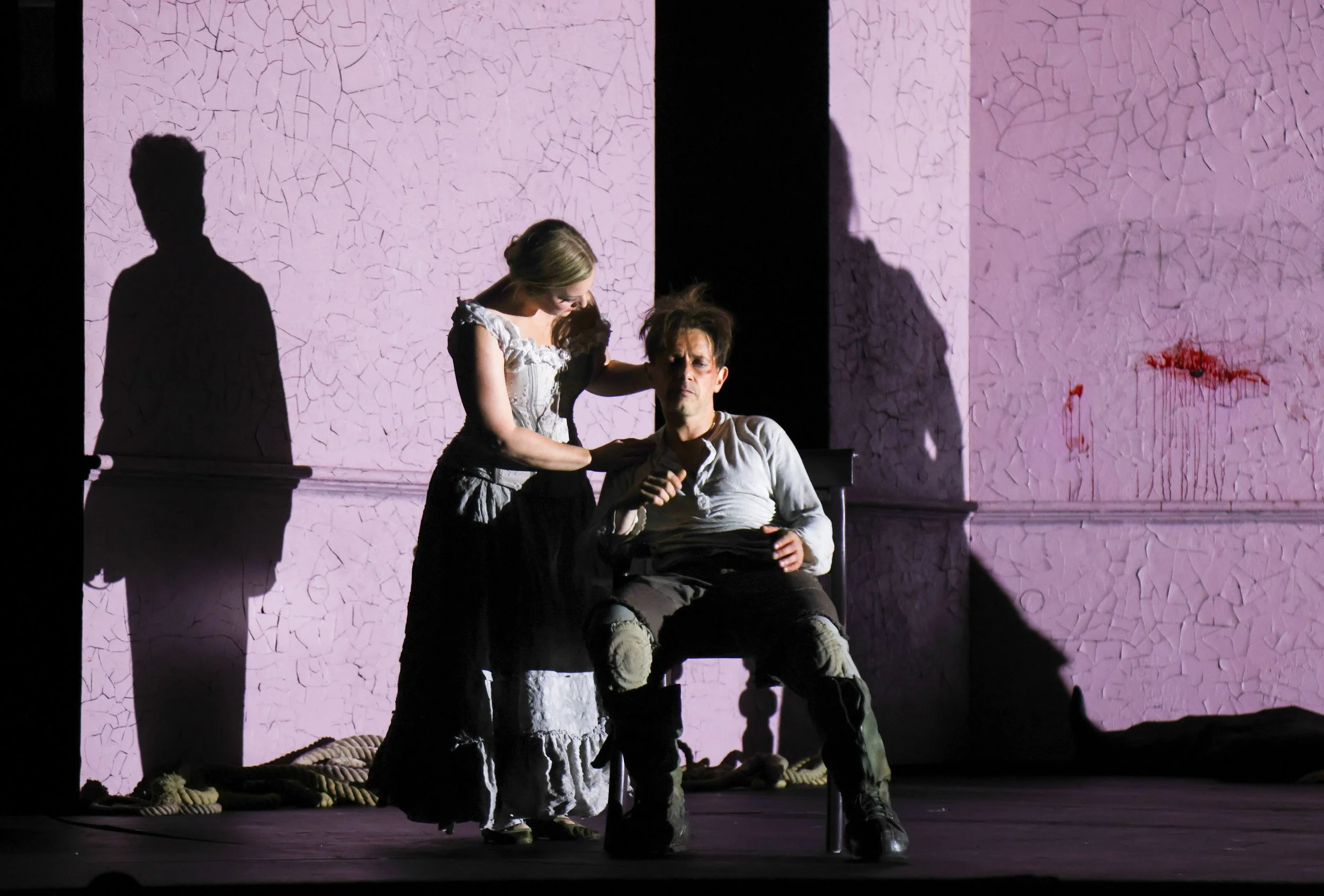
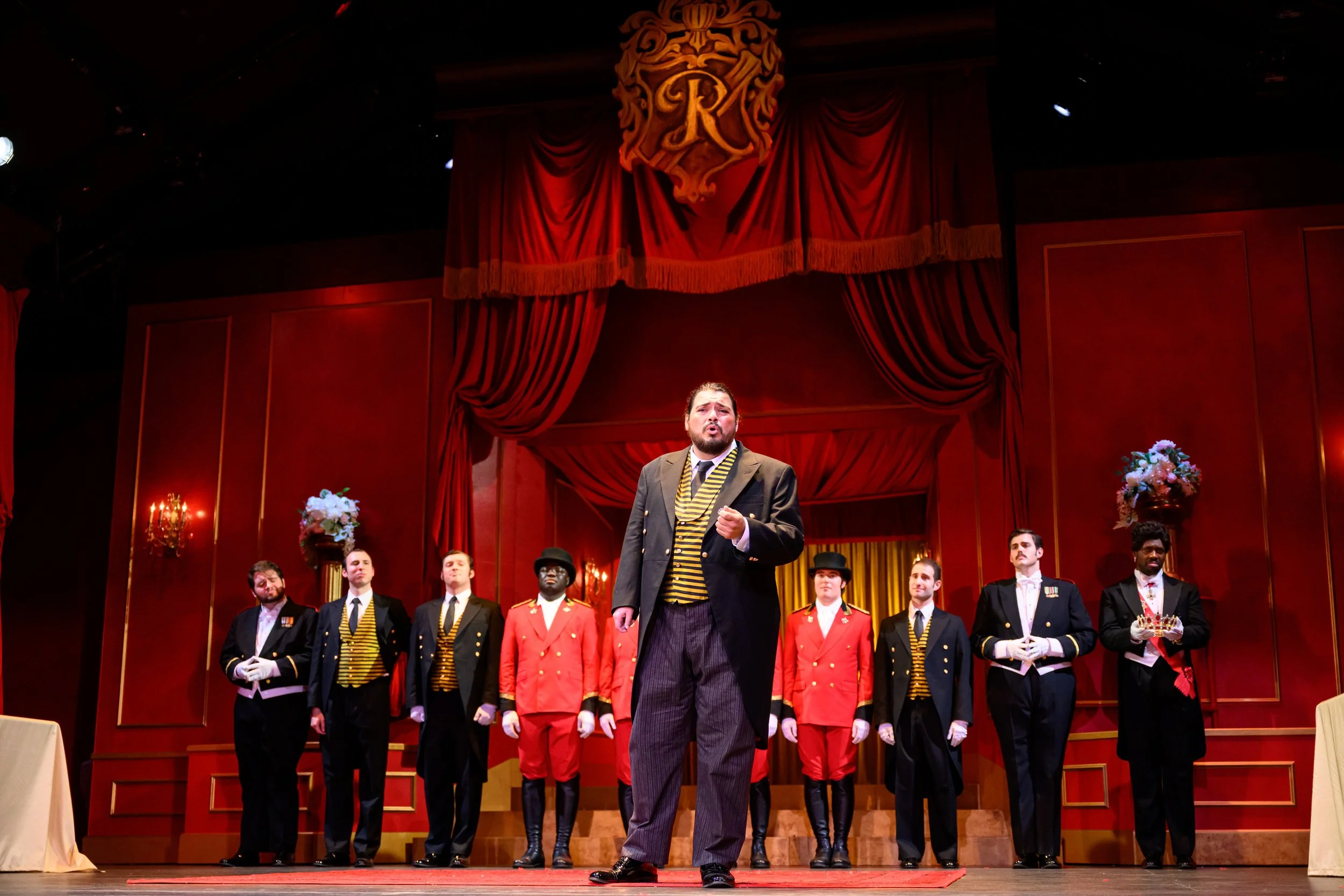
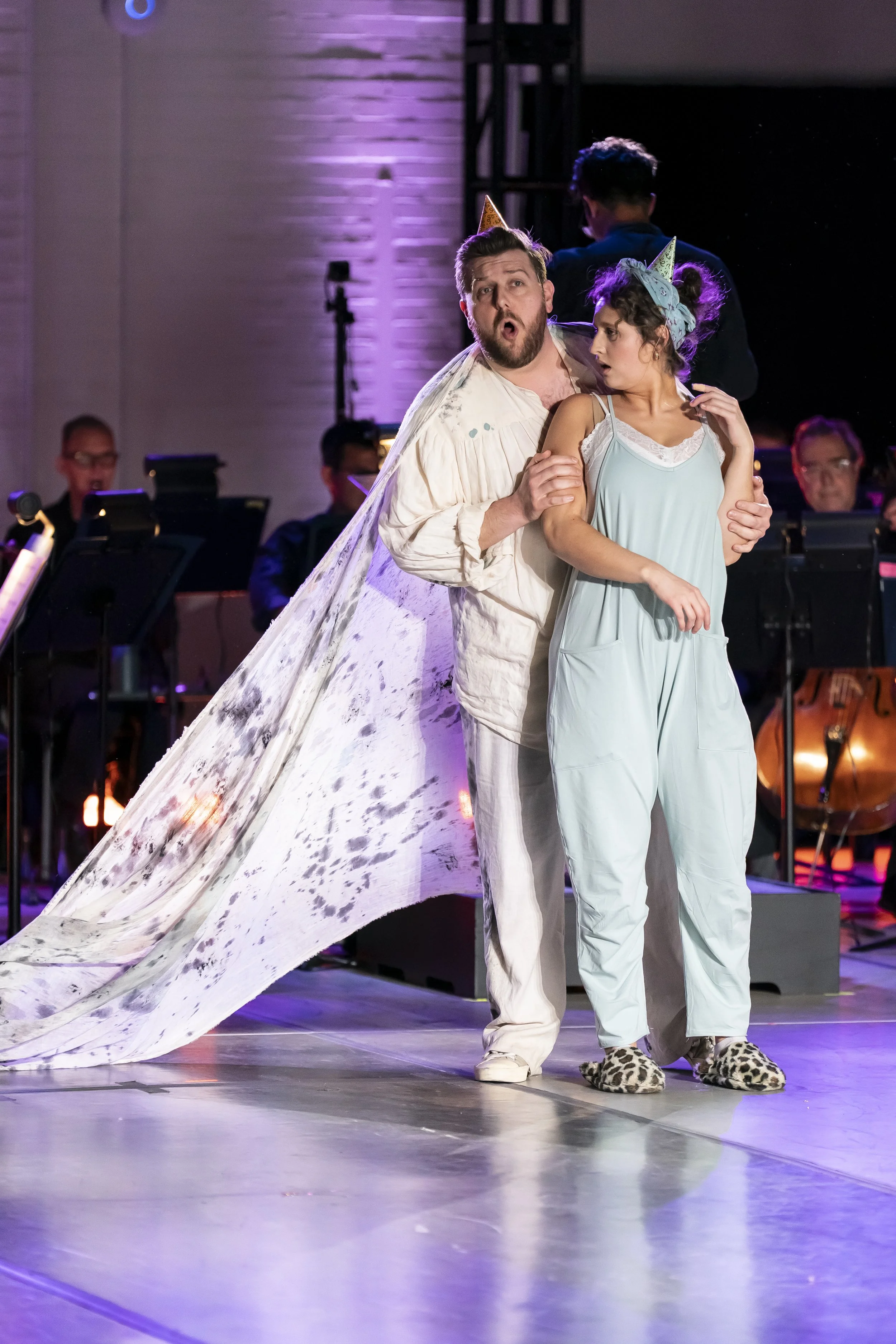
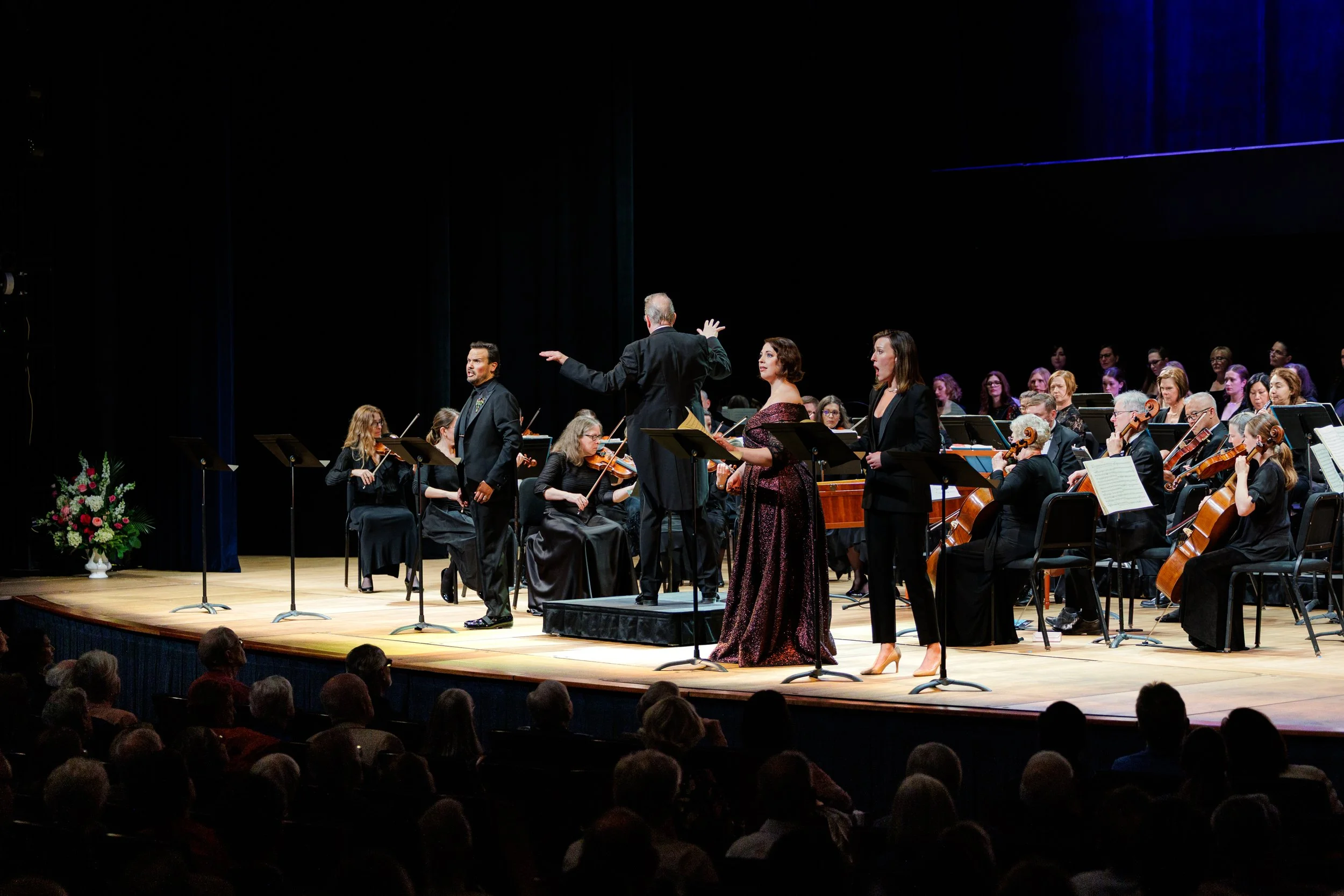
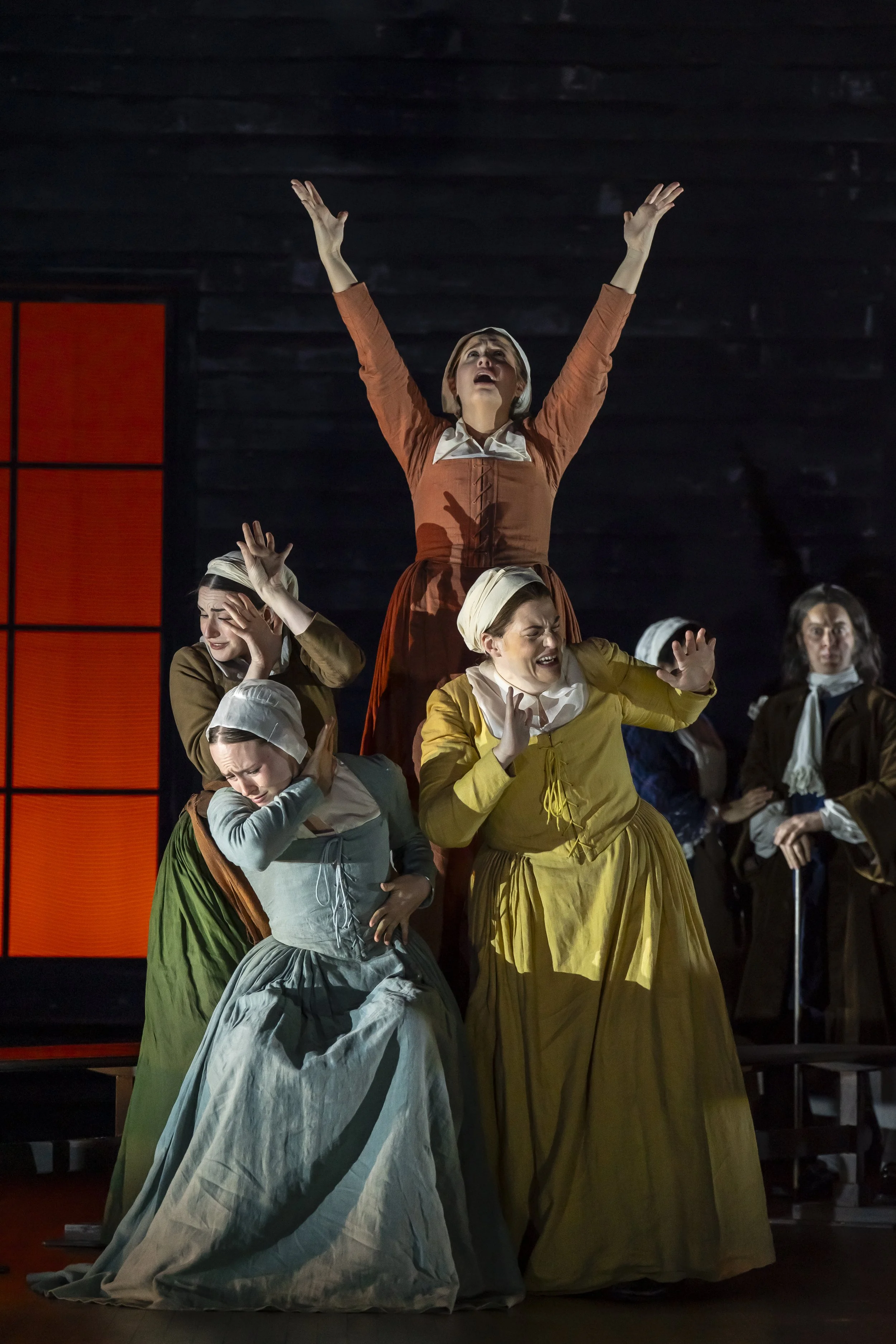
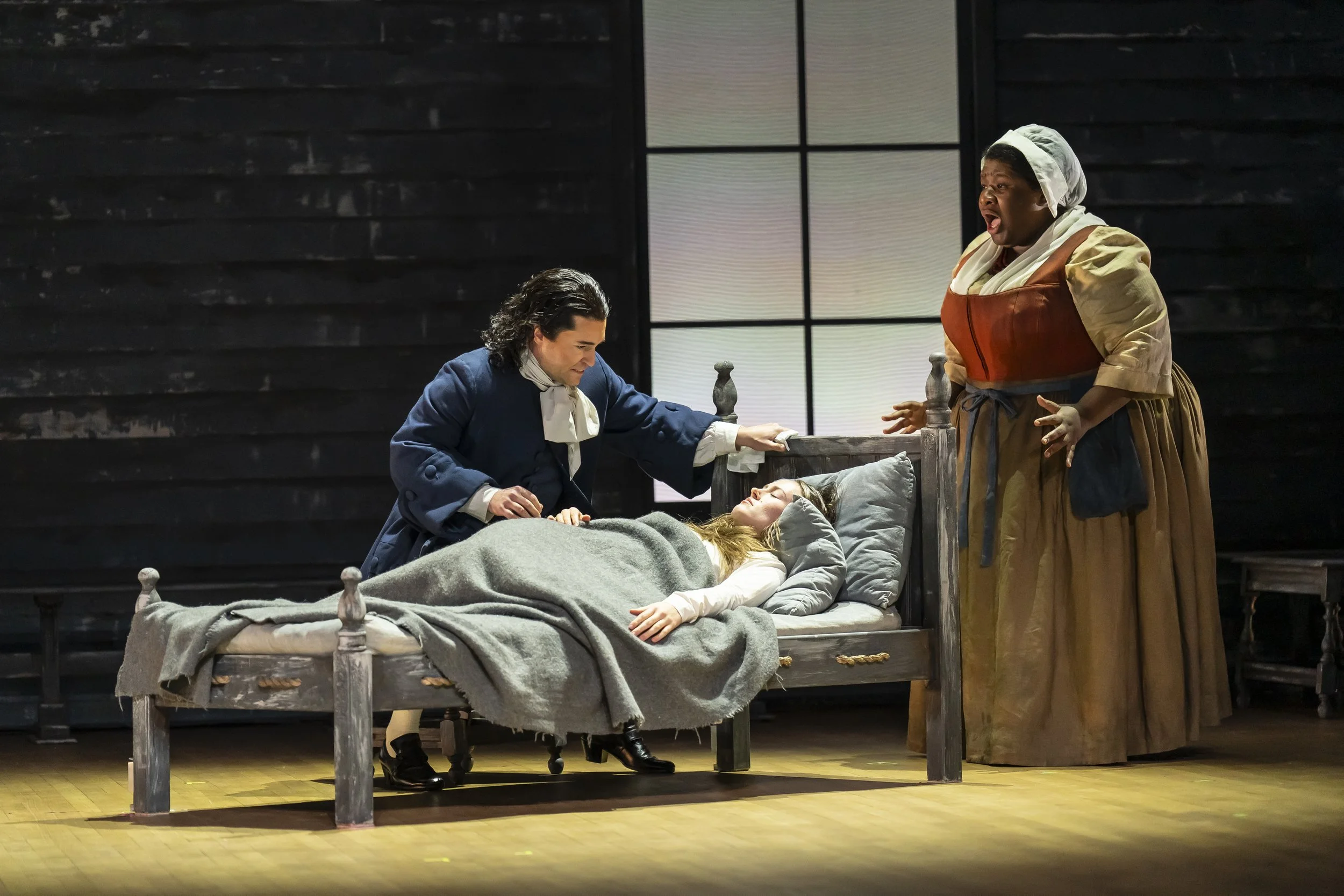
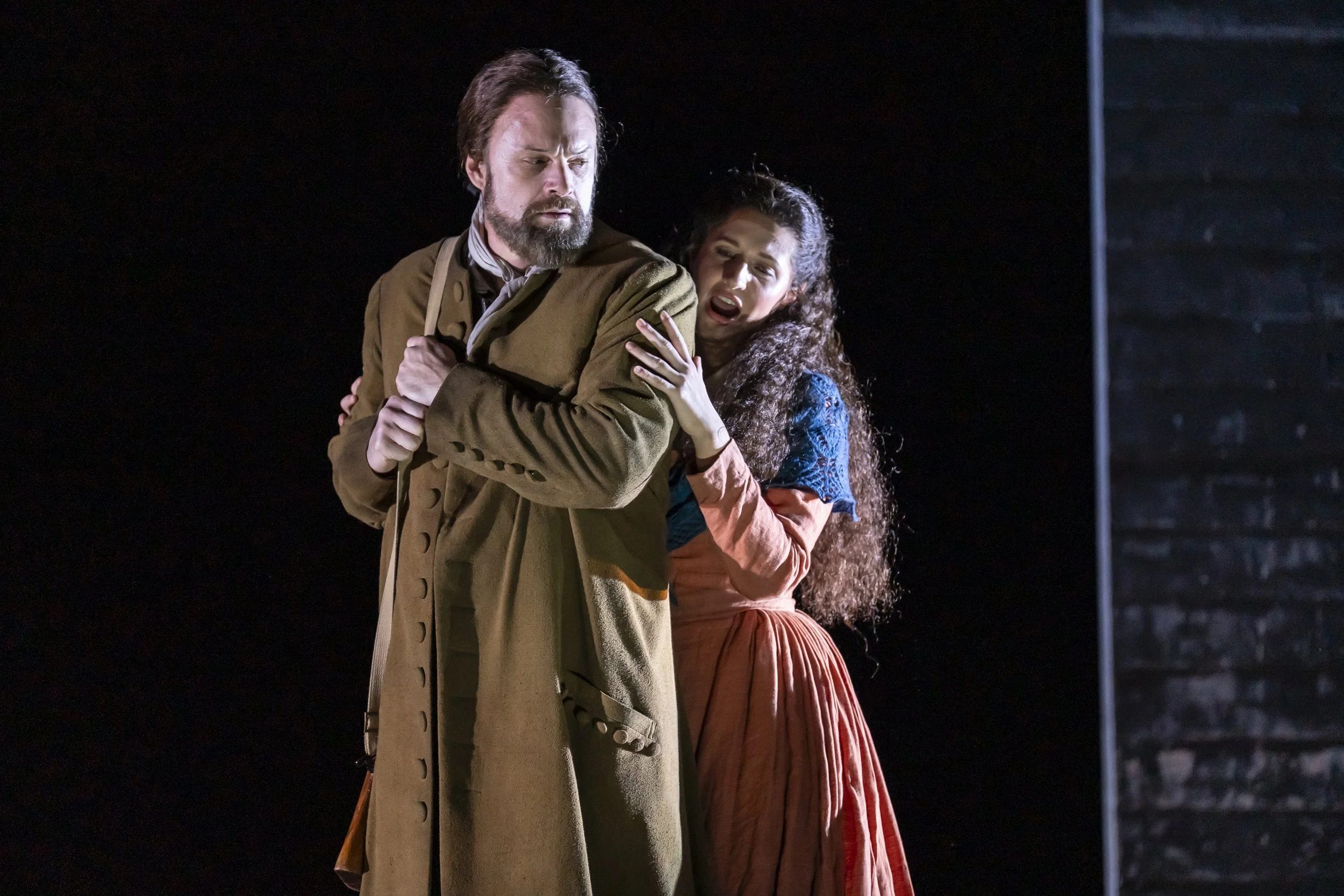
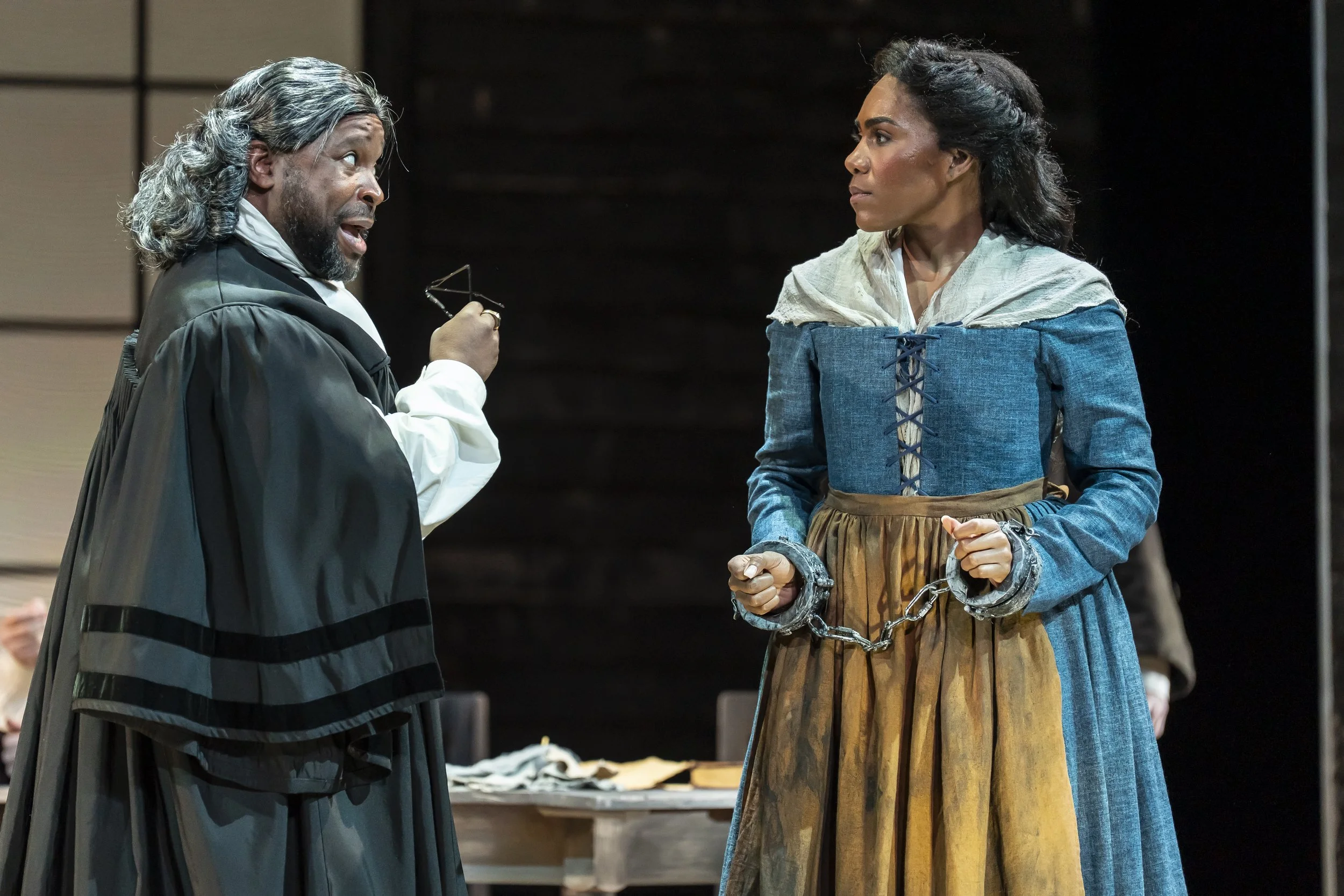
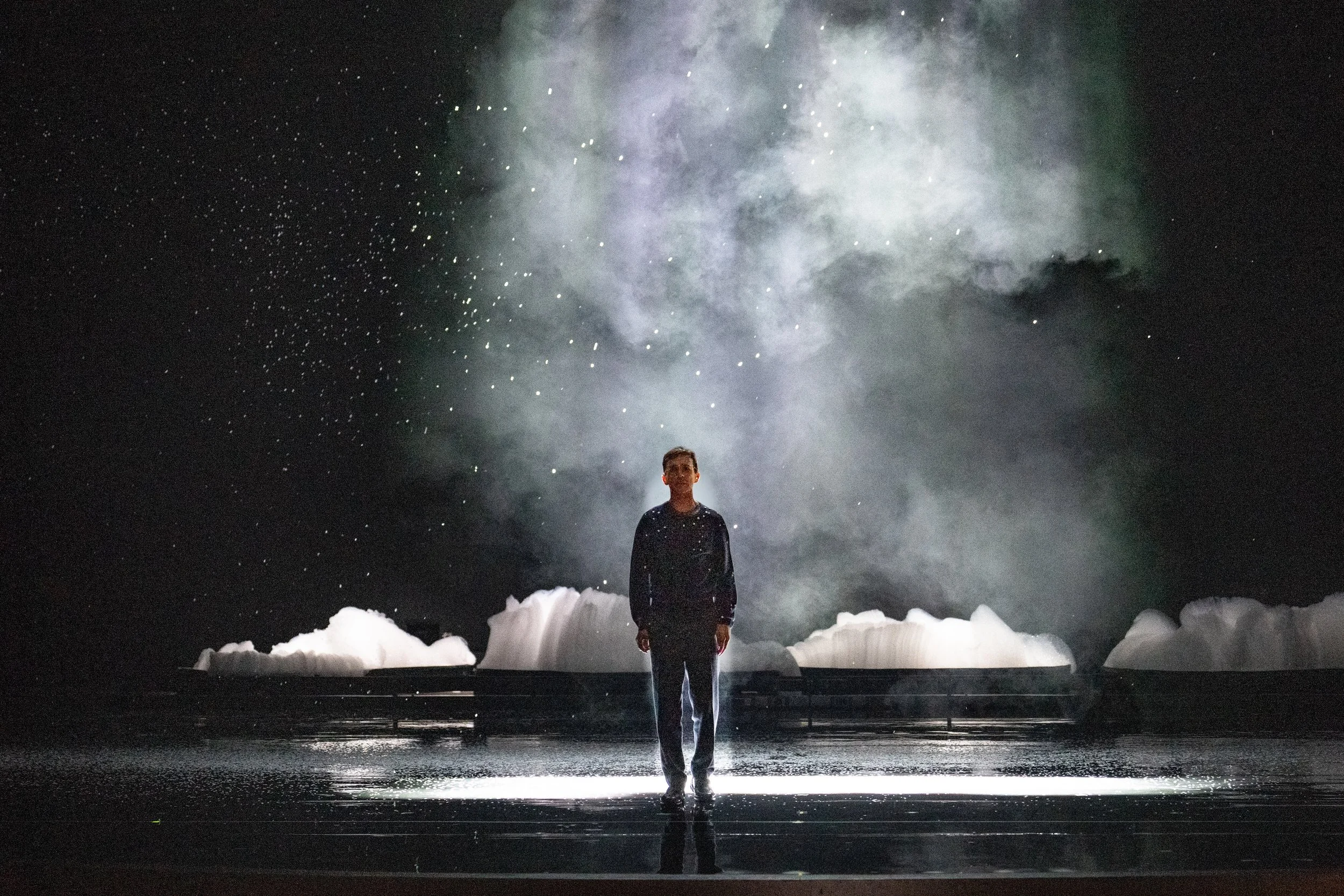
King Mitridate (Lawrence Brownlee), enraged by Aspasia’s (Brenda Rae) infidelity with his son, threatens her life. Photo by Dominic M. Mercier; courtesy of Opera Philadelphia.
Mitridate (Italian version of Mithridates VI) is not a household name today, but this ruler of Pontus, a kingdom on the edge of the Black Sea in today’s Turkey, was famous during his rule (120-63 BCE). The clashes between Mitridate-led Pontus and Rome would have been daily news in the NY Times and the Wall Street Journal if they were reporting then. The opera focuses on the last year of his rule, and the drama is largely historical fiction. The story ping-pongs around a love quadrangle in the royal family: King Mitridate, son Farnace, son Sifare, and the king’s fiancée Aspasia. The king, of no small ego, fakes his death in a battle with Rome to see who at home would reveal their true colors. On his return, he believes his son Farnace has seduced Aspasia; he tried, but she rebuked his advances. When the king discovers Farnace has been conspiring with Rome, Farnace tells him that Aspasia is in love with Sifare. That’s true, though they have resisted the urge to pursue their love. The king is overcome with anger at the betrayal by both sons, both real and imagined, and he plans to execute both sons. However, another Roman attack draws him into battle. Mitridate is wounded and decides he prefers suicide to capture. He expresses his regret for his actions towards his sons and Aspasia and learns that Farnace has achieved redemption by attacking the Romans, defending Pontus and the king. All is forgiven; Sifare and Aspasia can marry, and the king dies a happy man. That’s where Mozart’s version ends with a nice ensemble number…without addressing the final resolution with Rome. OP’s ending concludes with Farnace’s Roman handler Marzio quickly executing all members of the royal family, an ending not too far from what actually happened. The story comes from a Racine play that is closely followed by the libretto. In real life, Mitridate had a son who conspired with the Romans. The real king fought the Romans frequently. When defeated, he was killed by a mercenary at his request, after a failed suicide attempt. The Romans eventually killed the remaining leaders of Pontus; there was enormous brutality and slaughter on both sides. OP’s ending closes the chapter and is true to the real story, though not to the requirements of opera seria.
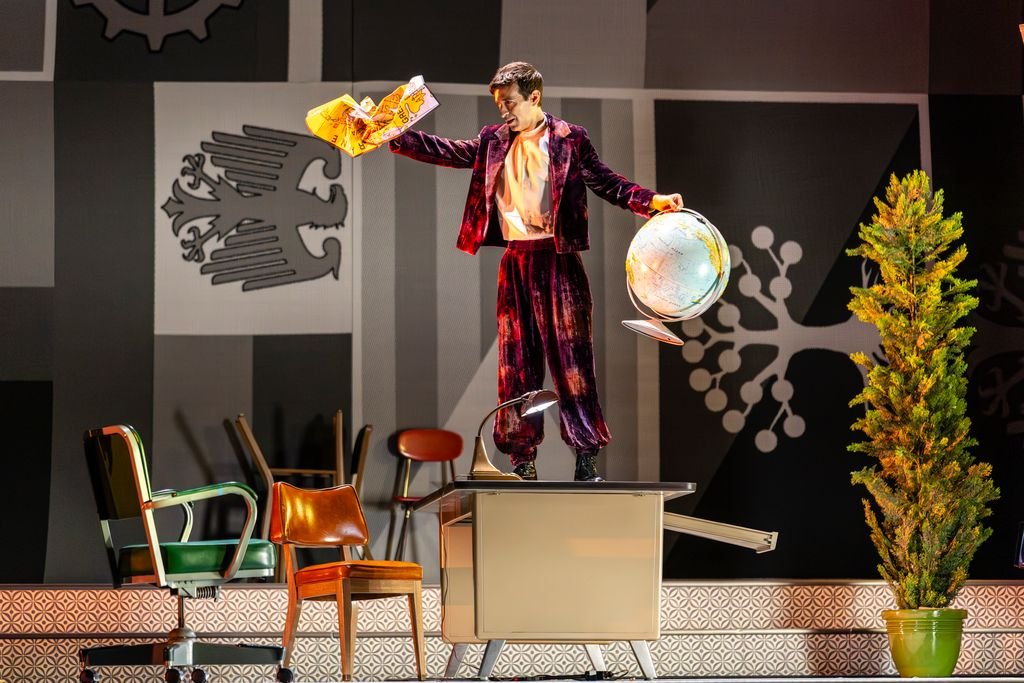
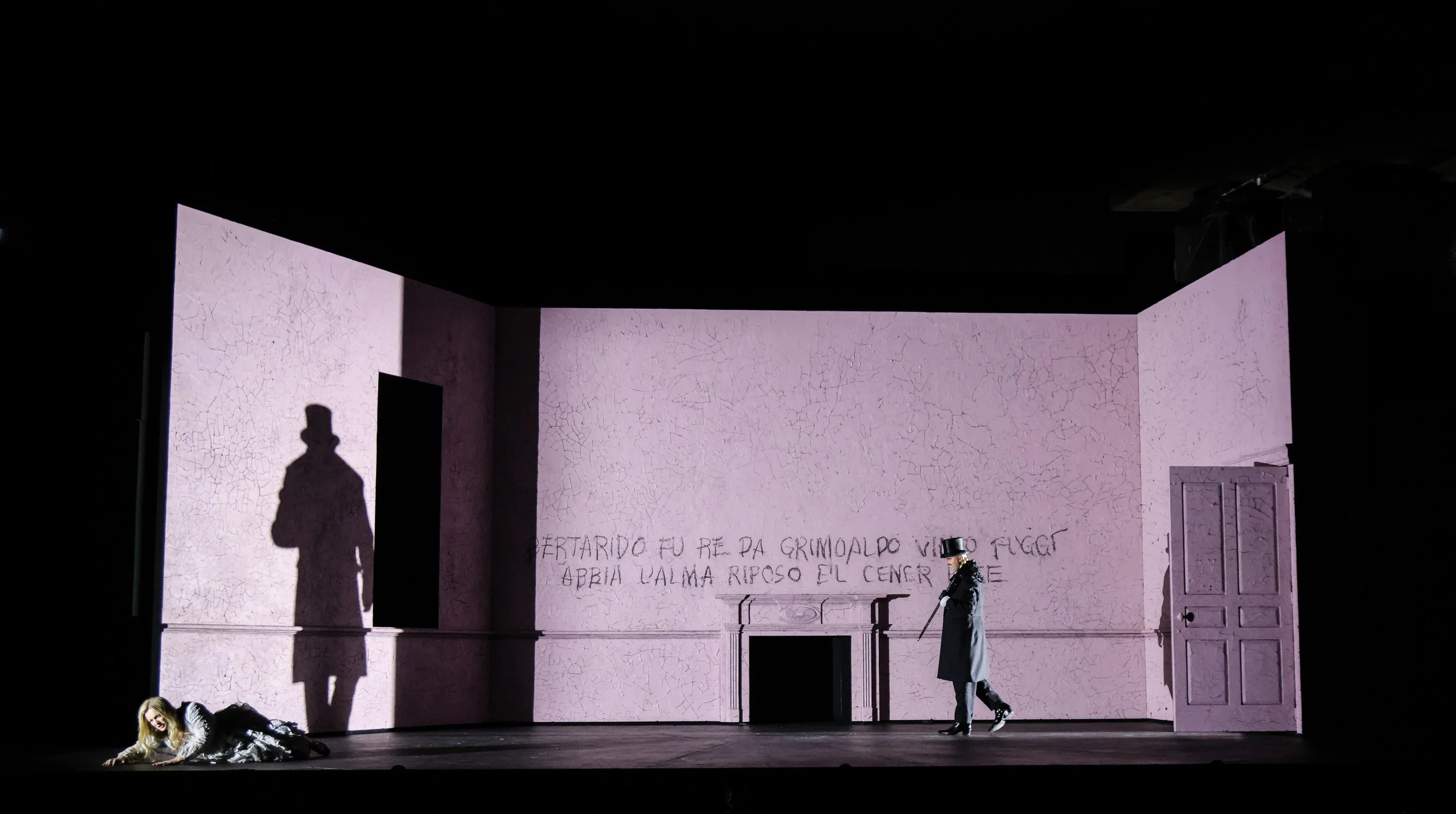
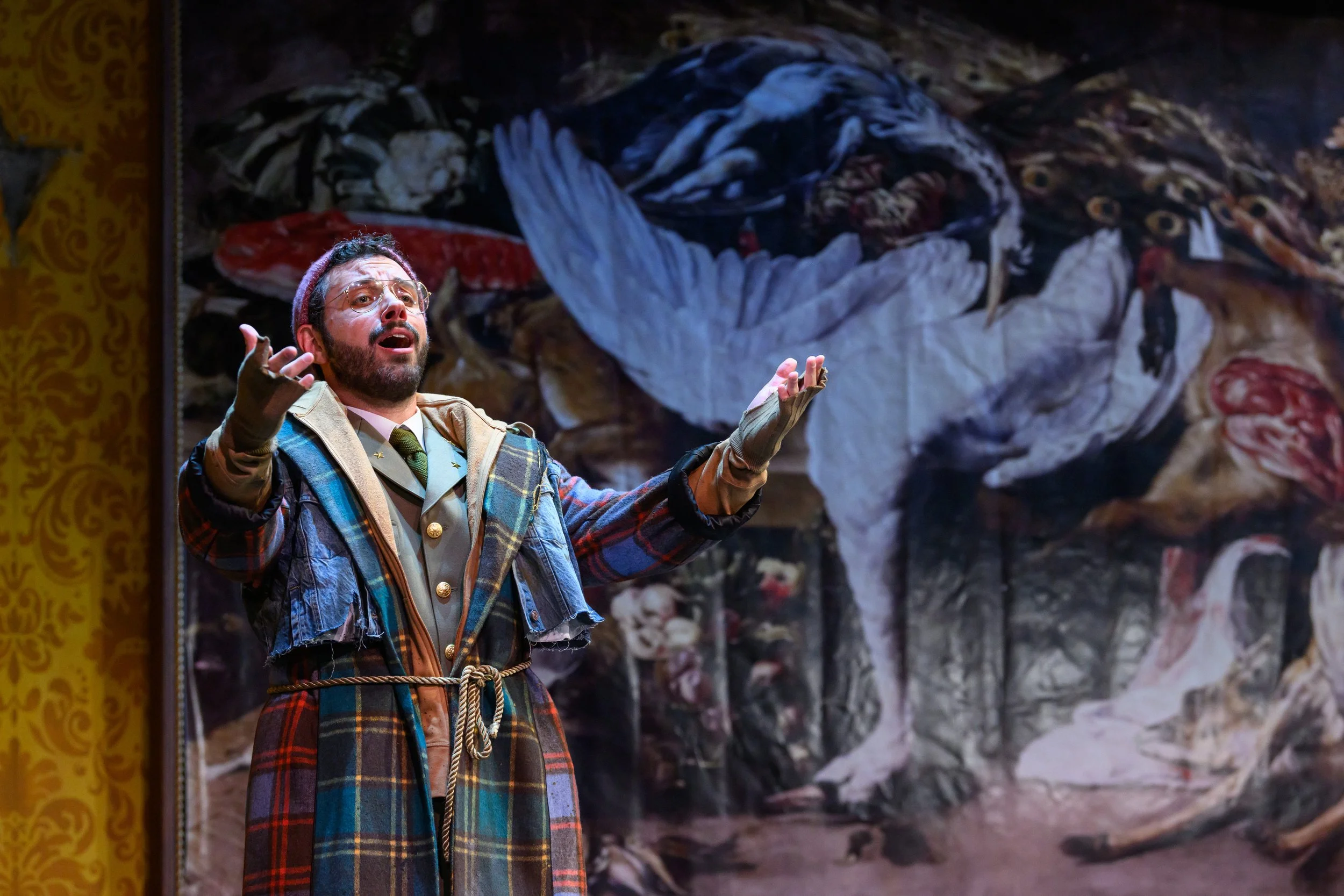
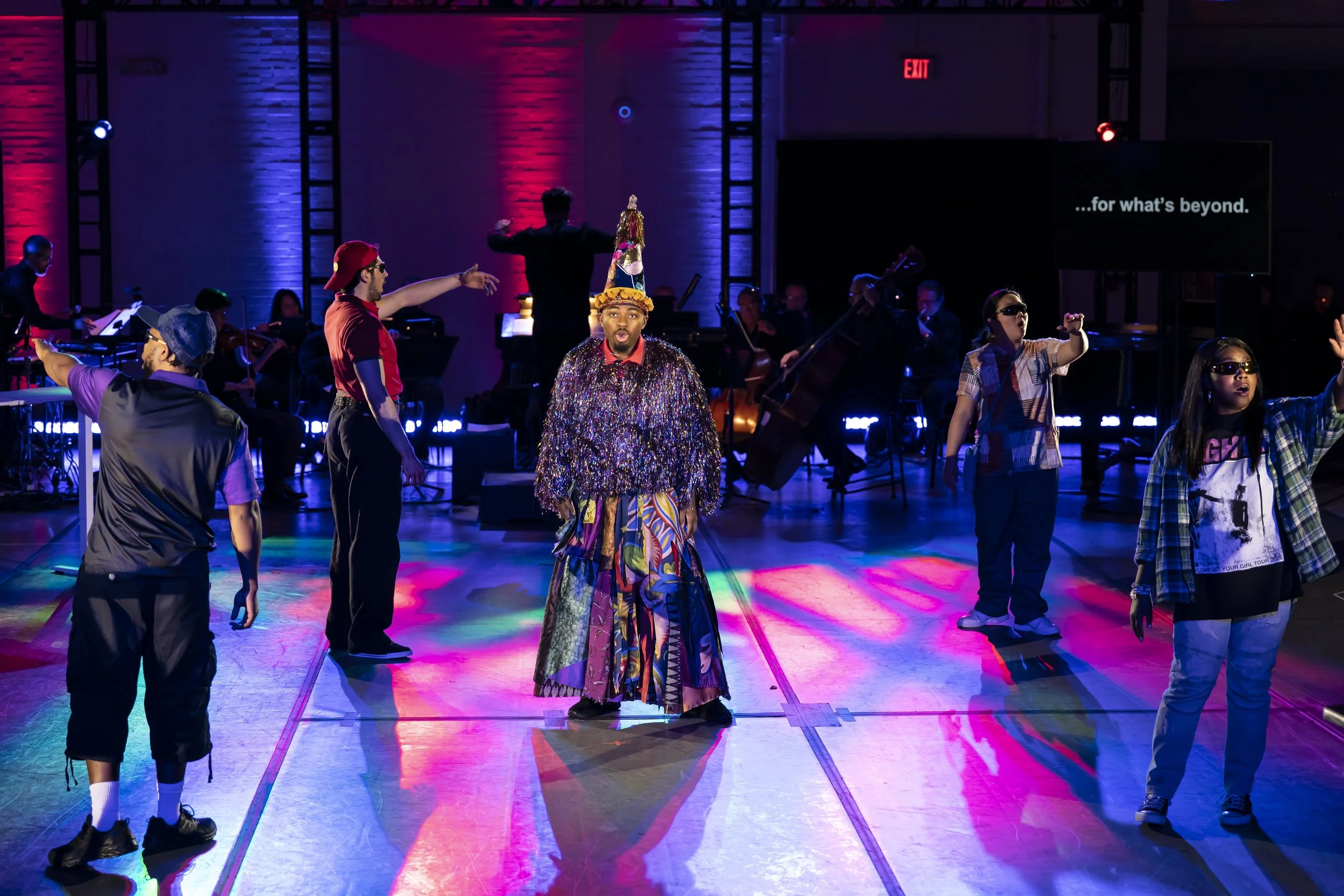
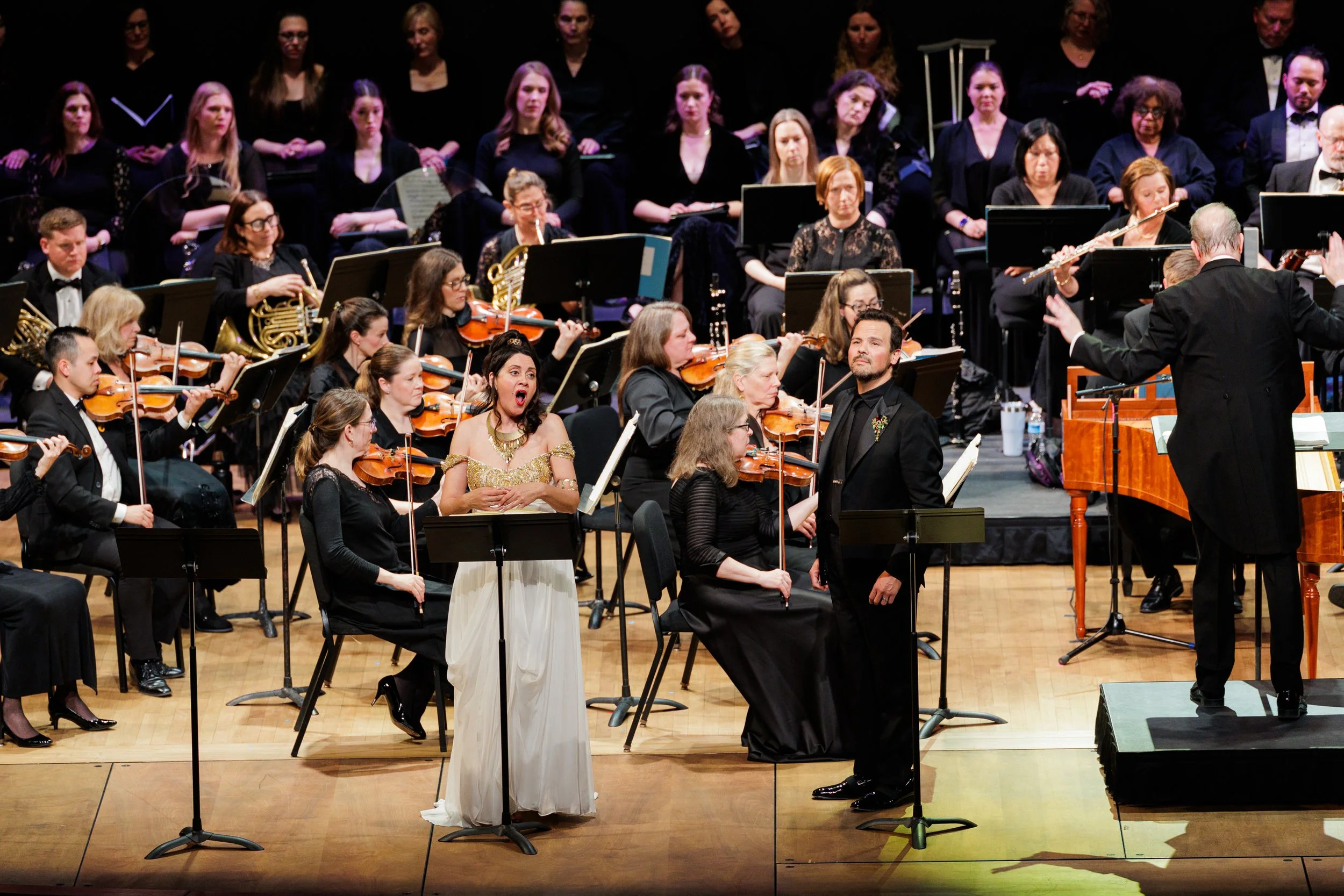
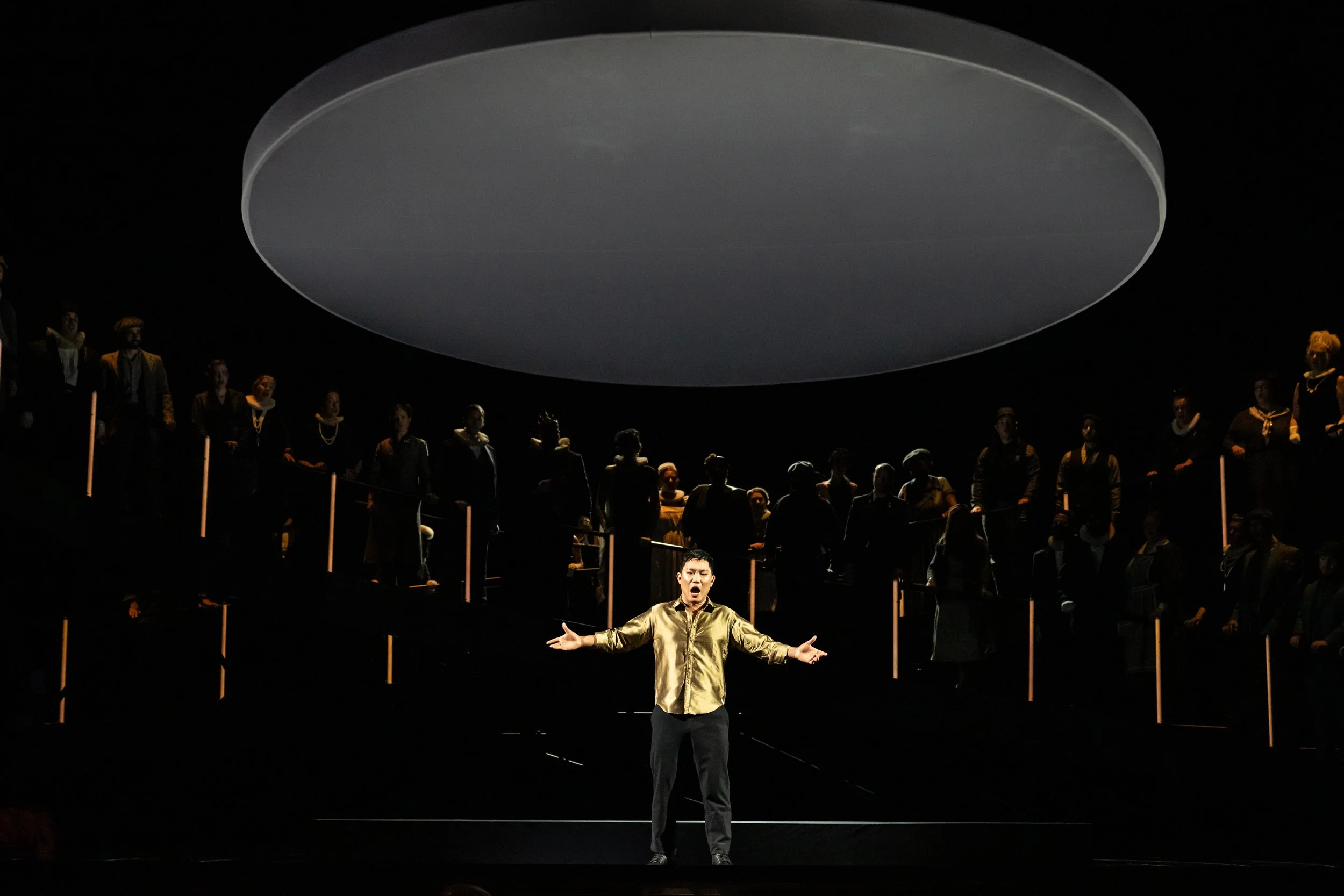
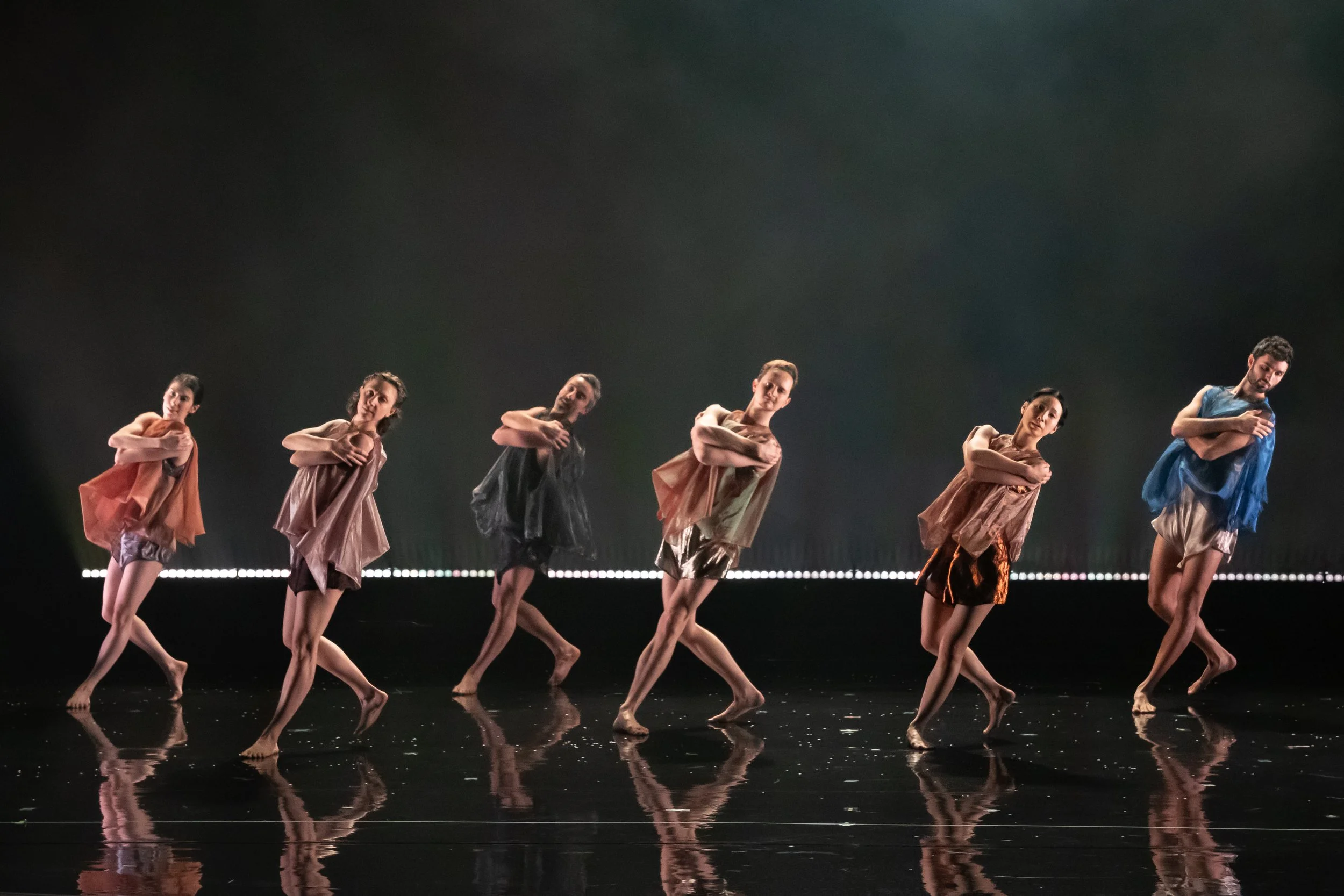
Farnace (Anthony Roth Costanzo) explains his position demonstratively. Photo by Dominic M. Mercier; courtesy of Opera Philadelphia.
To their credit, Opera Philadelphia has treated Mitridate as more than a dated opera seria by a novice, if brilliant, composer. The clearest evidence is the stellar cast, including opera luminaries Lawrence Brownlee, Brenda Rae, and Anthony Roth Costanzo. Director Griffin draws on an analogy to the HBO series “Succession”, adding a dose of reality at the end of the opera. The themes in this family drama are presented as timeless conflicts caused by the intersections of ambition – an aging ruler fearful of losing his power, two sons competing for their father’s love, power, and empire, loyalties at play, filial love clashing with romantic love, and brief redemption for characters who chose completely selfish paths. This was Mozart’s first opera commission. He was given the subject and a libretto by Vittorio Amedeo Cigna-Santi, which Gasparini had previously set to music. It is said that the veteran singers chosen for the first performance with Mozart planned to substitute arias from Gasparini’s eponymous opera from four years earlier if Mozart’s weren’t up to snuff. He made some changes to satisfy them. They chose to stay with the challenging vocals written by Mozart, which gave them a opportunities to show off their singing prowess.
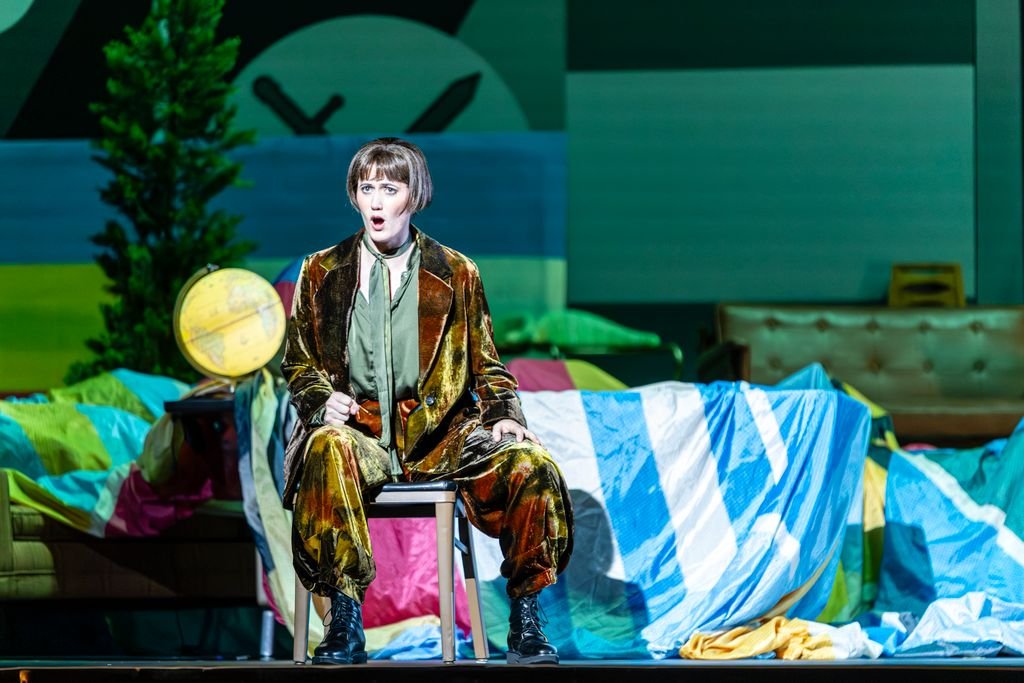
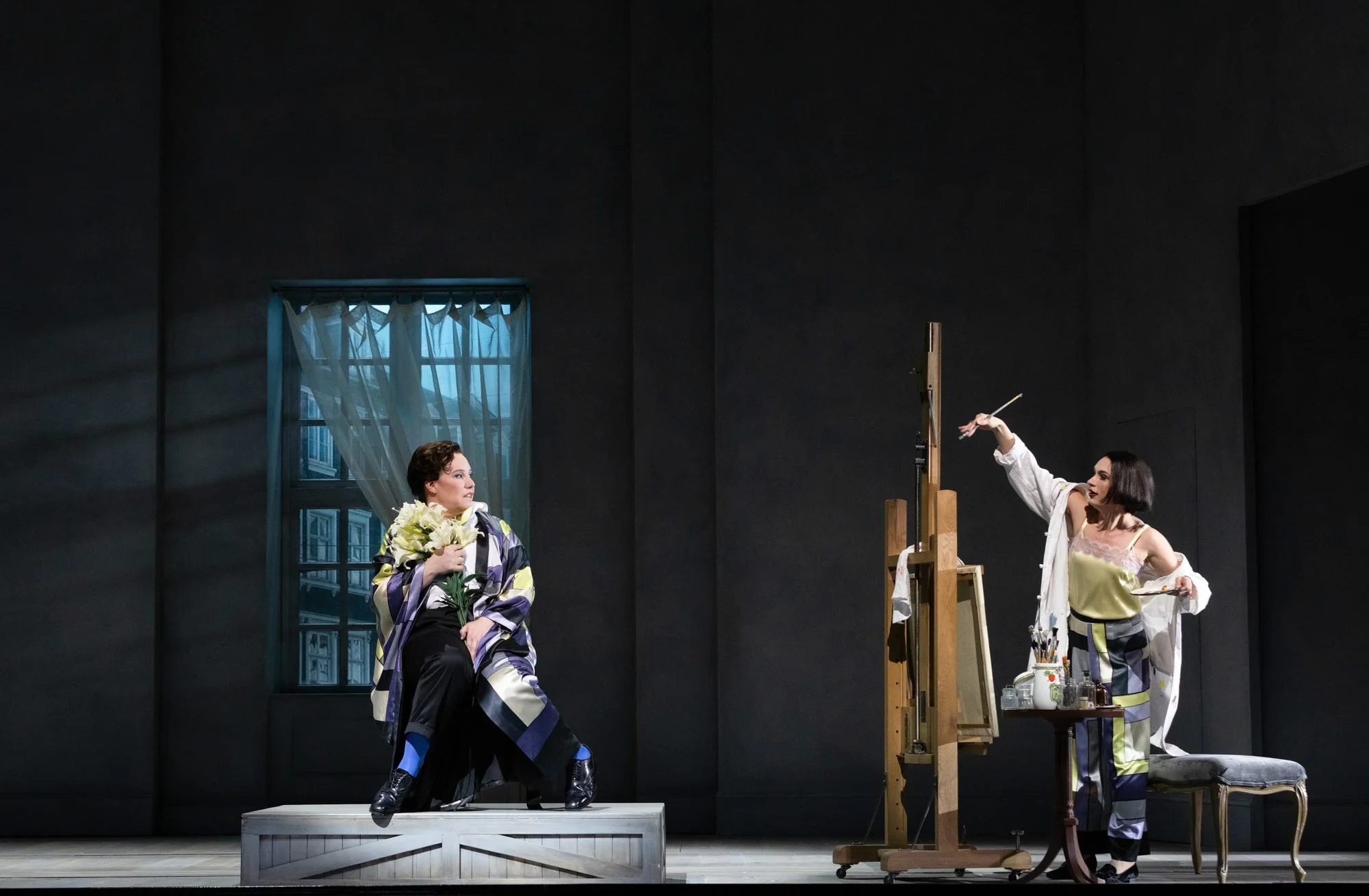
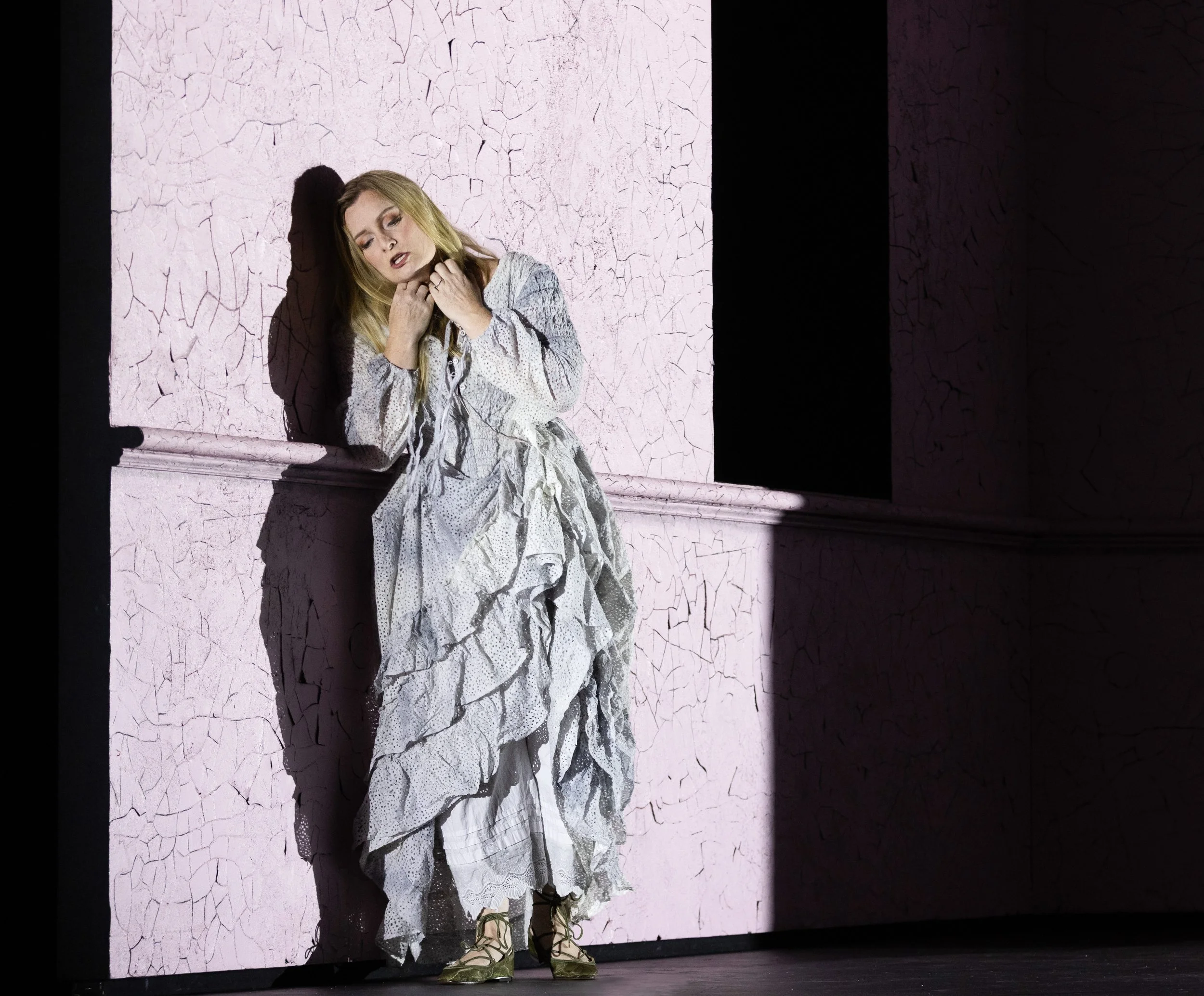
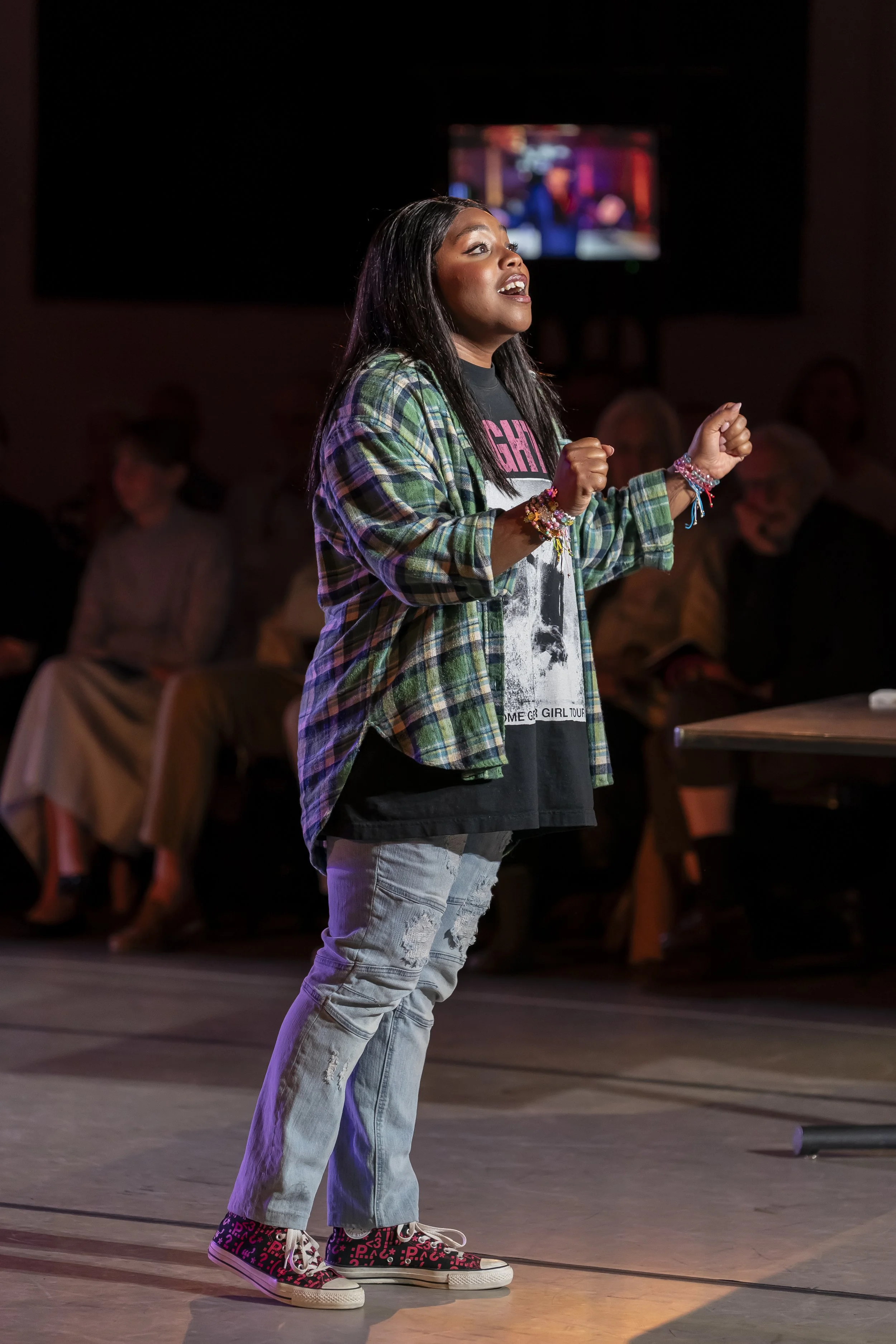
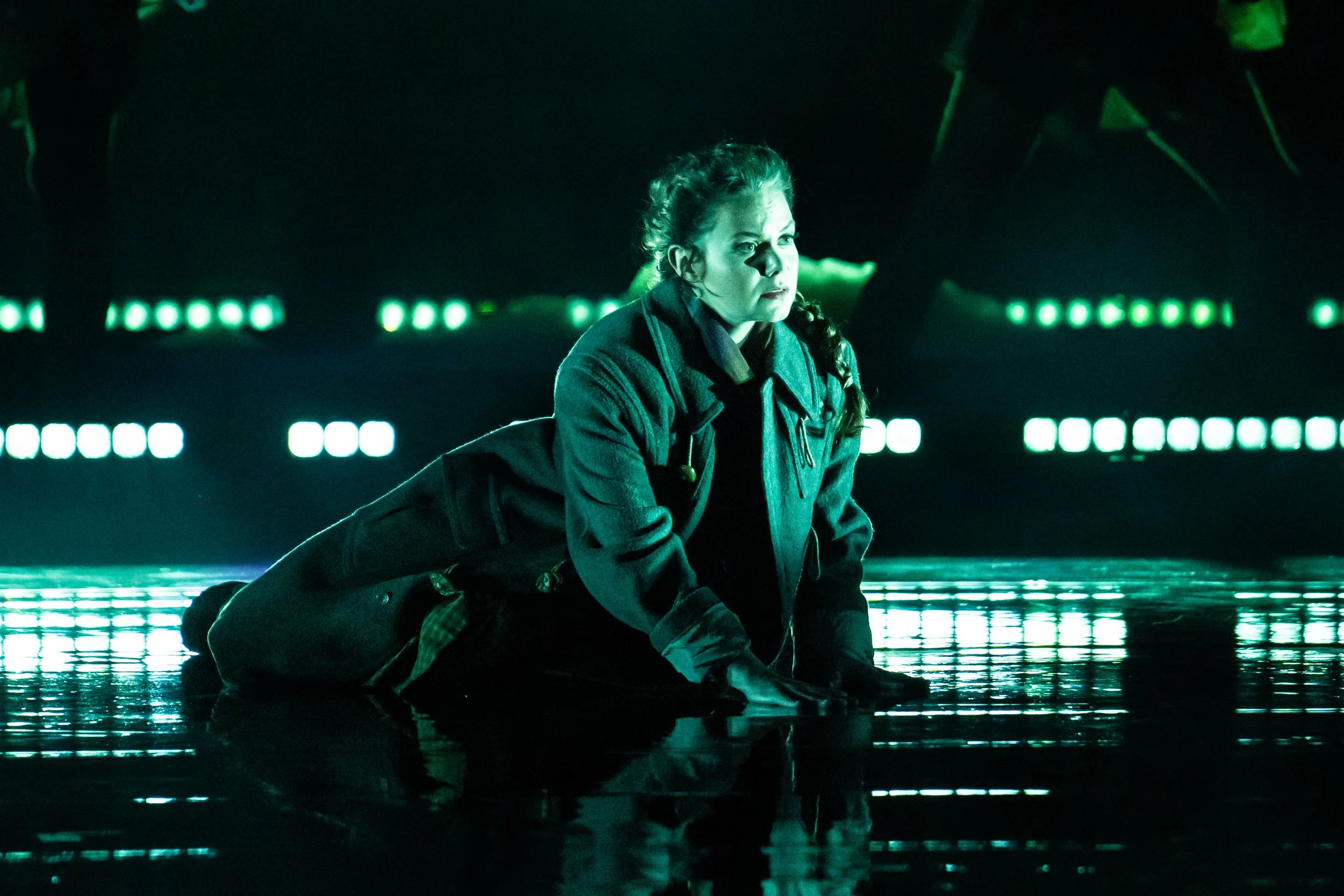
Sifare (Meredith (Wohlgemuth), the youngest son, ponders his dilemma. Photo by Dominic M. Mercier; courtesy of Opera Philadelphia.
Opera Philadelphia’s cast met and exceeded the challenges presented by Mozart’s arias. This was a period where baroque opera was giving way to classical opera. Opera seria had a strict format, which Mozart mostly followed for his first opera. Baroque opera was designed to give singers the freedom to embellish the arias as they had the ability and inclination. In Mozart’s better-known operas, I have always felt he was the champion at ensemble writing. In OP’s performance of Mitridate, I recall only two ensemble numbers, one between Aspasia and Sifare, and the finale for the main characters and chorus. The individual singing challenges and opportunities remain today. OP’s production stayed true to the libretto to the end. Interestingly, the opera was a success when first presented but then lay unperformed for 200 years; a modest revival began with a 1971 production. (As an aside for DC opera fans, I’m rather surprised Washington Concert Opera’s hasn’t gone there already).
Opera superstar Lawrence Brownlee played the lead, Mitridate. Interestingly, he serves on the OP Board and was instrumental in getting Boston Lyric Opera to perform the opera in 2024. Thus, OP’s interest. Also interesting, his costar in BLO’s production was opera superstar soprano Brenda Rae, who played Aspasia. When soprano Lauren Snouffer withdrew from the production a week before opening night, OP called on Ms. Rae, who accepted the challenge. Oh, and the other superstar performer, that’s countertenor Anthony Roth Costanzo, who also happens to be General Director and President of Opera Philadelphia. Costanzo points out that Ellen Trainer, president of the Philadelphia Musicians’ Union, plays viola in this production, which makes the production almost an episode of “All in the Family”. Lucky OP fans.
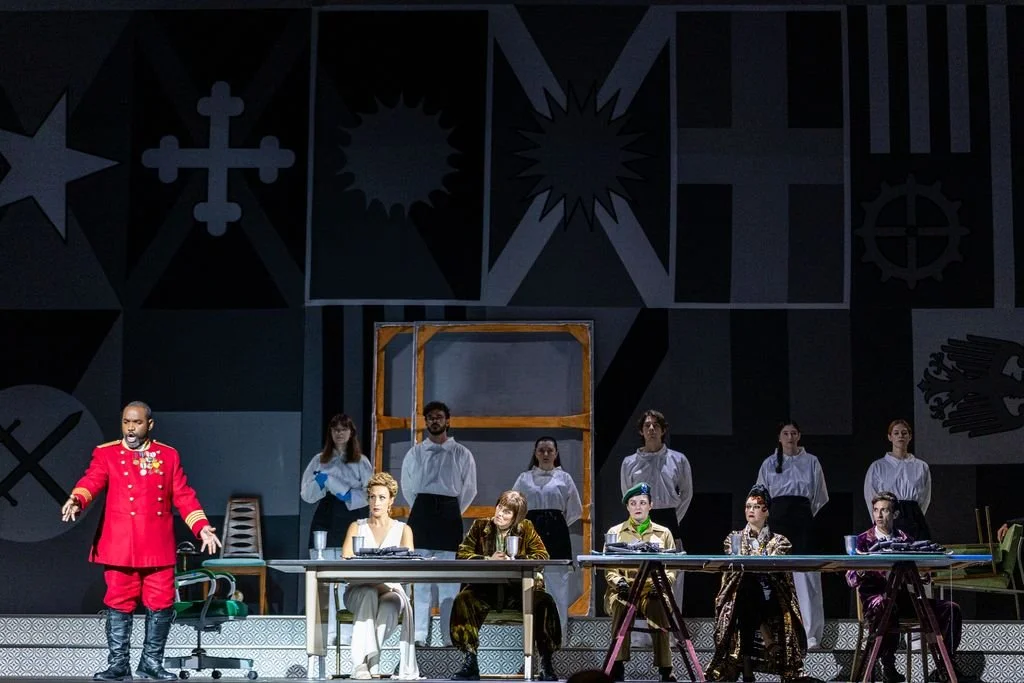
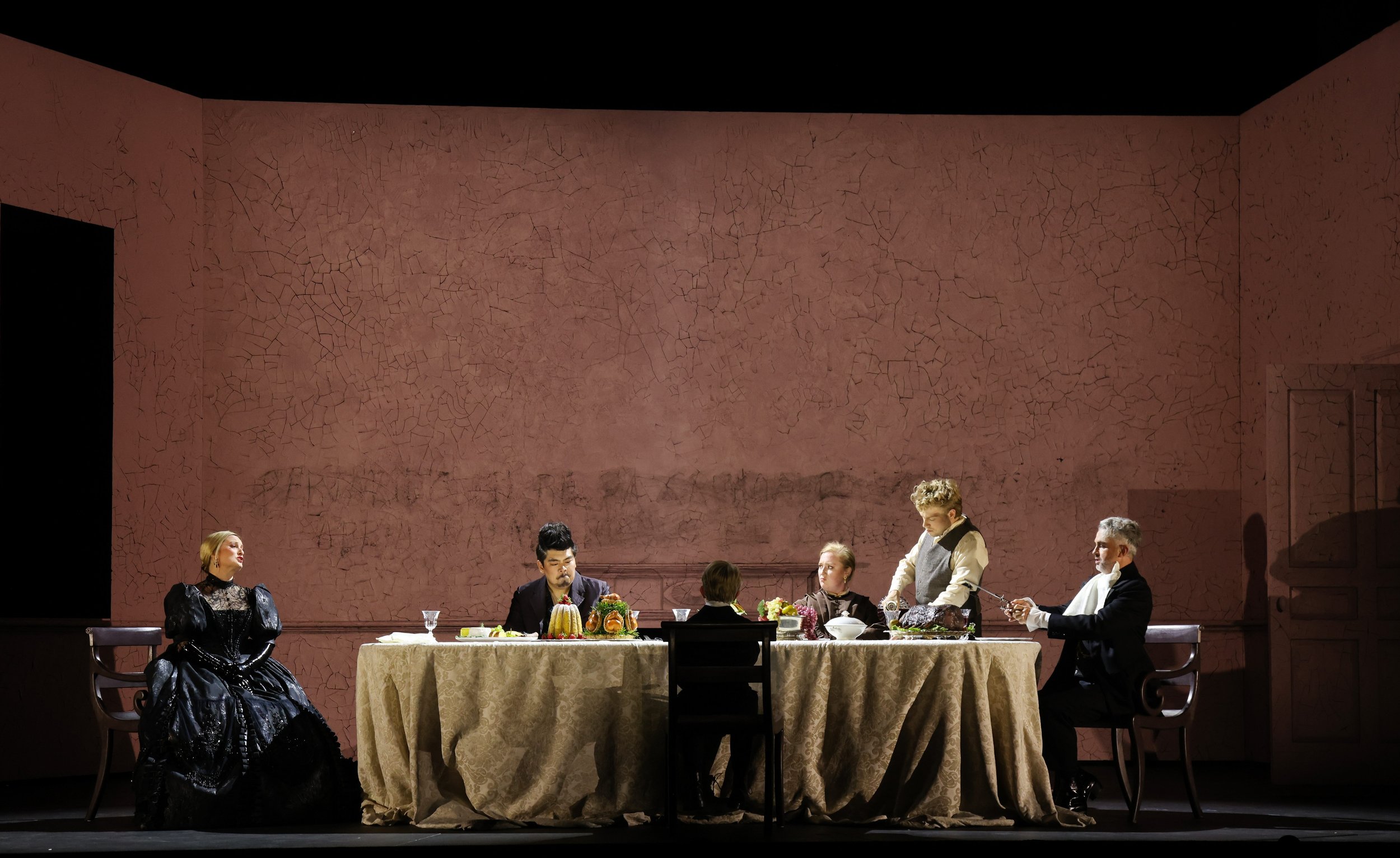
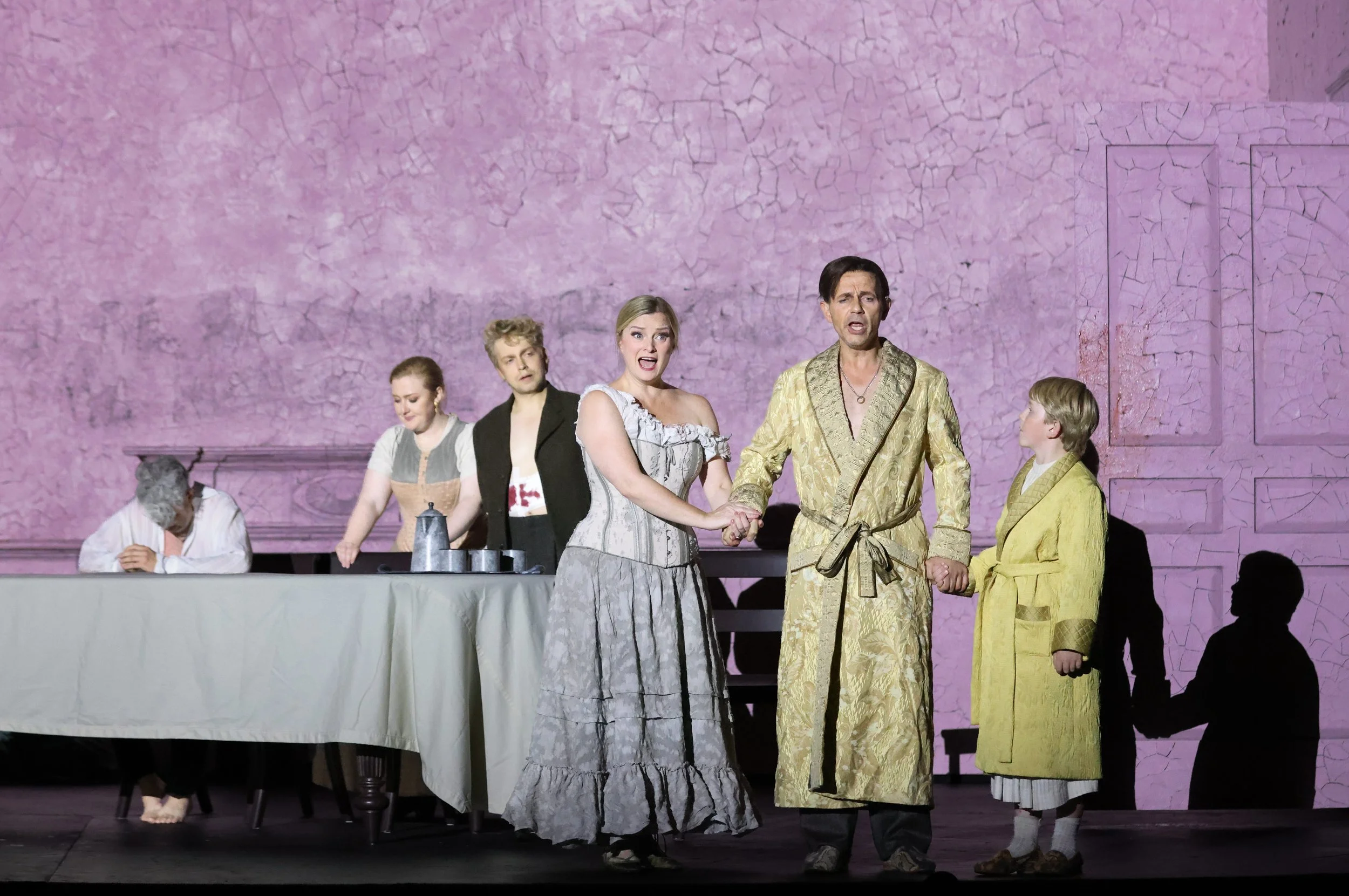
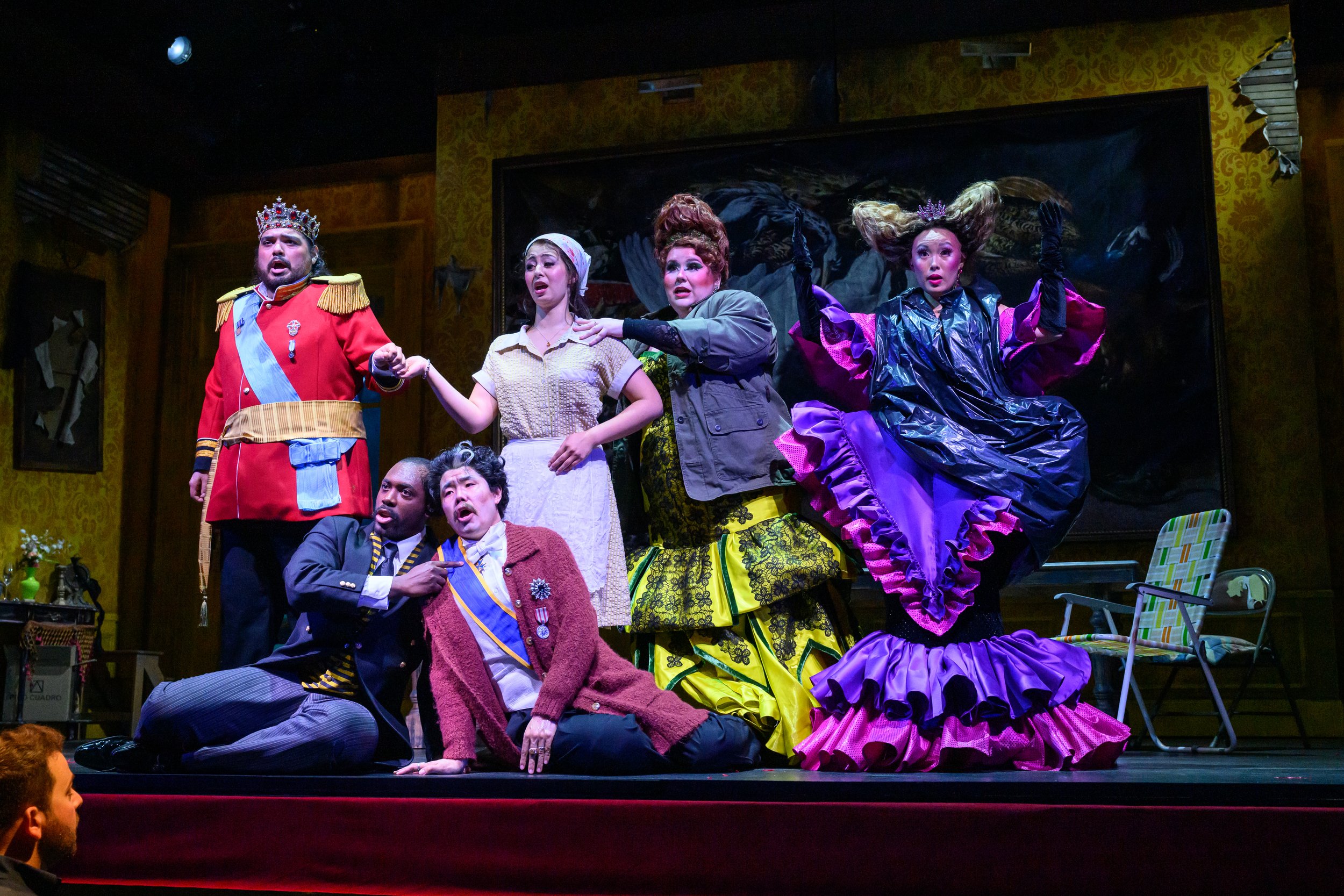
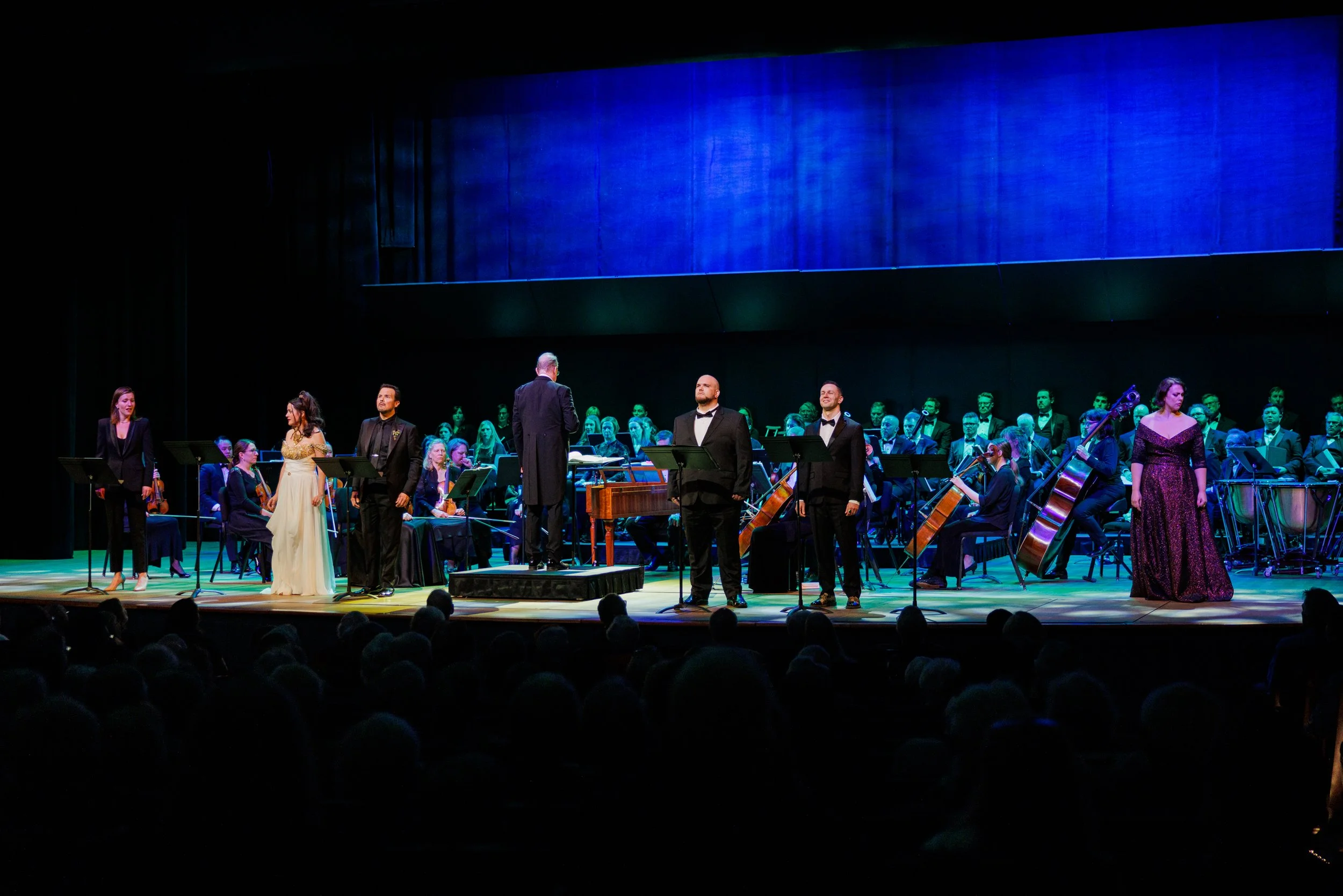
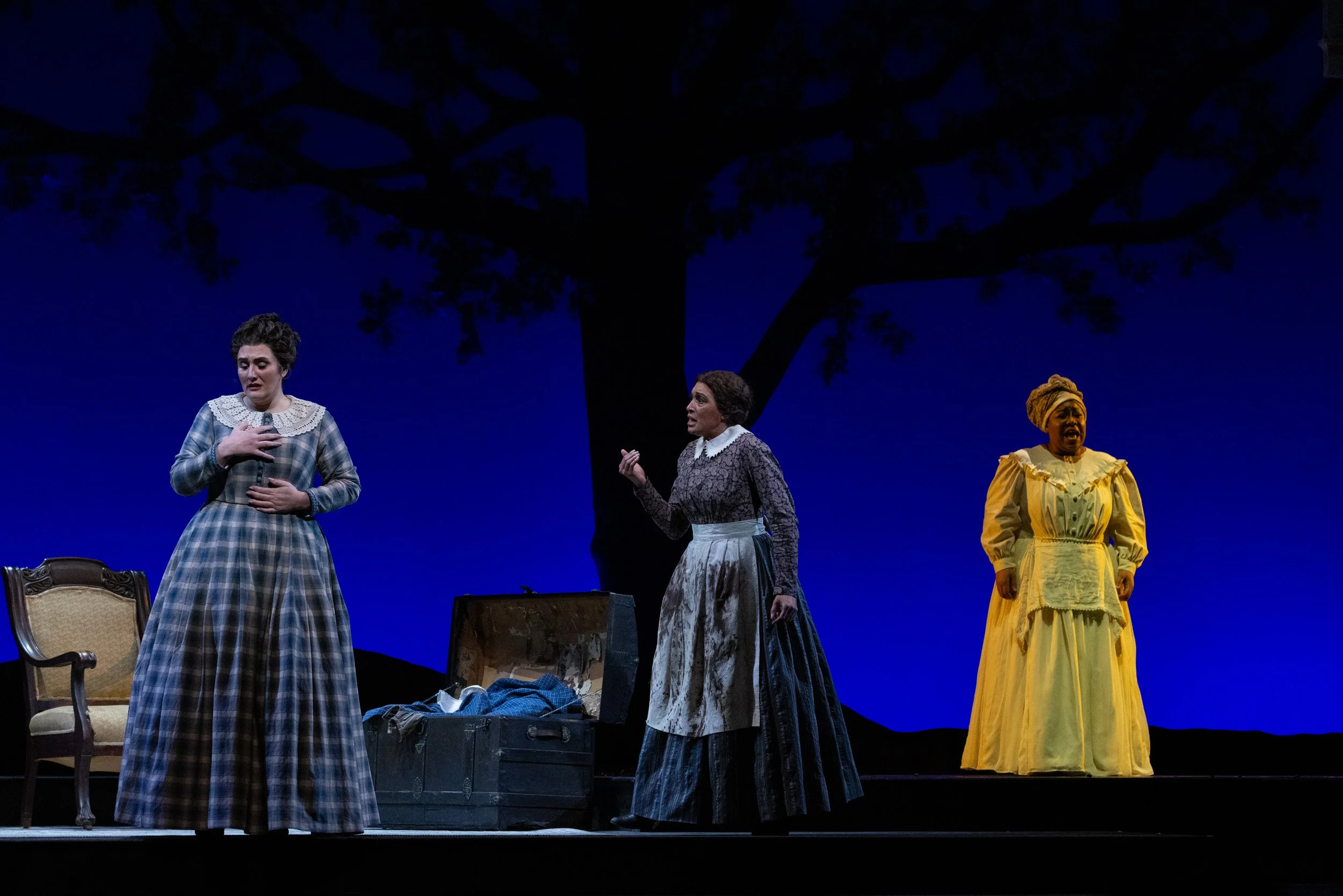
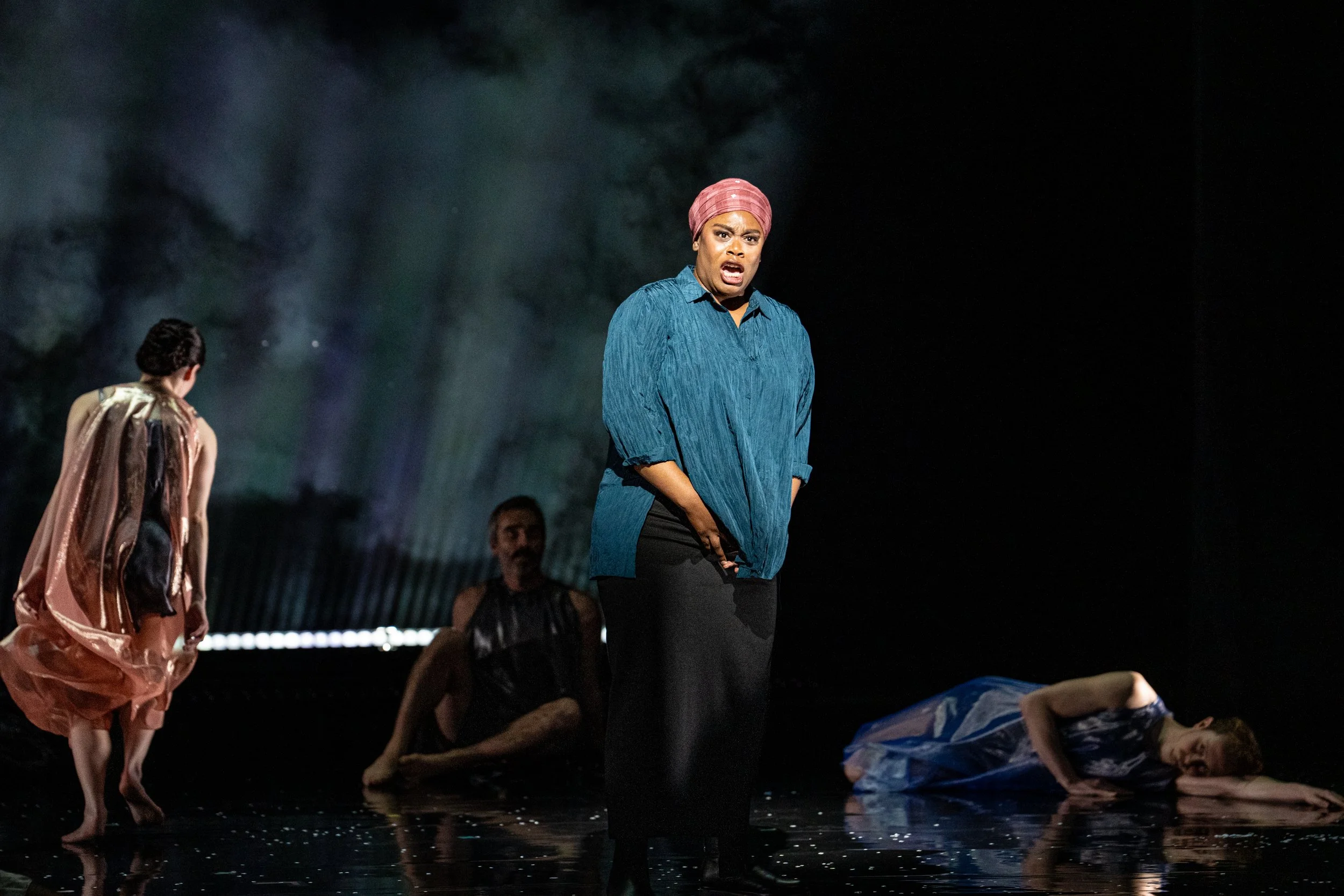
King Mitridate (Lawrence Brownlee) assembles the team for an angry confrontation, including Aspasia (Brenda Rae), Silfare (Meredith Wolgemuth), Arbate (Sarah Coit), Ismene (Nola Richardson), and Farnace (Anthony Roth Costanzo). Photo by Dominic M. Mercier; courtesy of Opera Philadelphia.
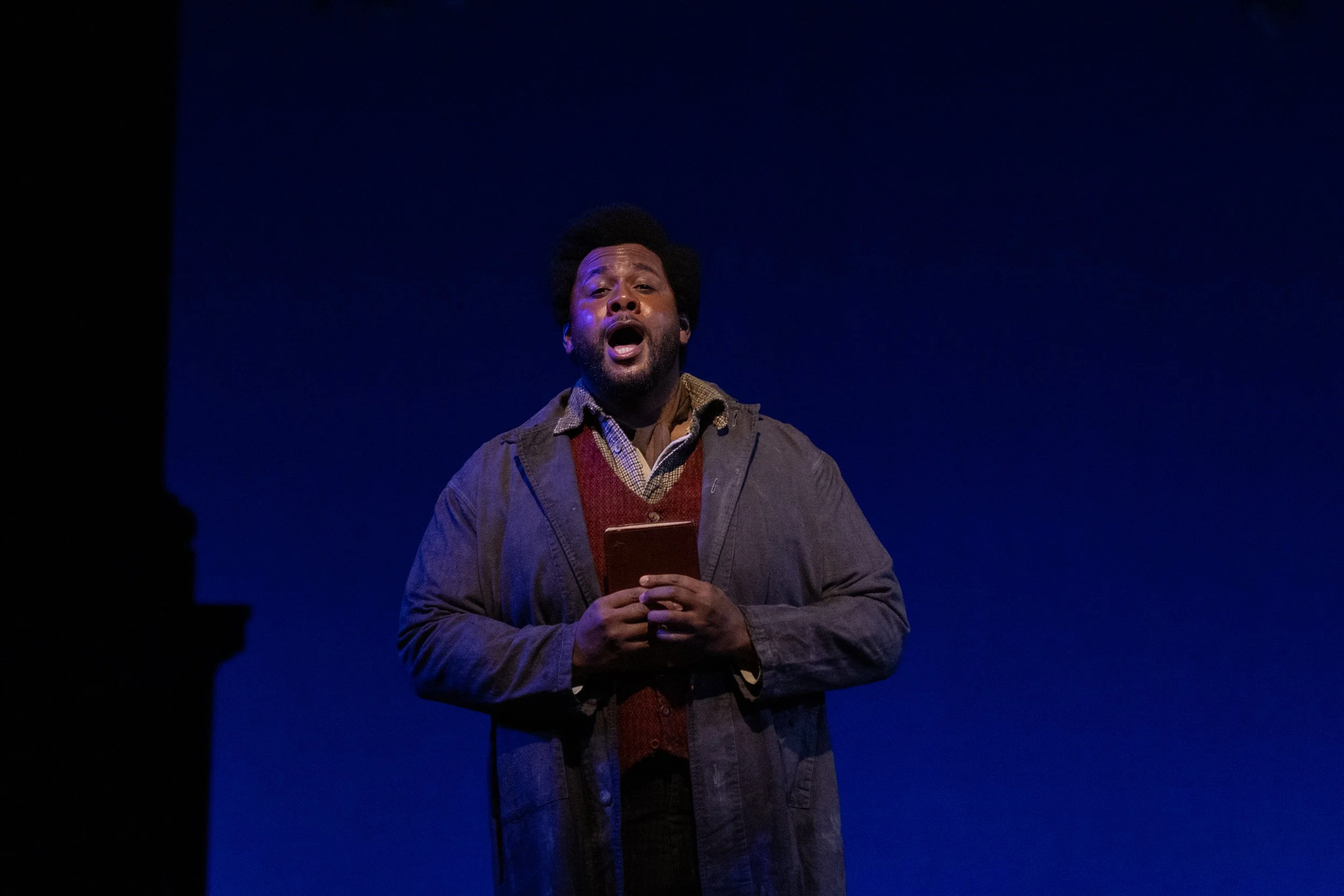
It was so much fun to hear Lawrence Brownlee sing once again, pleasant always and exciting when he turns up the heat, that shimmering tenor voice turning to glowing. As Mitridate, his acting was also excellent, giving us a domineering tyrant who showed his love for his sons in the end. Soprano Brenda Rae’s vocal beauty and virtuosity were a pleasure, and her acting was convincing; her vocal performance was especially impressive given that she joined the troupe less than a week before opening night. I never tire of seeing countertenor Anthony Roth Costanzo perform on stage, showing his acting creds as well as singing acumen; it’s hard to take your eyes off him. His singing moves easily from emotionally expressive and dramatic to a sublime softness in certain passages. Since the director drew an analogy to “Succession”, Roth’s slouchy manner on stage compelled me to think of him as the damaged, smart-alecky, scheming youngest son, Roman, in that show; really, his name was Roman. Conferring with the Romans behind his father’s back, not a good idea by Farnace, but wanting a peace with treaty with Rome was. Rounding out the quadrangle as Sifare was relative newcomer soprano Meredith Wohlgenmuth. Remember that name. When you hear her sing, you won’t be surprised that she was a grand prize winner in the 2023 Met Opera Laffont Competition. She sings beautifully, both in soft and dramatically charged vocals, and her vocals were as compelling as anyone else’s. When she sang her first aria, I thought, okay, she belongs. Her and Ms. Rae’s duet, the only one in the opera, was gorgeous and a highlight of the evening.
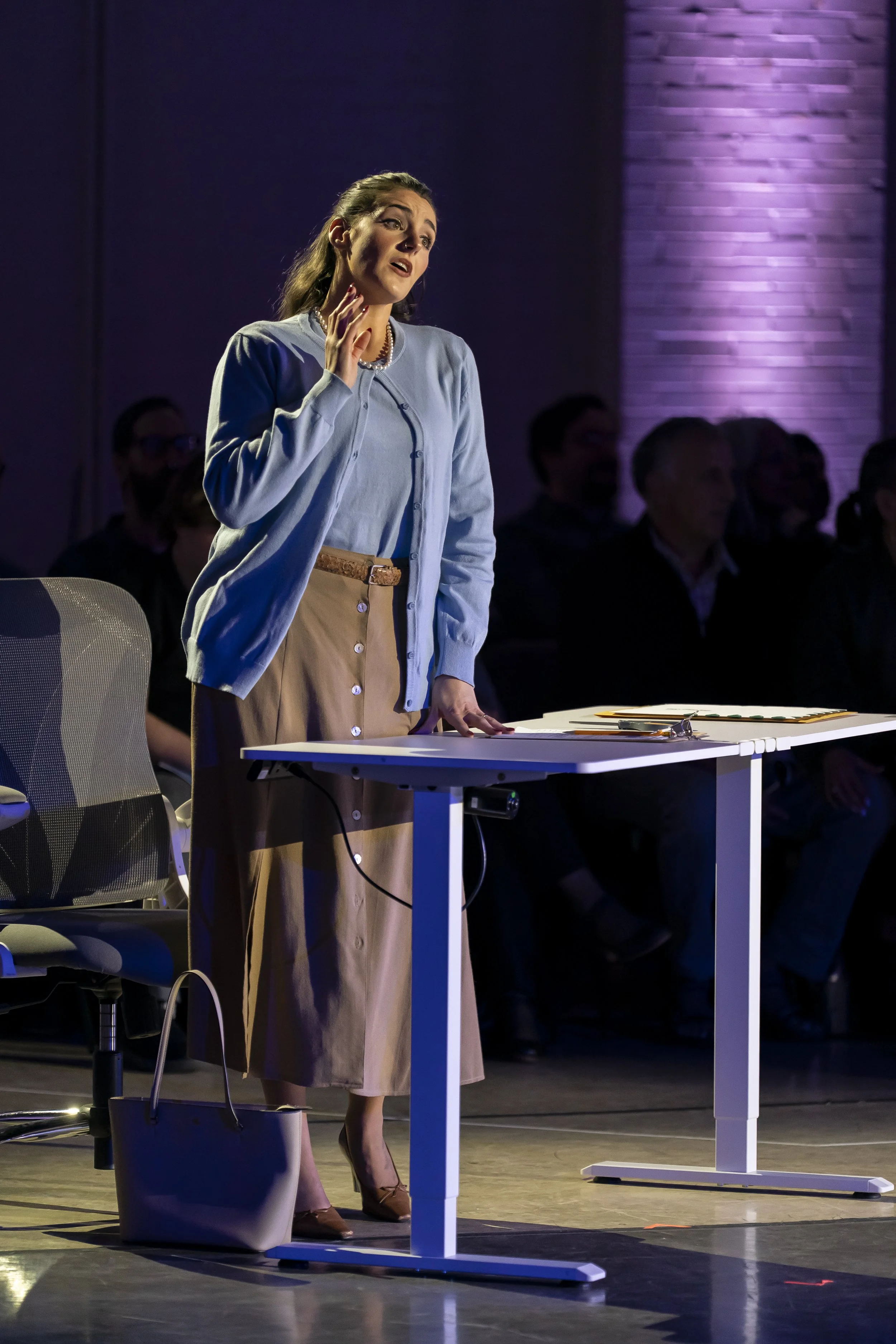
When I heard the supporting players - Nola Richardson as Ismene, who was jilted by Farnace and chose to hang in there; tenor Minghao Liu as the duplicitous Marzio, Farnace’s Roman handler; and Sarah Coit as Arbate, Mitridate’s friend trying to bring reason and reality to the court. As each one sang for the first time, I thought, ‘wow, OP raided the terrific singer cookie jar one more time’. Richardson’s Ismene might have been my favorite character, as she embellished her performance as the endearing Ismene with a beautiful voice and singing. Liu was good overall, then turned in a drop-dead gorgeous aria in his chance in the spotlight. And Coit also sang really well and made a nice guy noticeable.
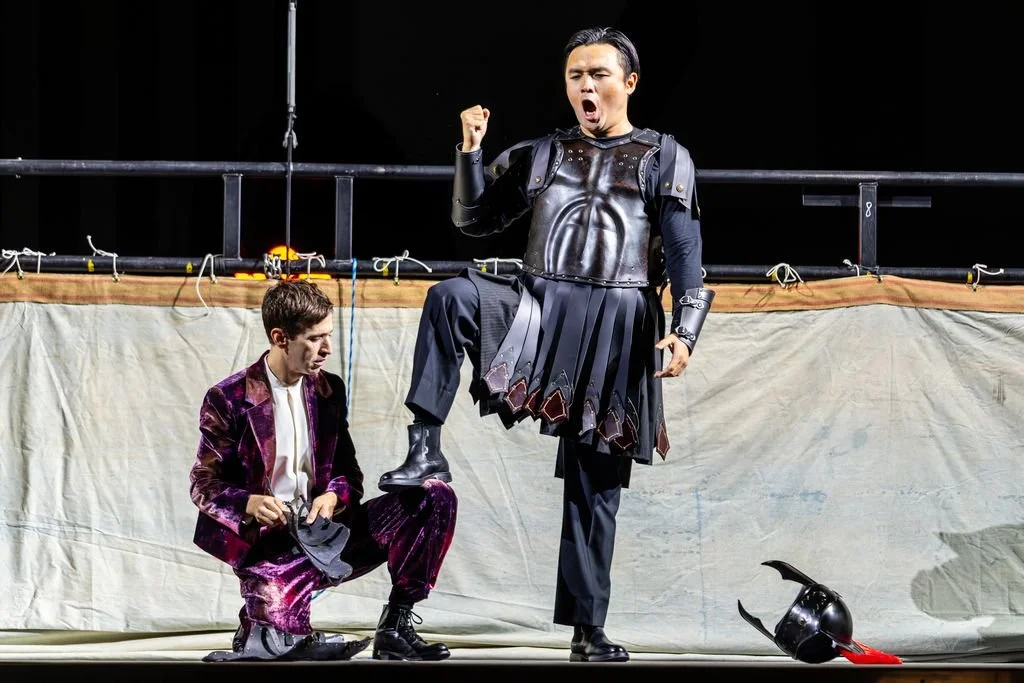
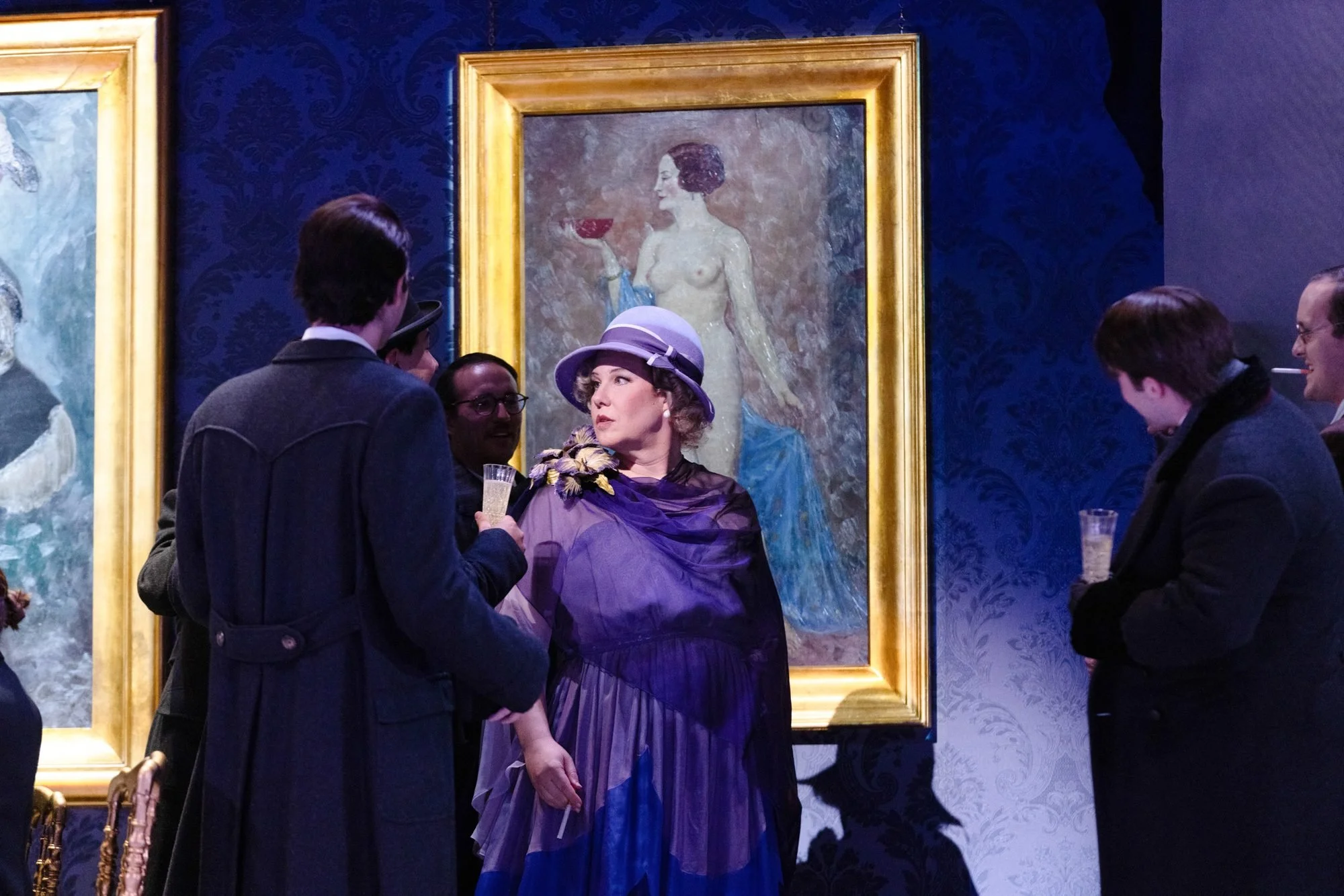
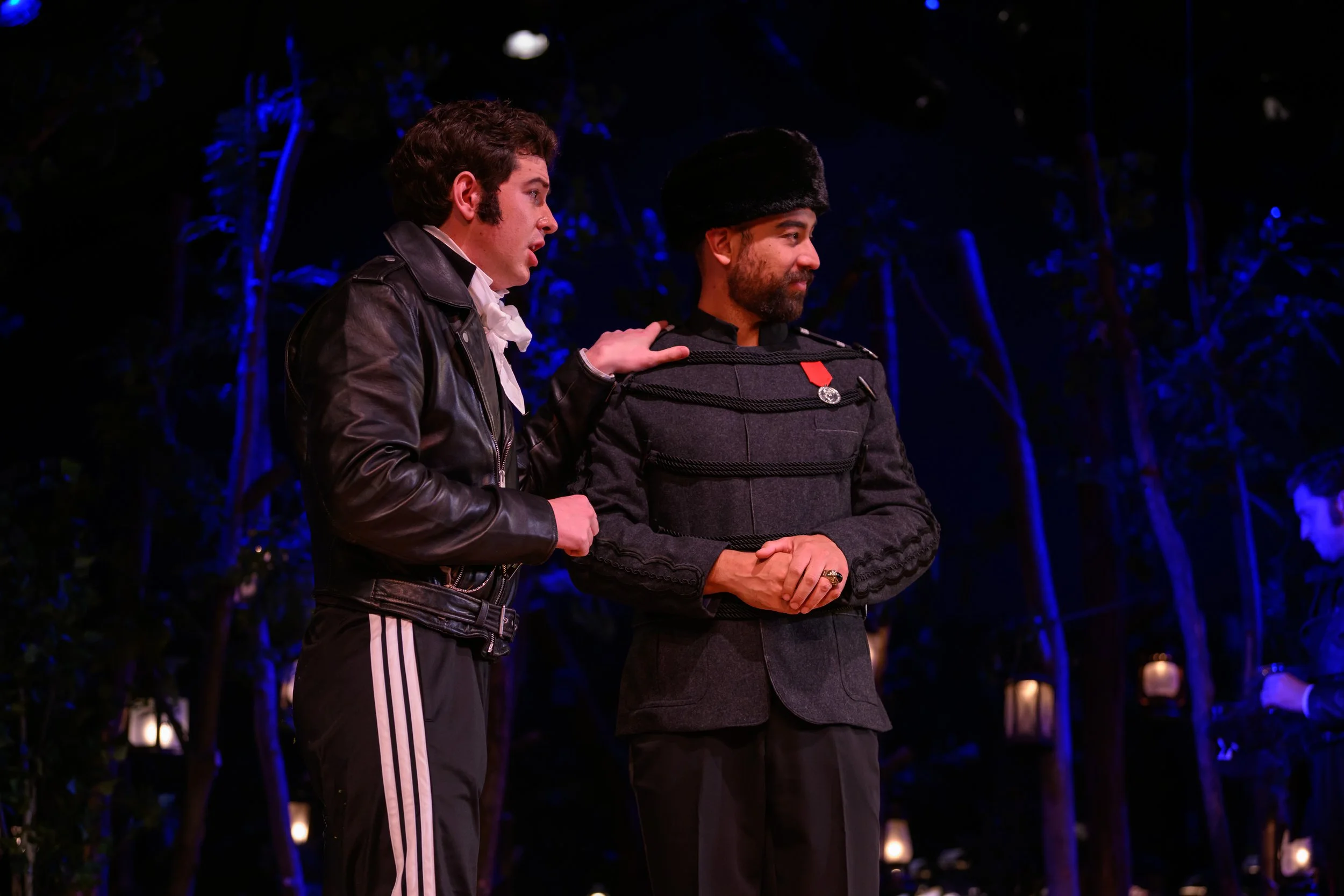
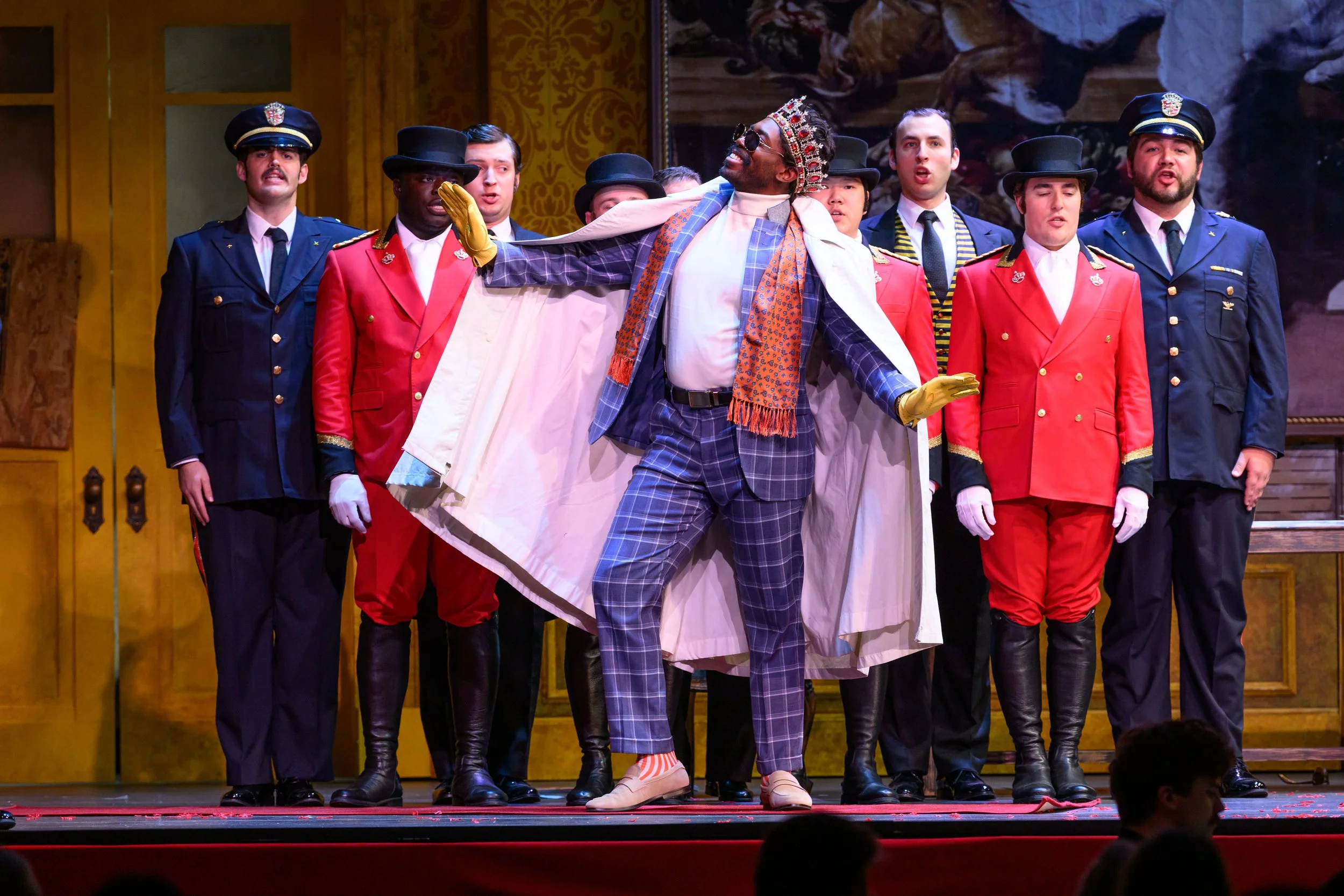
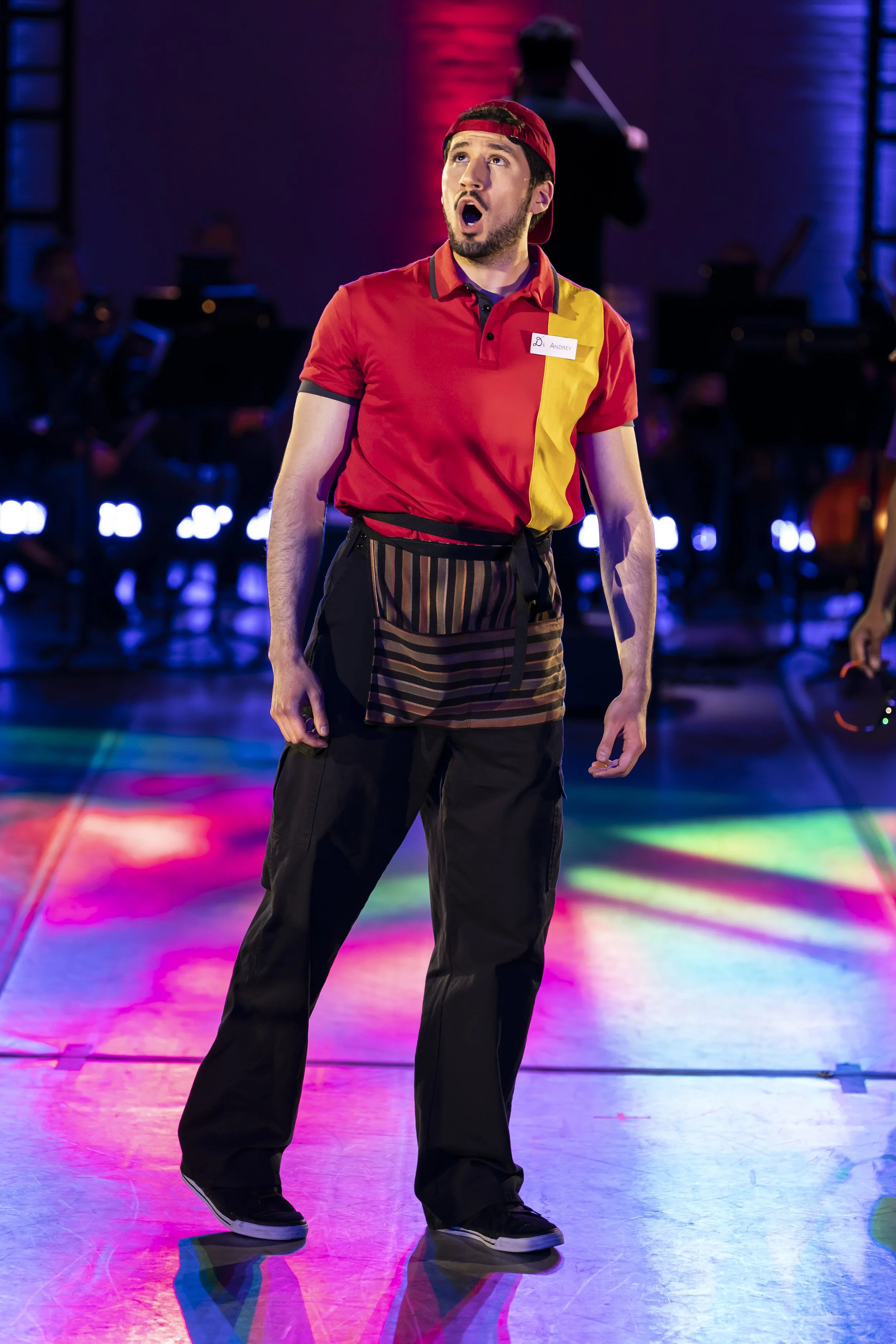
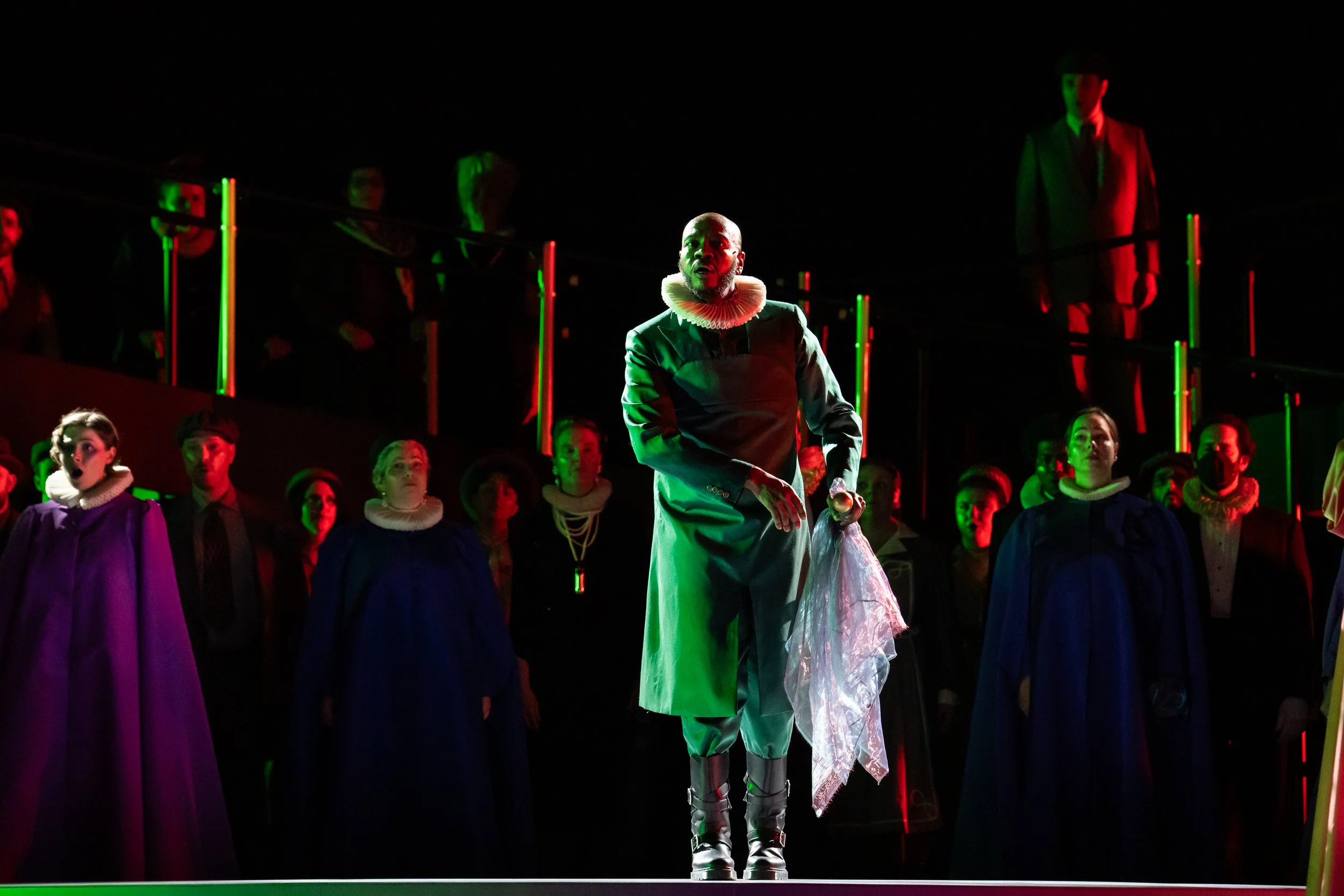
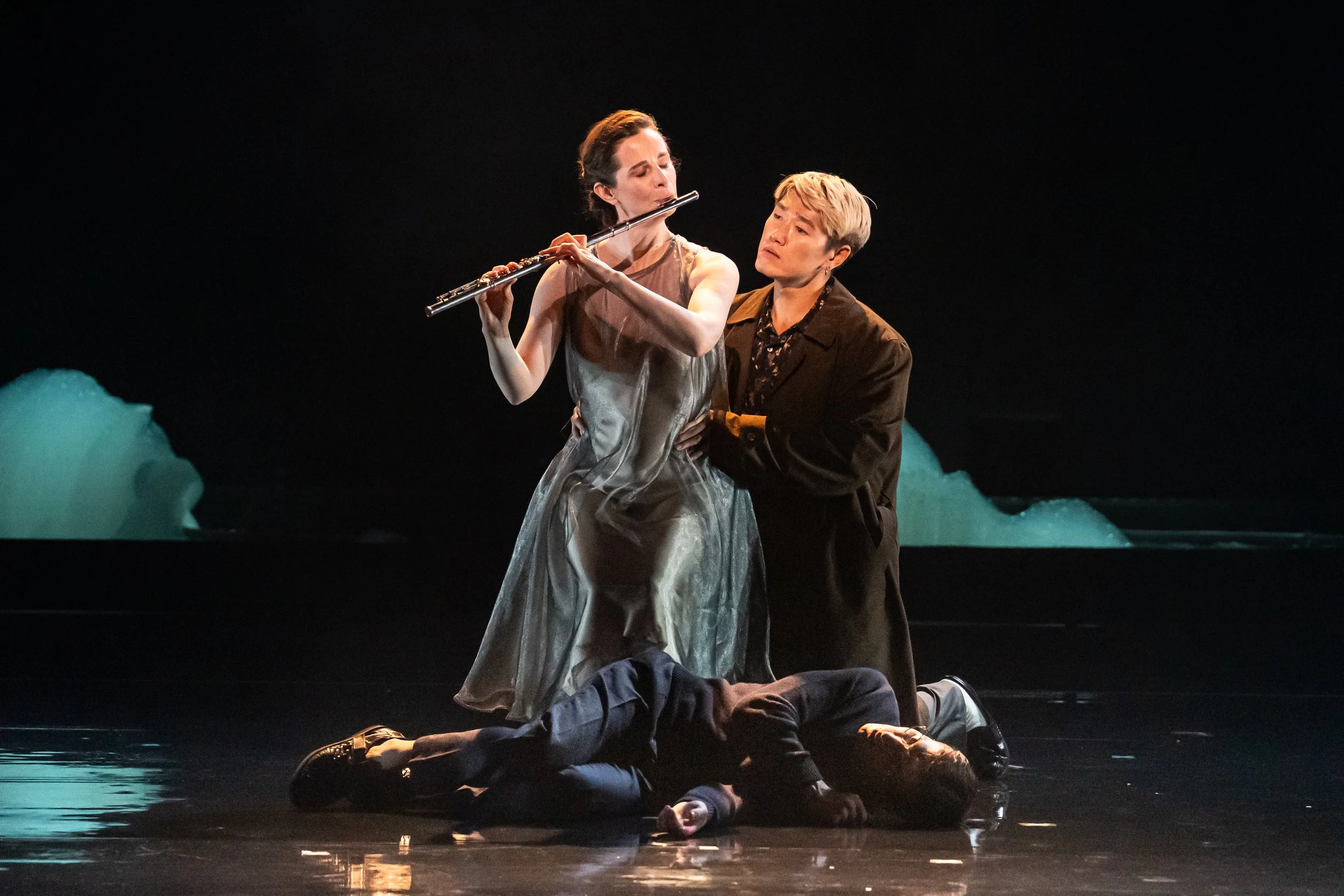
Farnace (Anthony Roth Costanzo) assists the Roman envoy (Minghao Liu) donning his armaments. Photo by Dominic M. Mercier; courtesy of Opera Philadelphia.
You might have noticed there were five male characters in the opera but only three males in OP’s performance. Mozart originally wrote the male roles of Farnace, Sifare, and Abate for high-voiced castrati. None of those are around today, so it is common to use sopranos/mezzo sopranos for those roles, and more recently, countertenors. Countertenor John Holiday sang the role of Farnace in the BLO production.
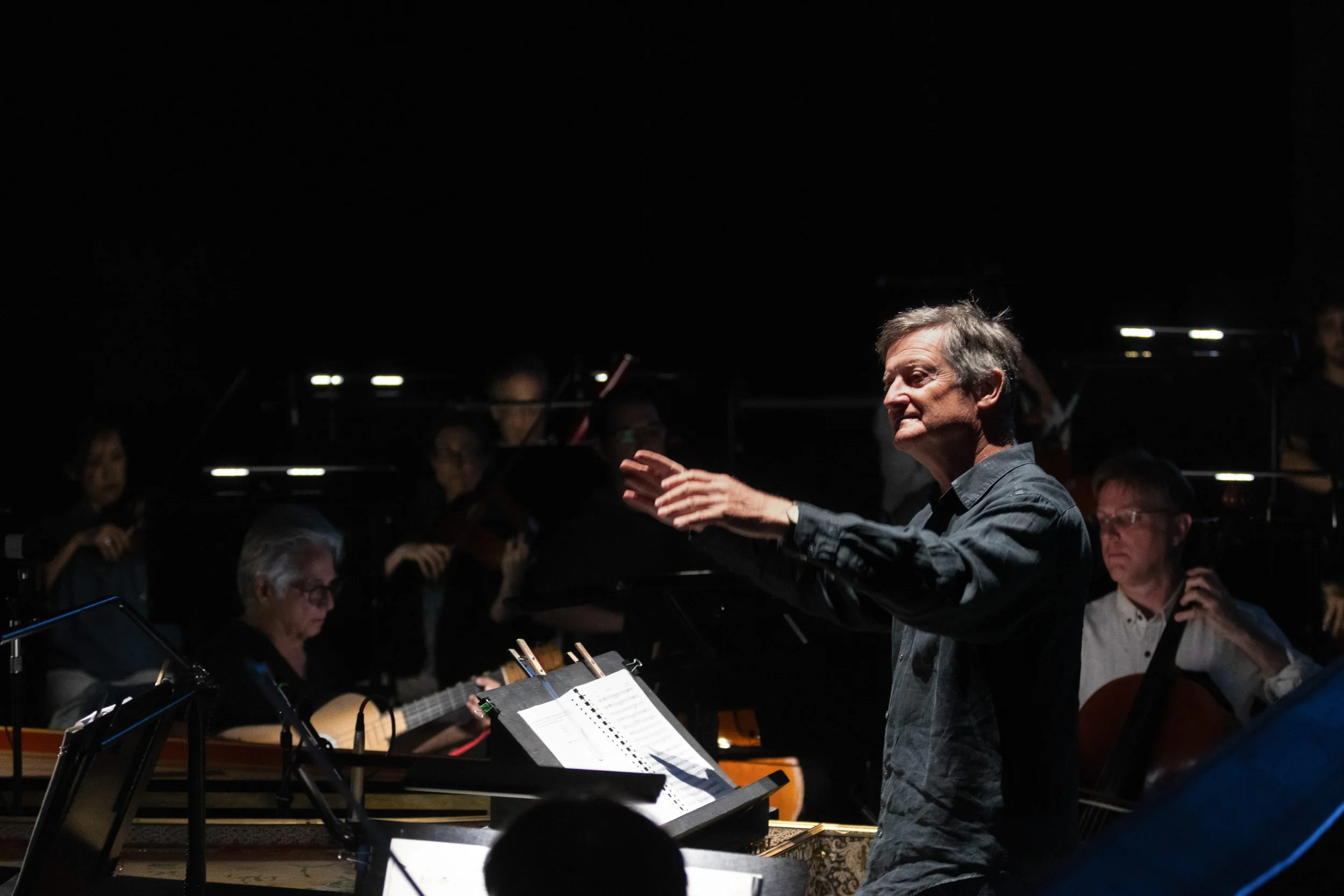
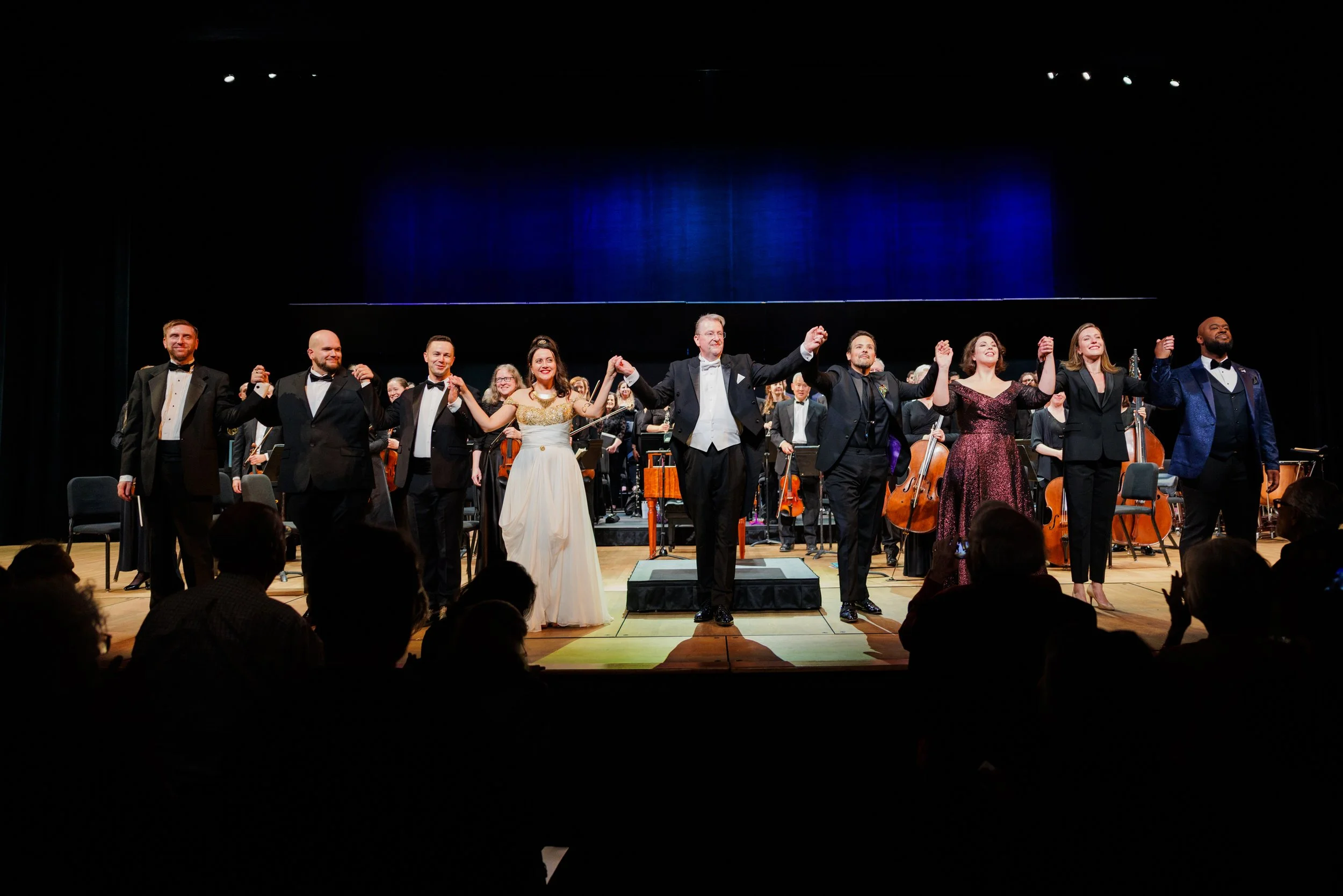
I thought the Opera Philadelphia Orchestra led by Maestro Corrado Covaris sounded great. I detected no issues with singer coloring or singer/orchestra coordination. My wife pointed out that, under the direction by Conductor Covaris, the orchestral sound supported but did not overwhelm the vocals being sung. The orchestral volume was strong when the arias were strong and soft when the arias were soft, very enjoyable.
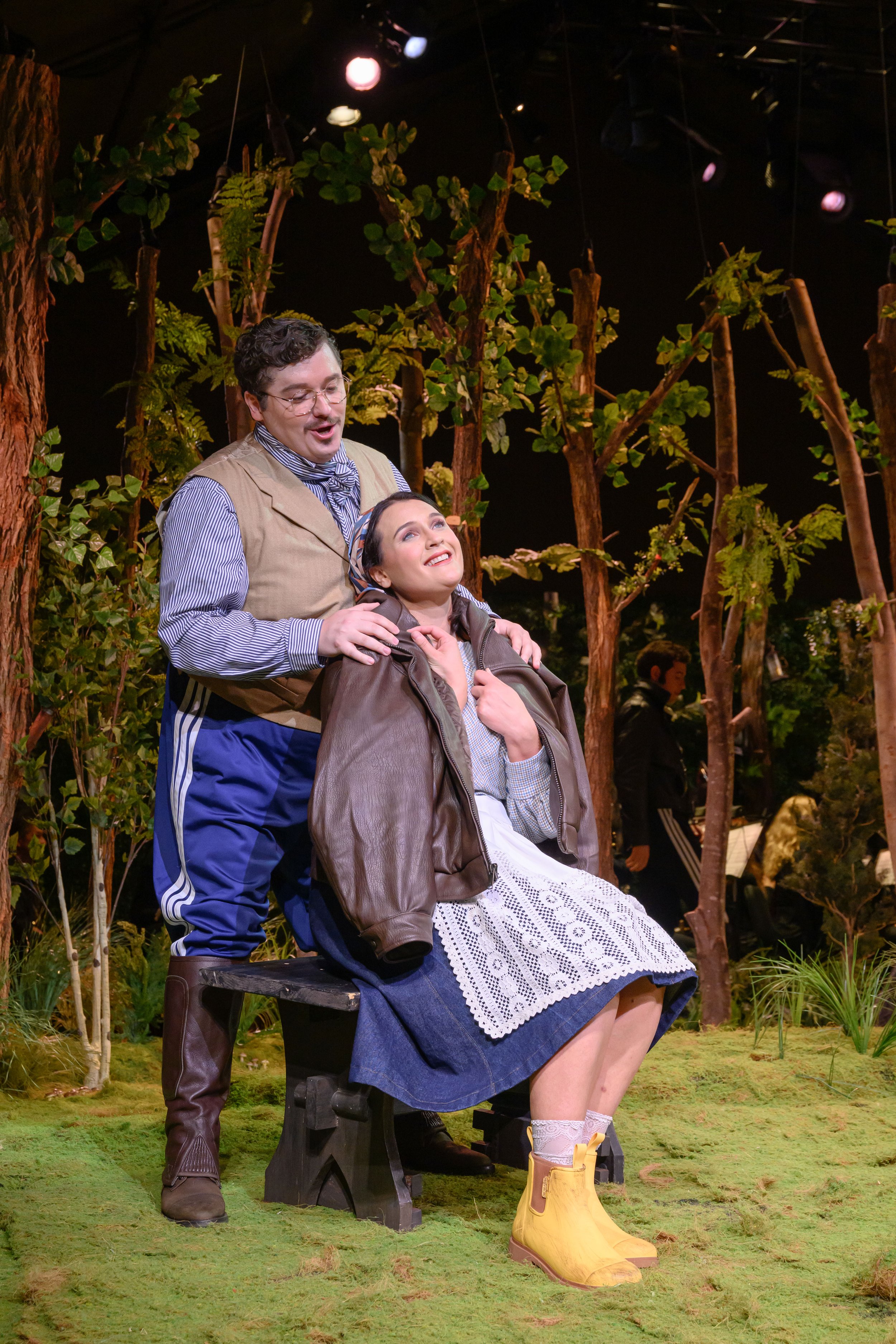
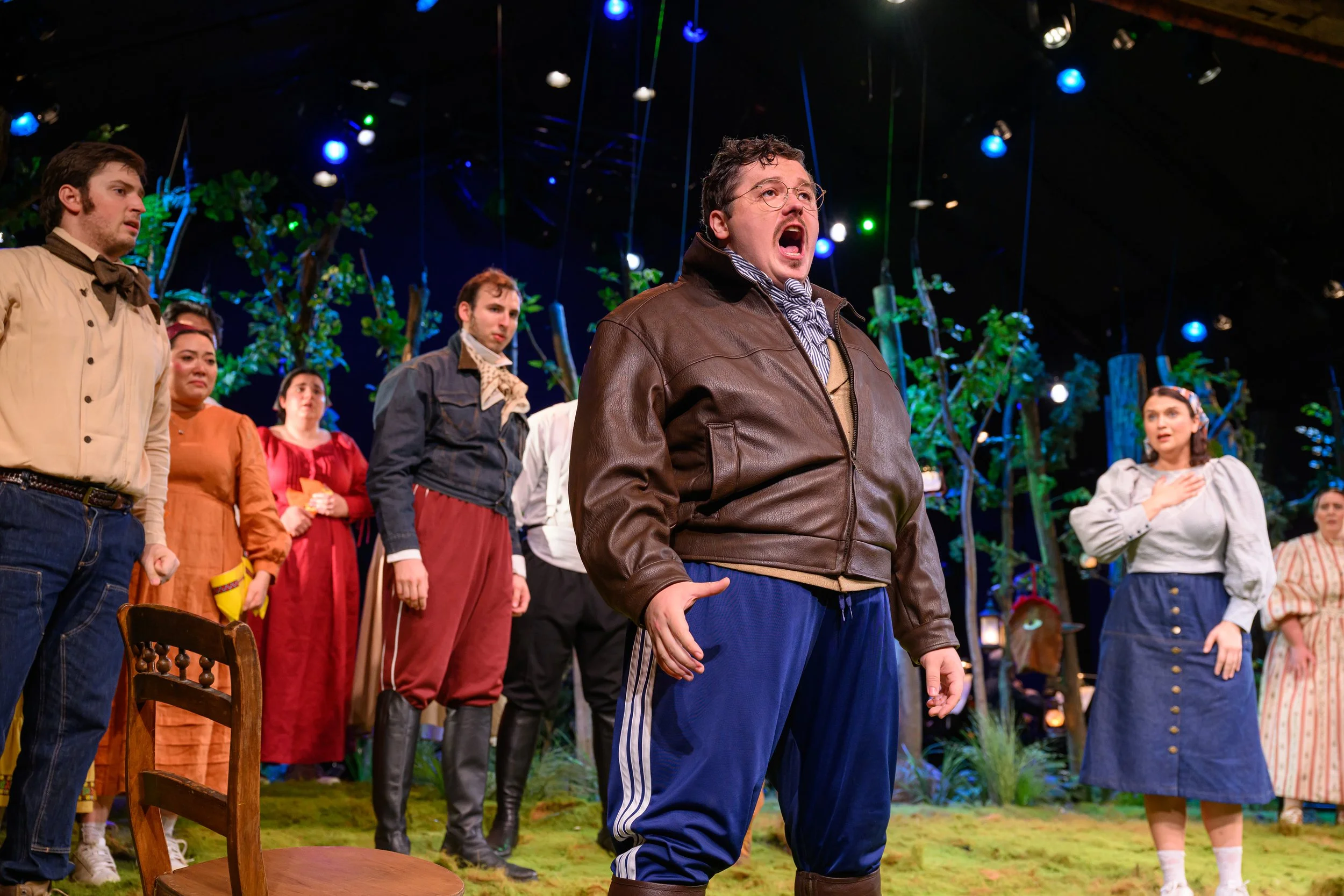
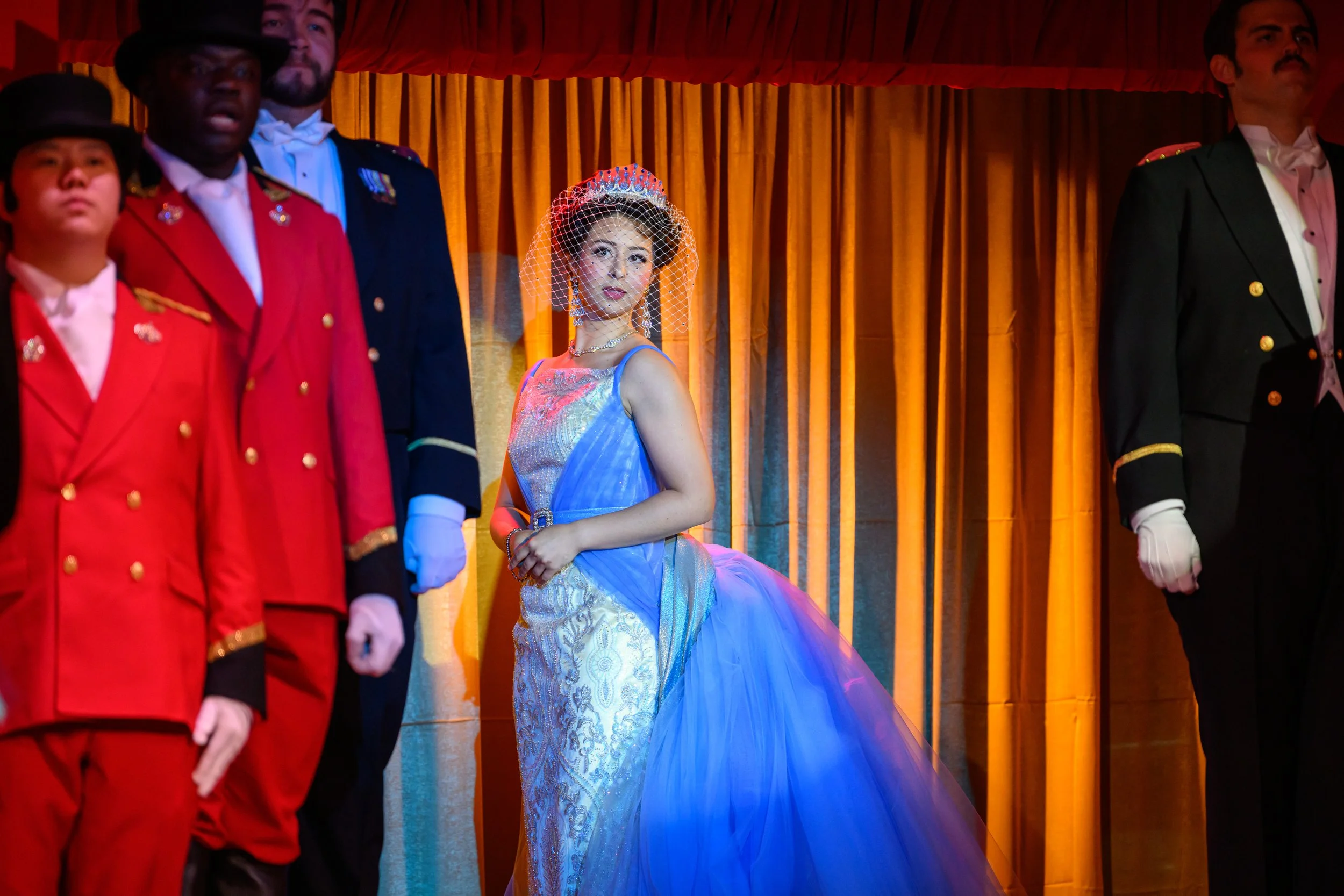
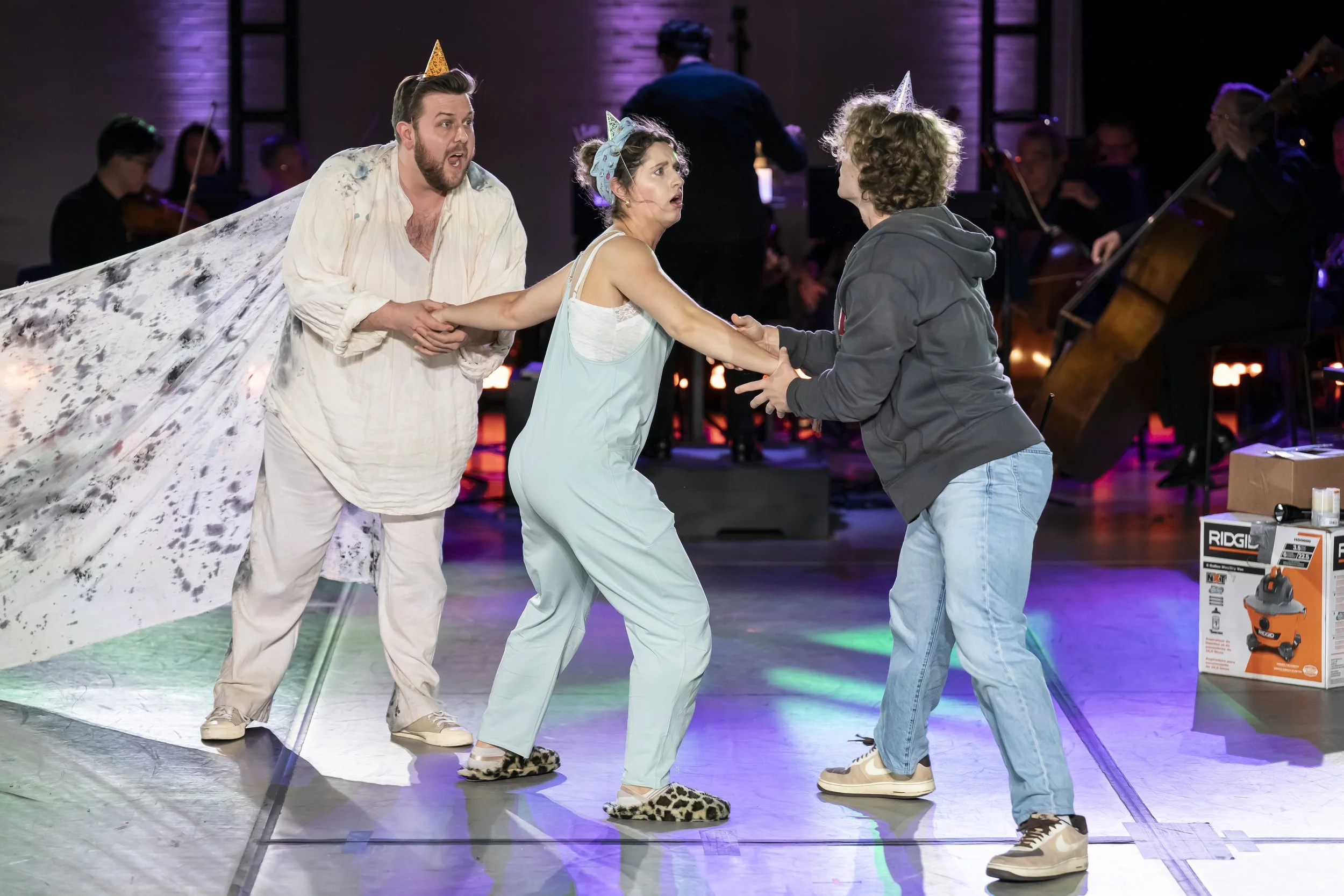
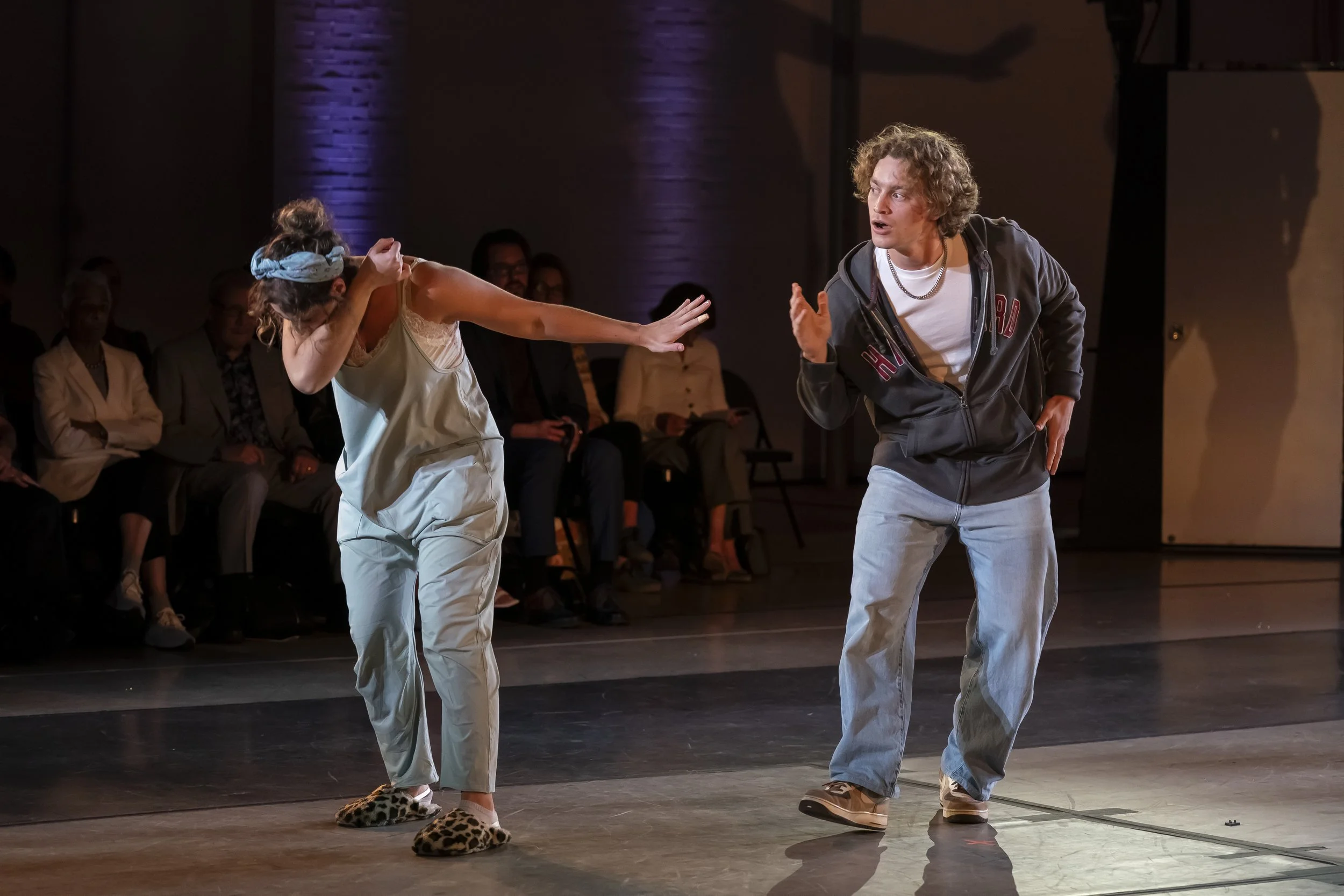
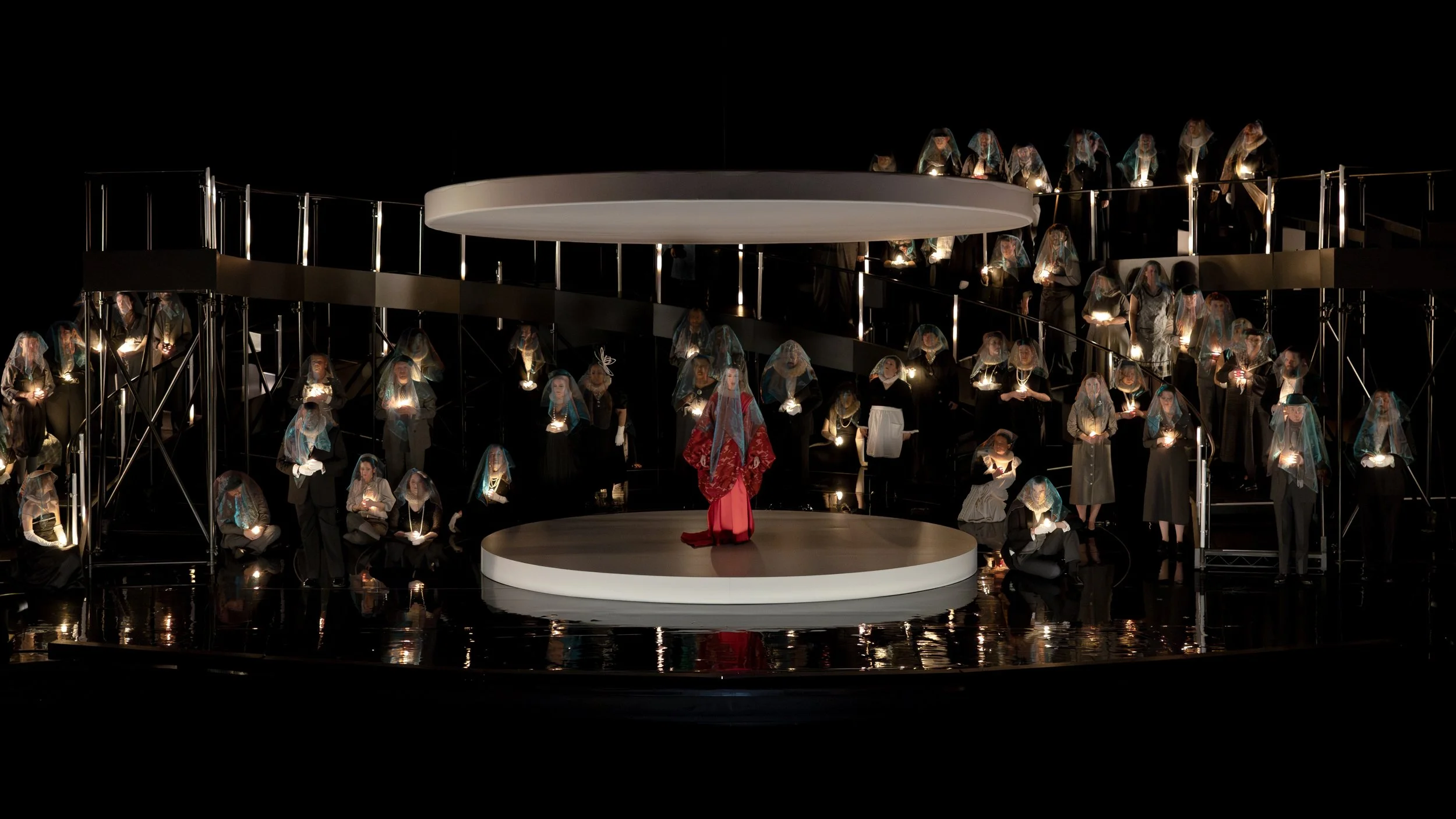
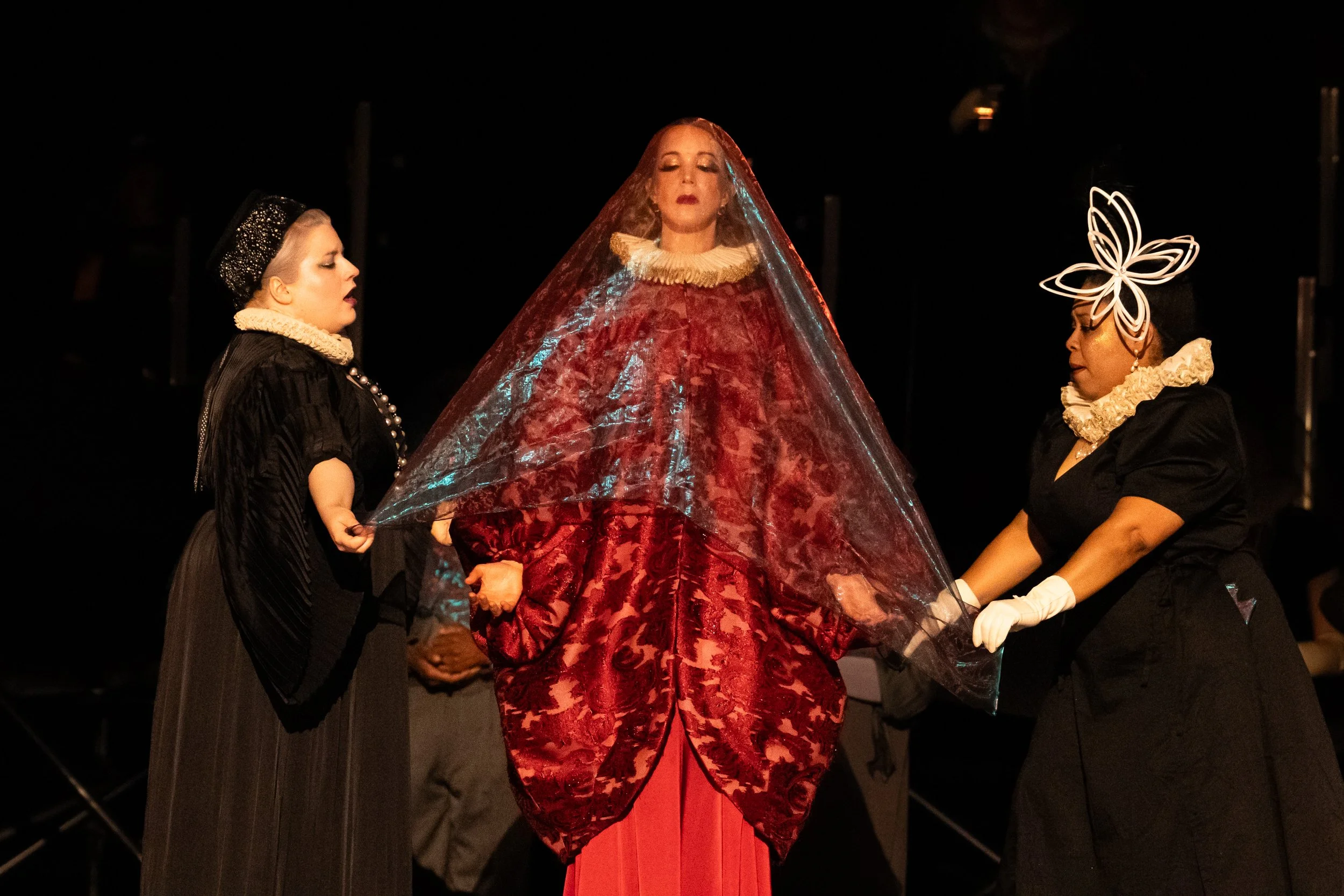
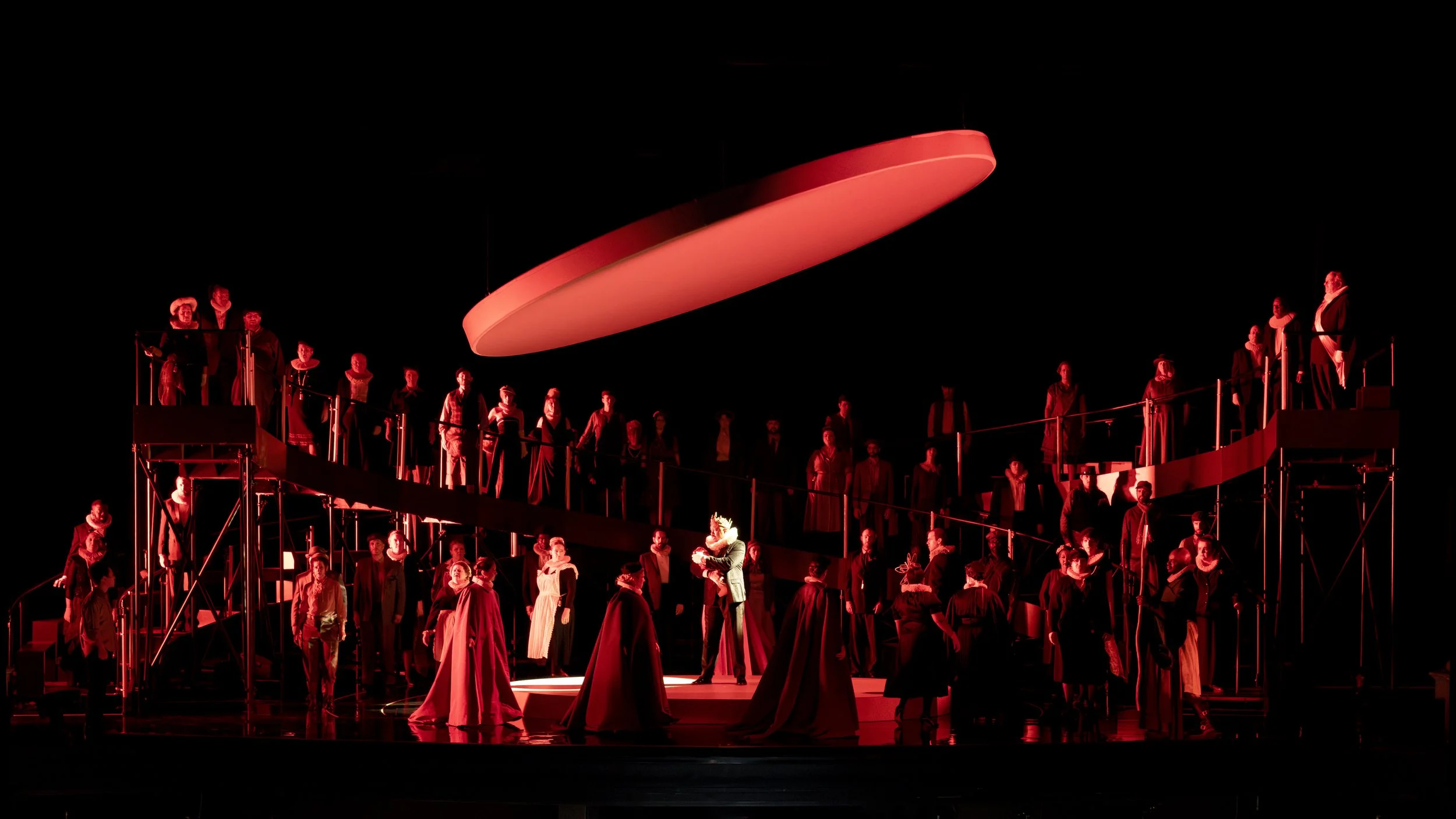
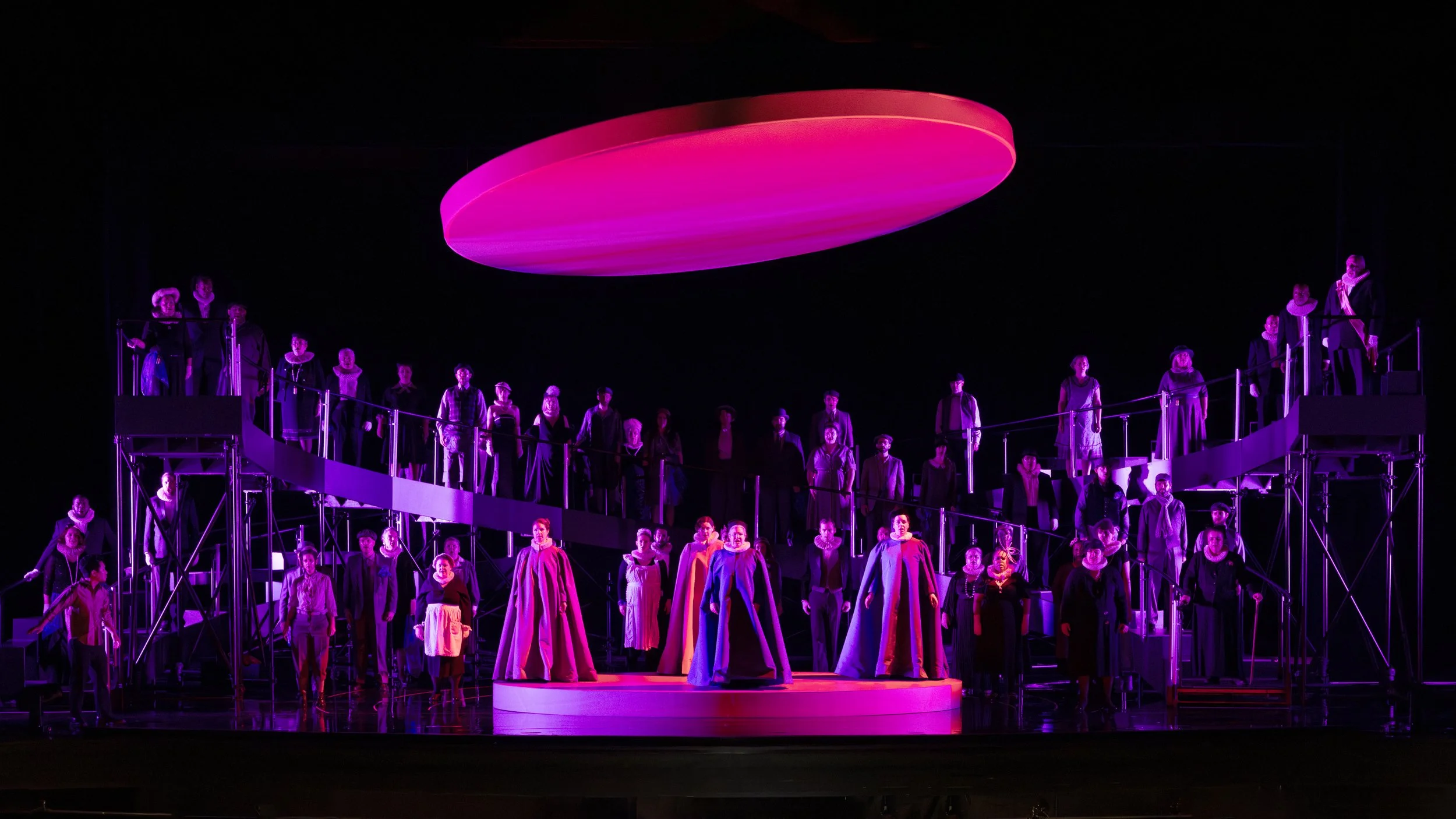
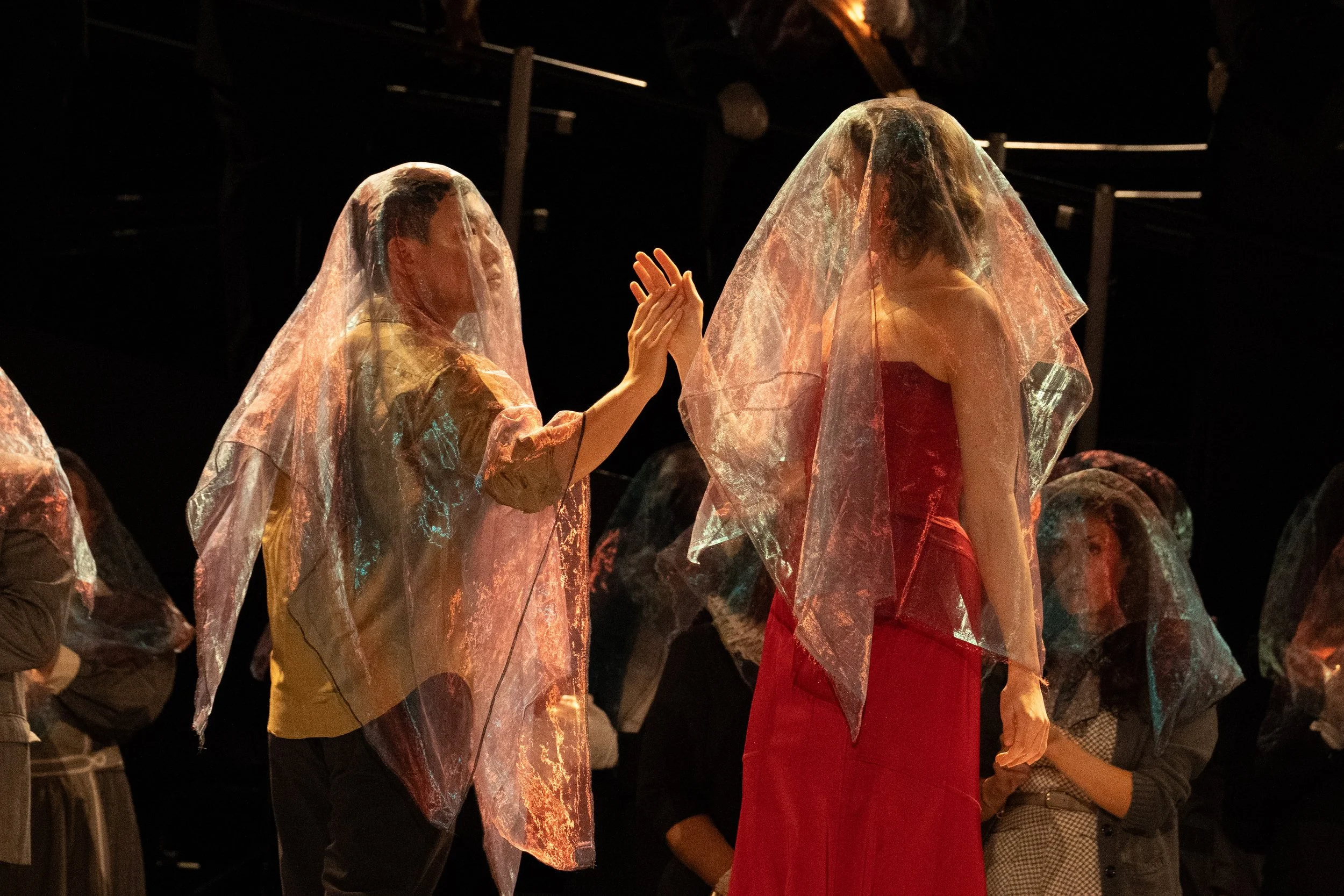
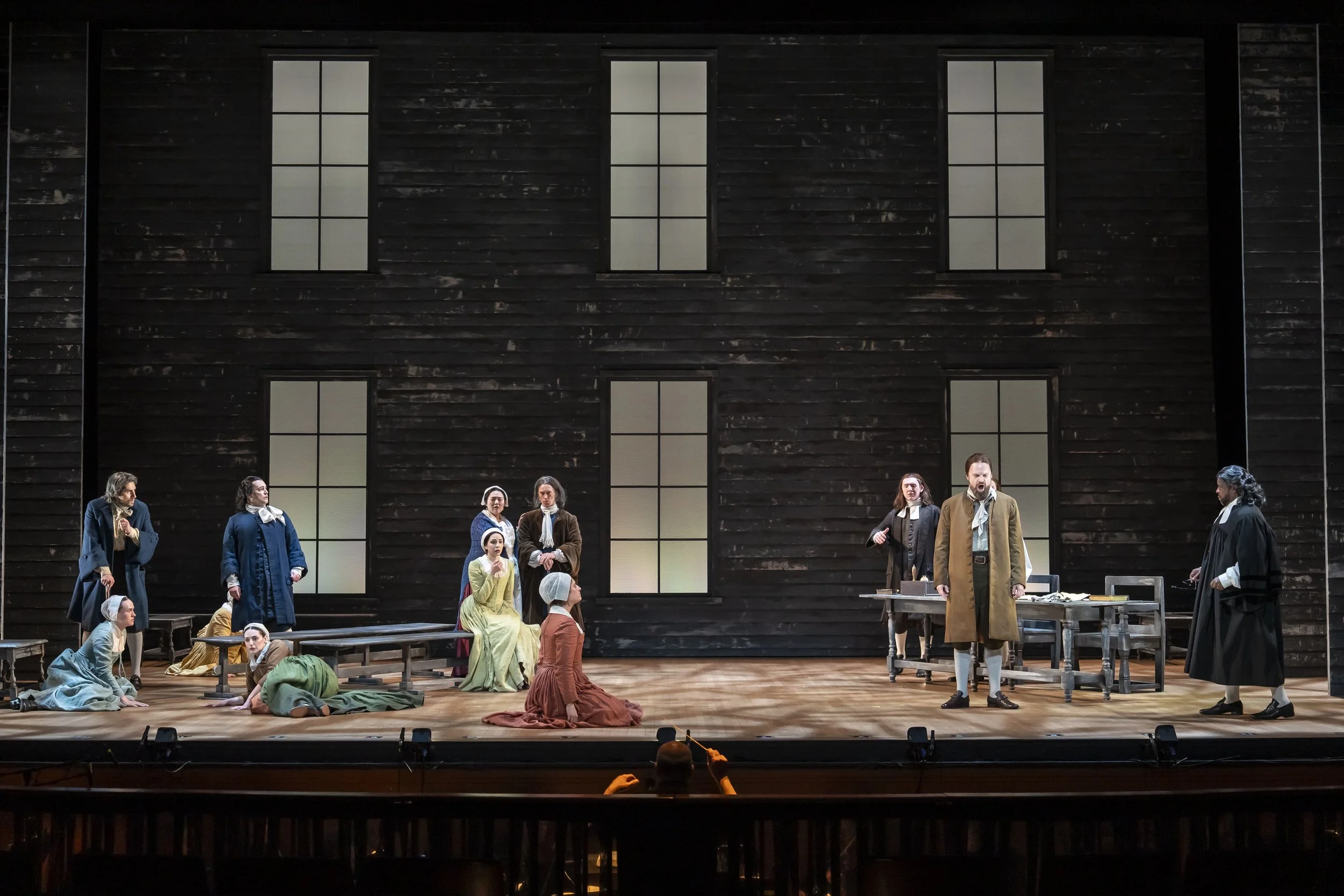
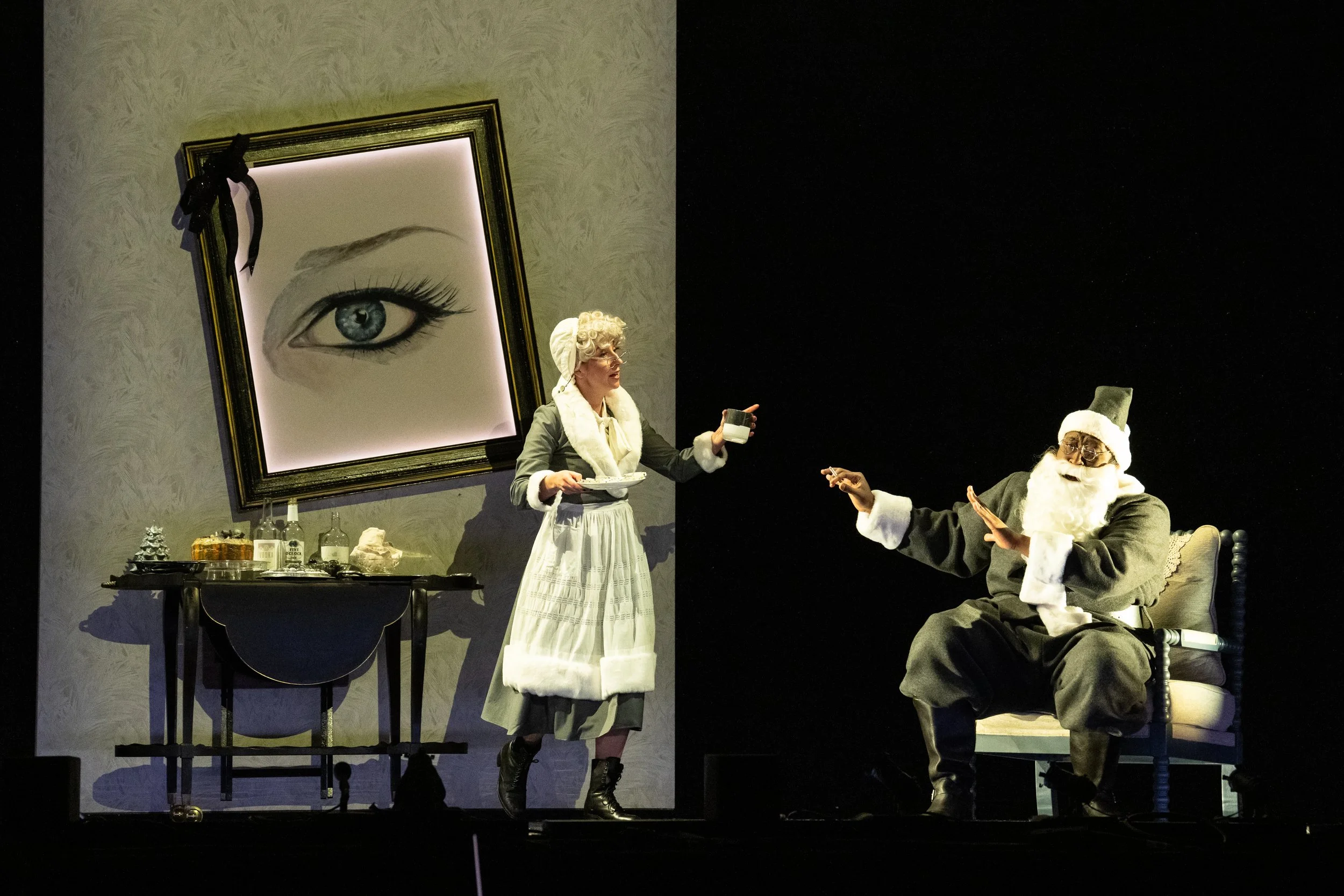
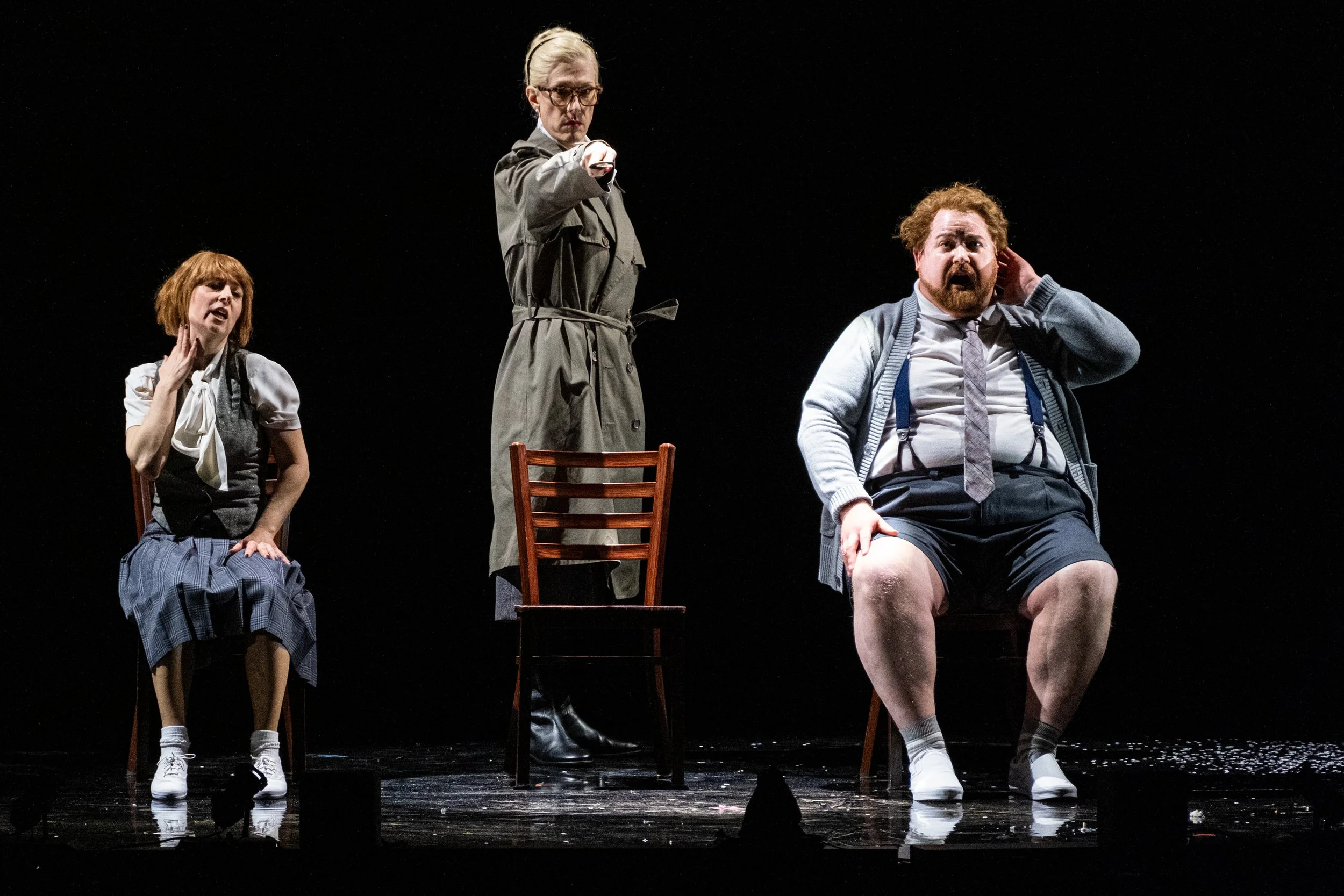
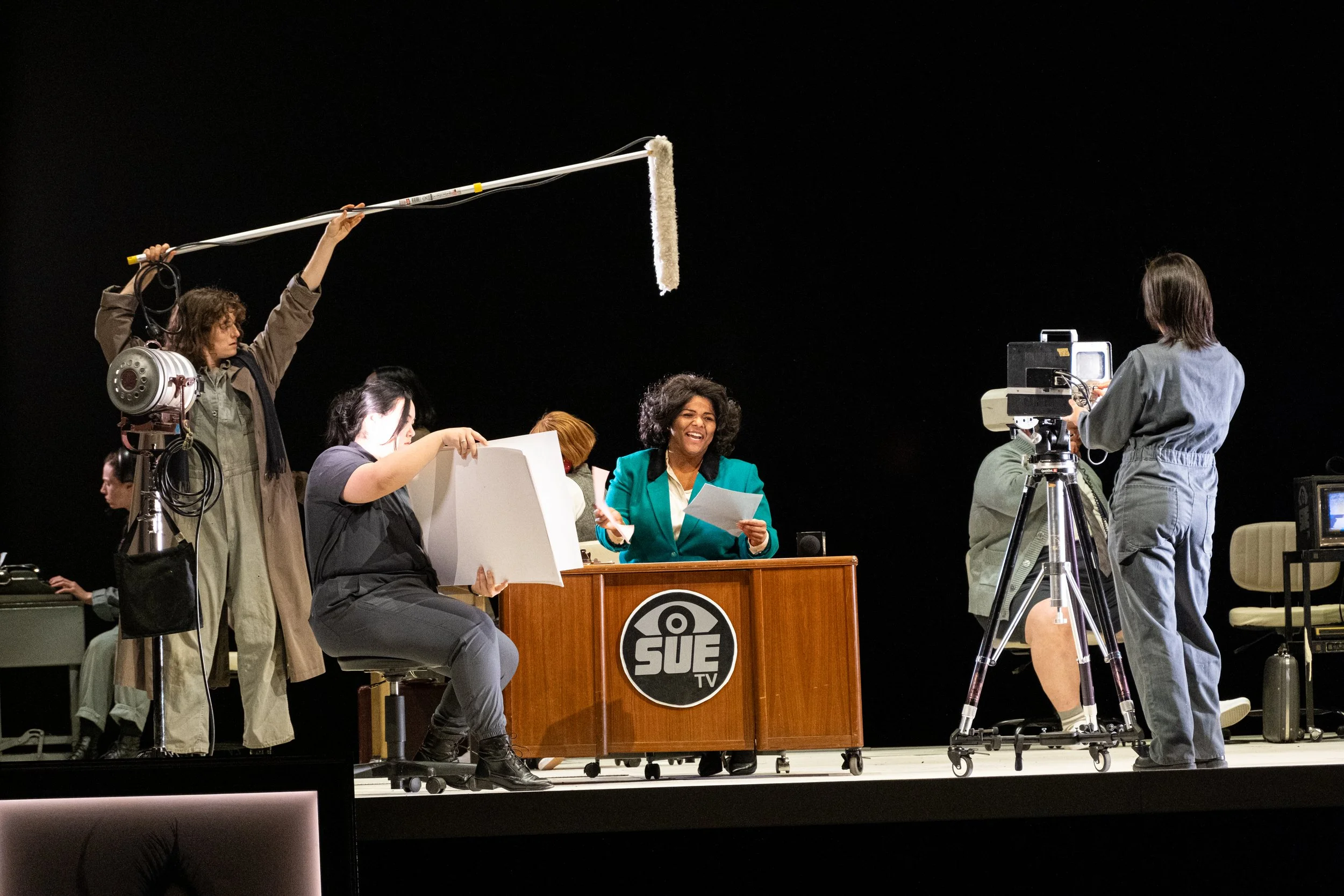
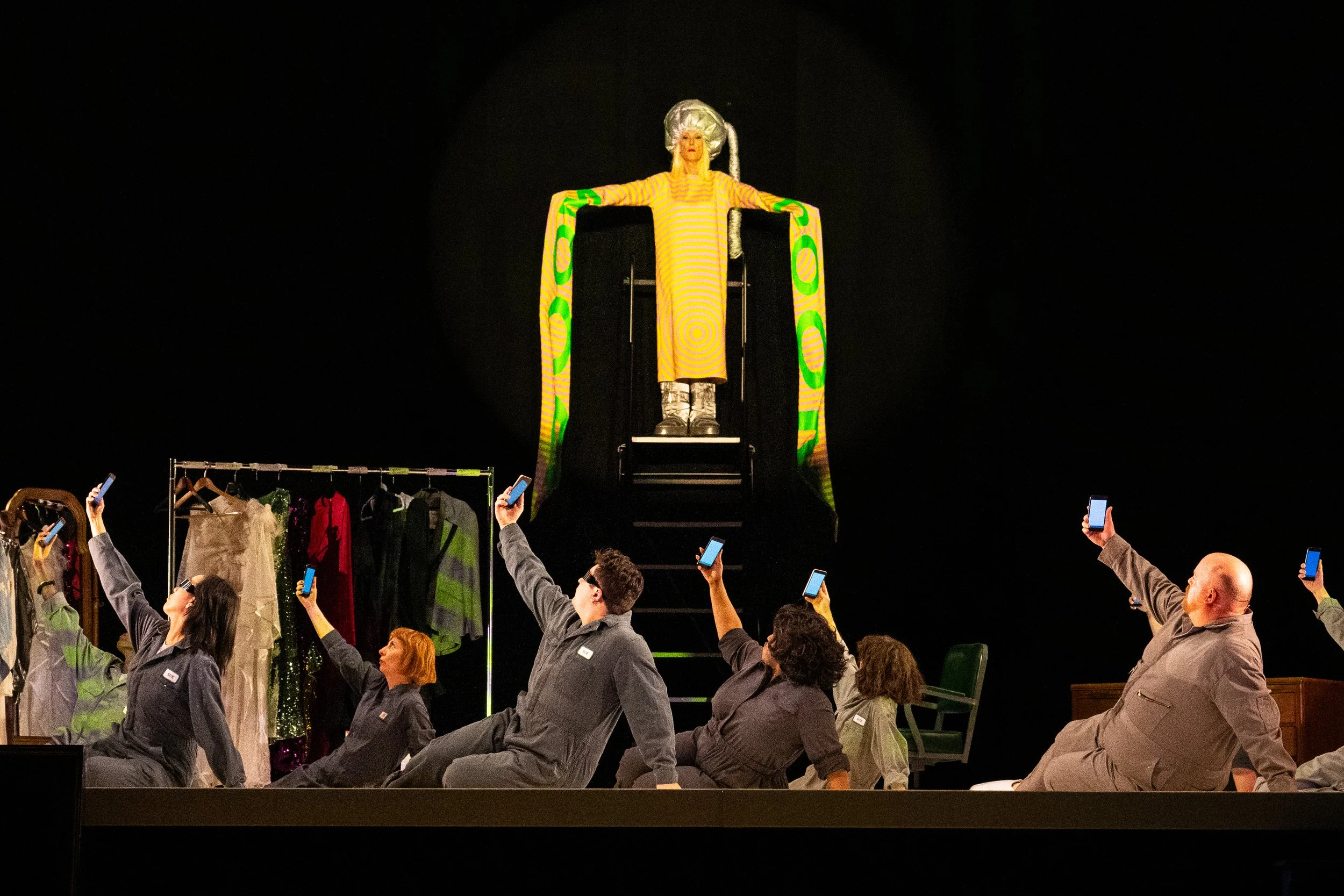
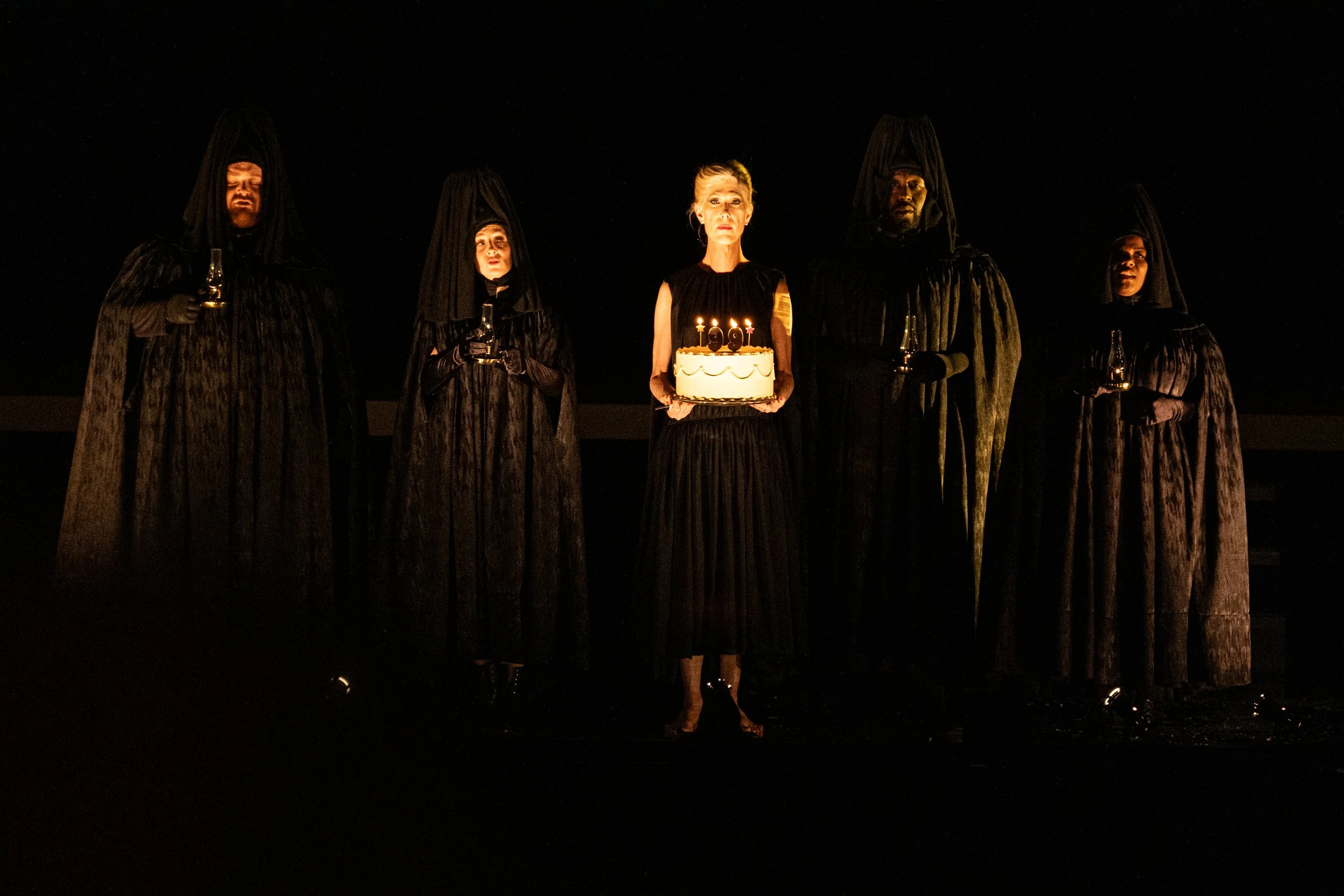
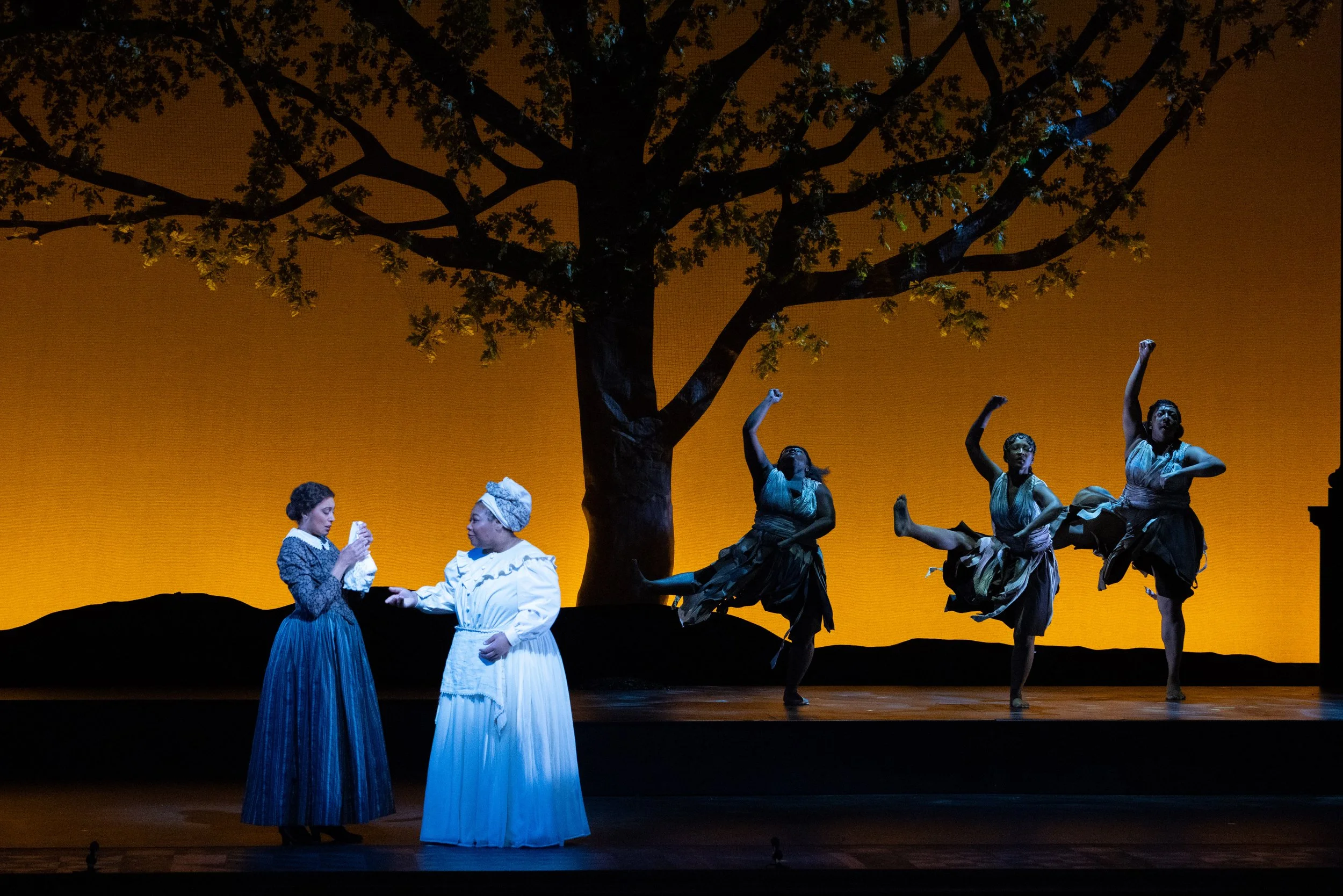
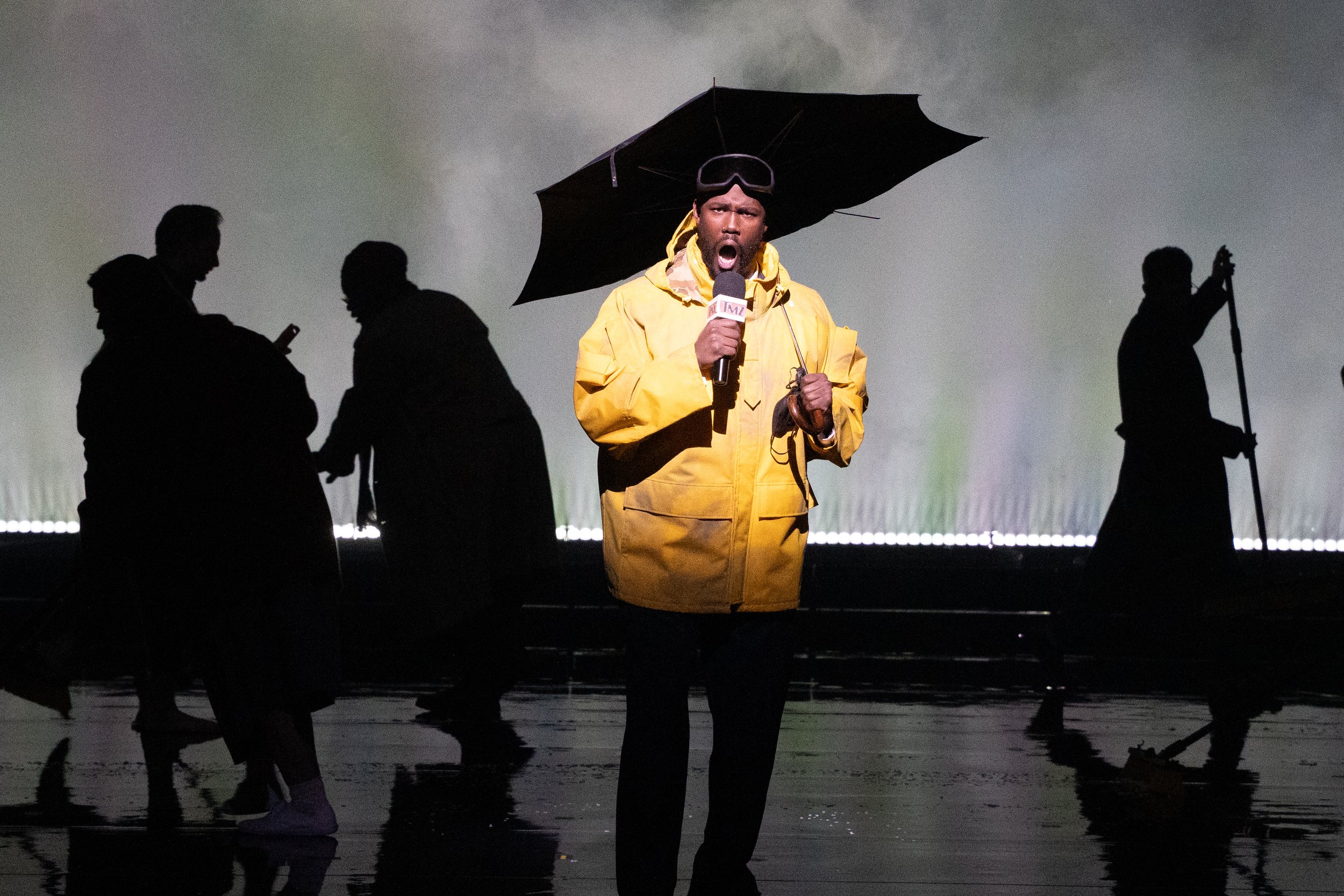
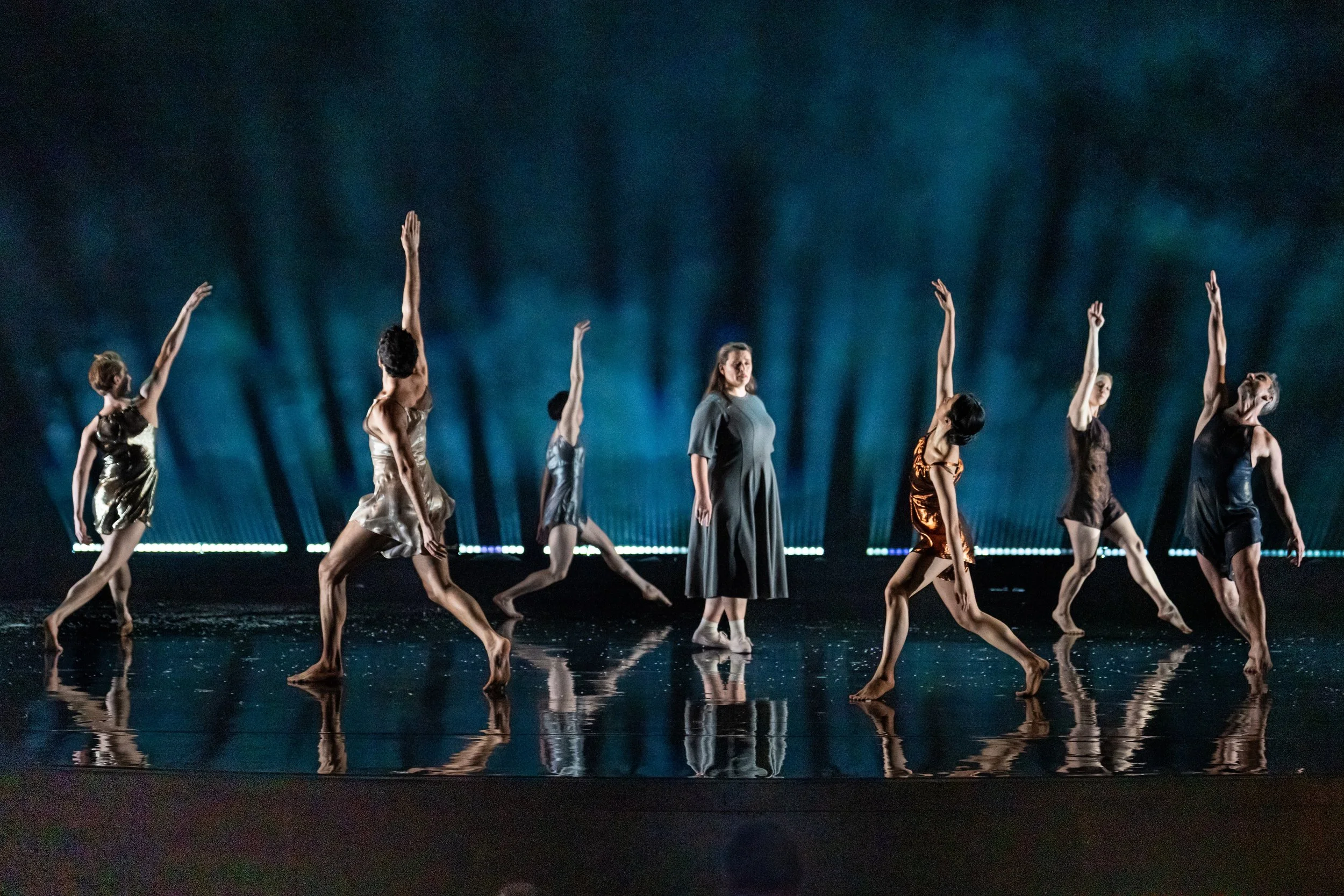
I rather enjoyed Director Griffin’s staging. The action mostly takes place in a large room, with props removed and distributed to fit the nature of the scene. There are globes, lots of globes, which would have been flat in Mitridate’s day, but we are talking about ruling the world. Supernumeraries, dressed in sterile white, move about the room frequently, perhaps sterilizing the scene? Costumes by Kaye Voyce, who was also the set designer, were varied, from many costume eras, but revealed the roles and natures of the characters. The major decoration was a wall of what appeared to be battle standards as a single painting. Lighting was well done by Masha Tsimring.
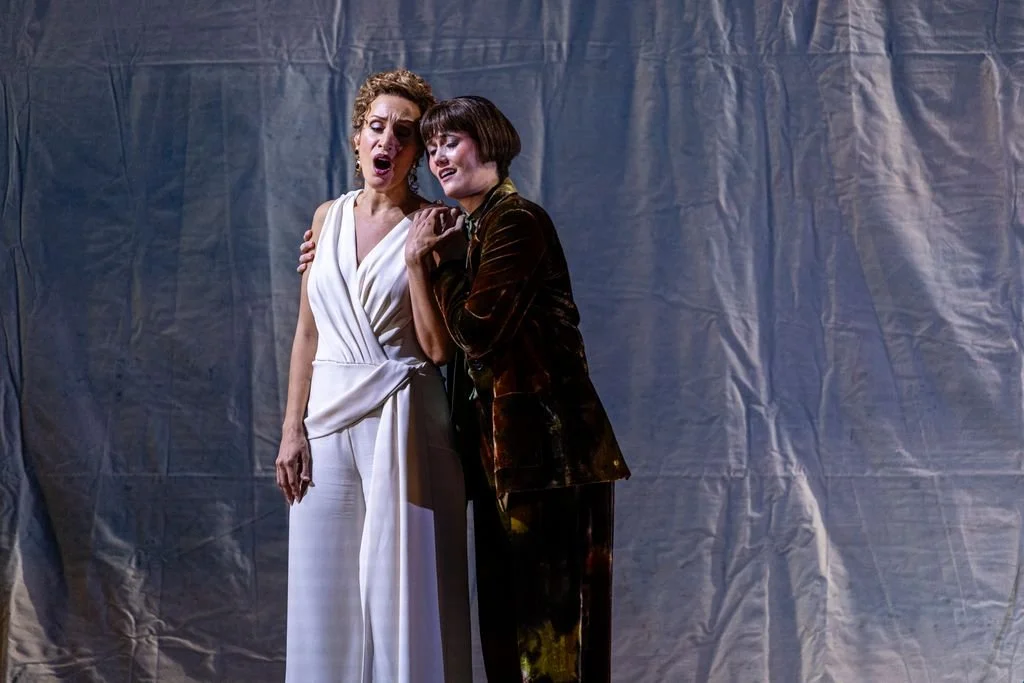
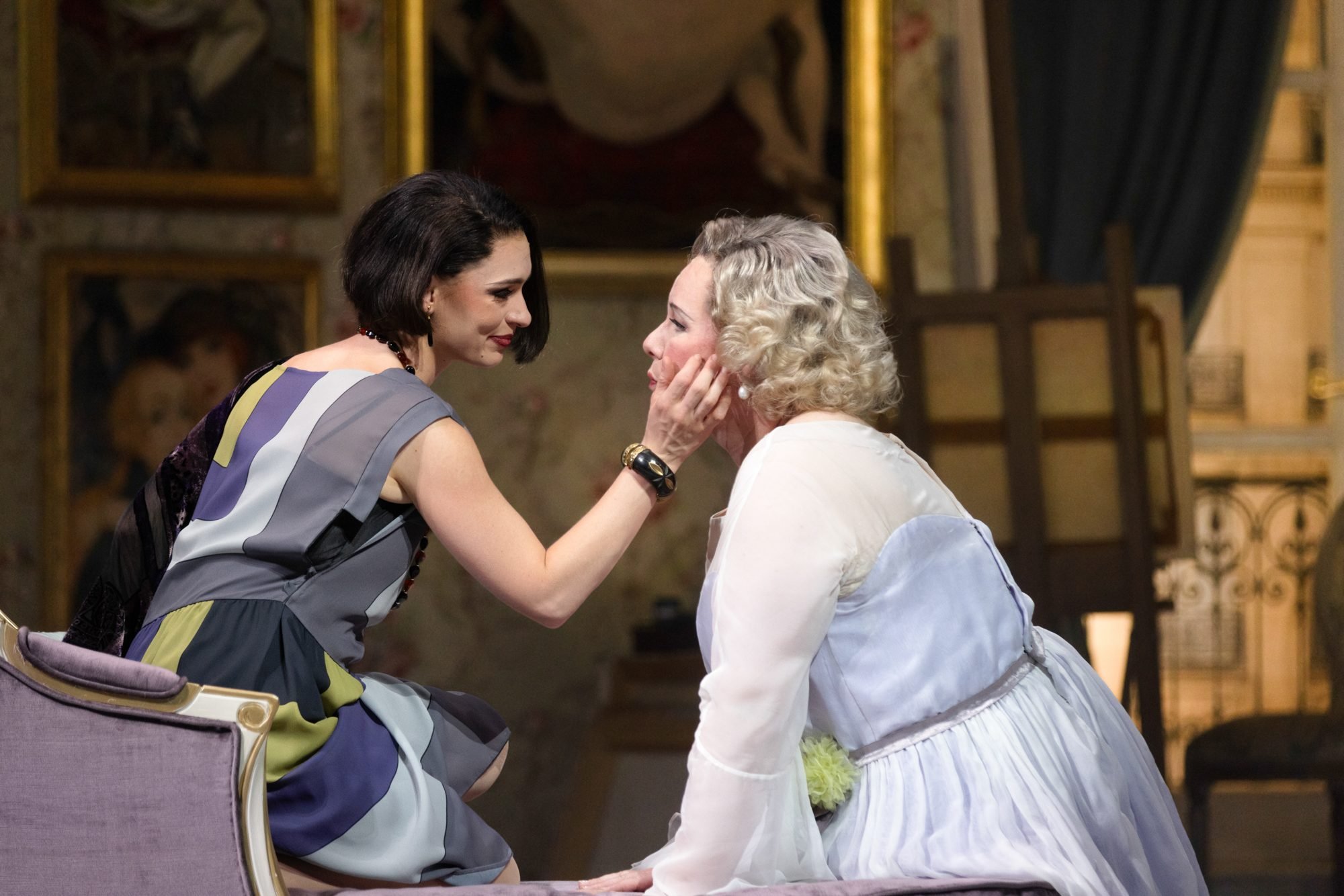
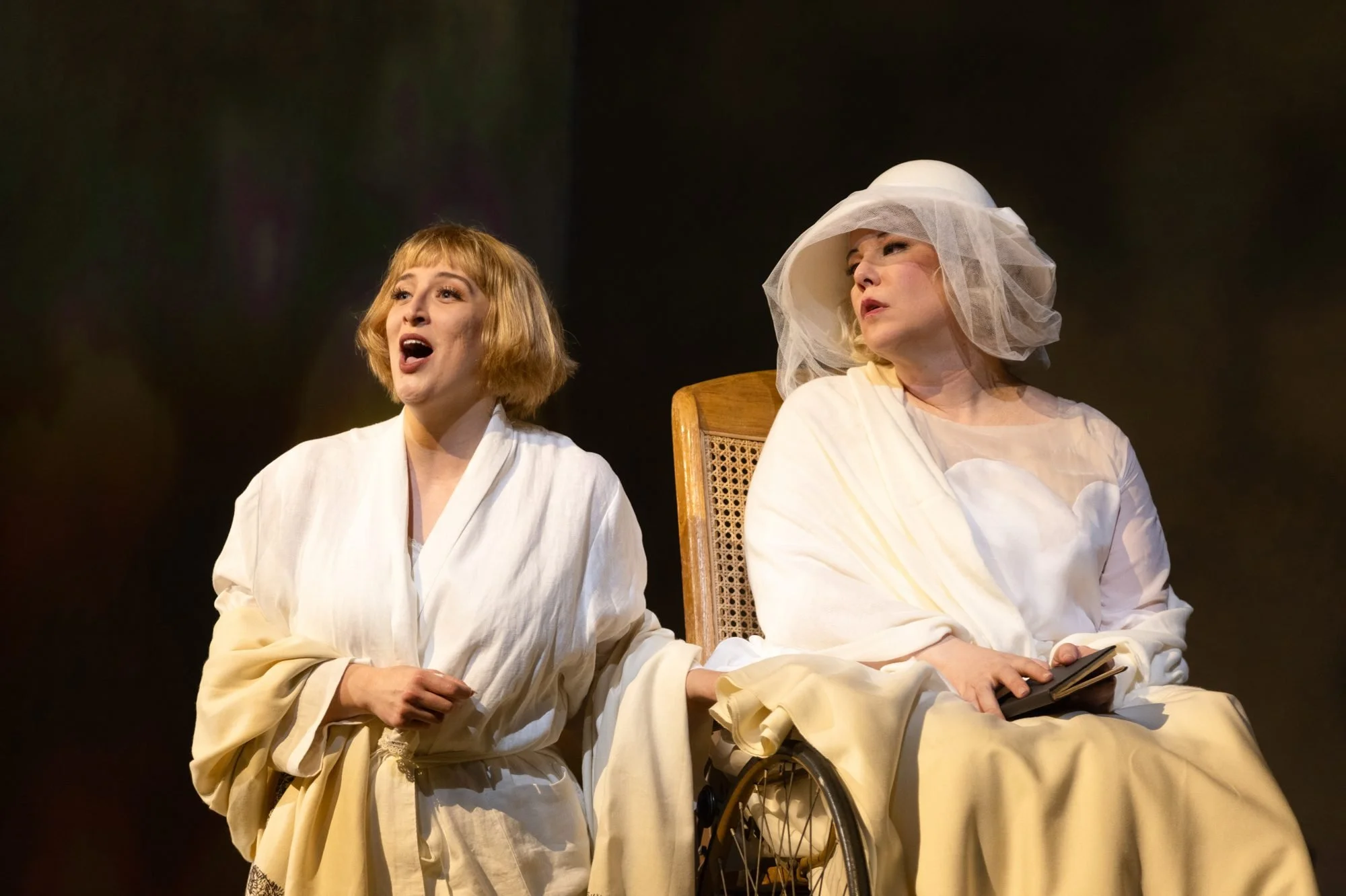
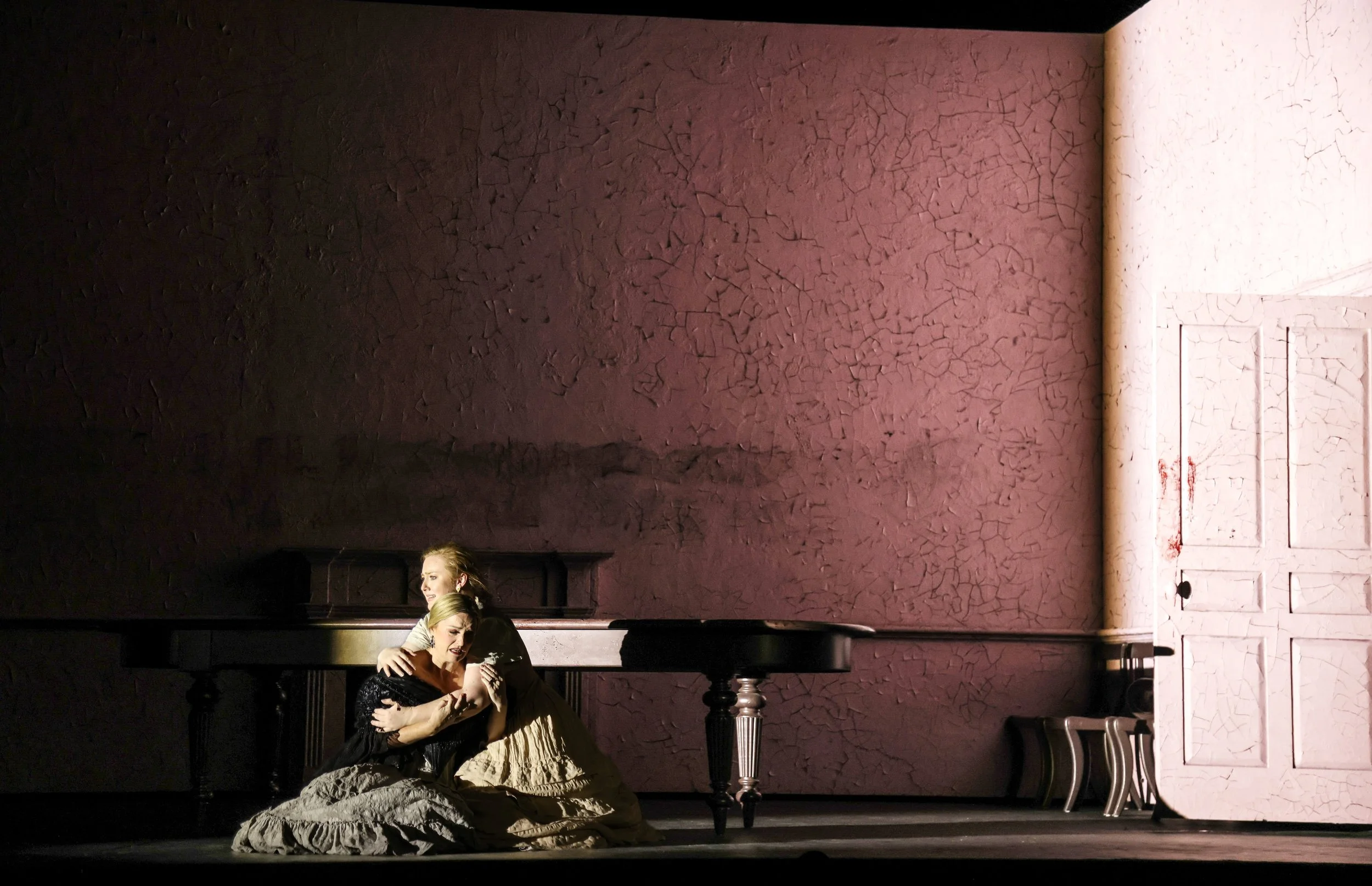
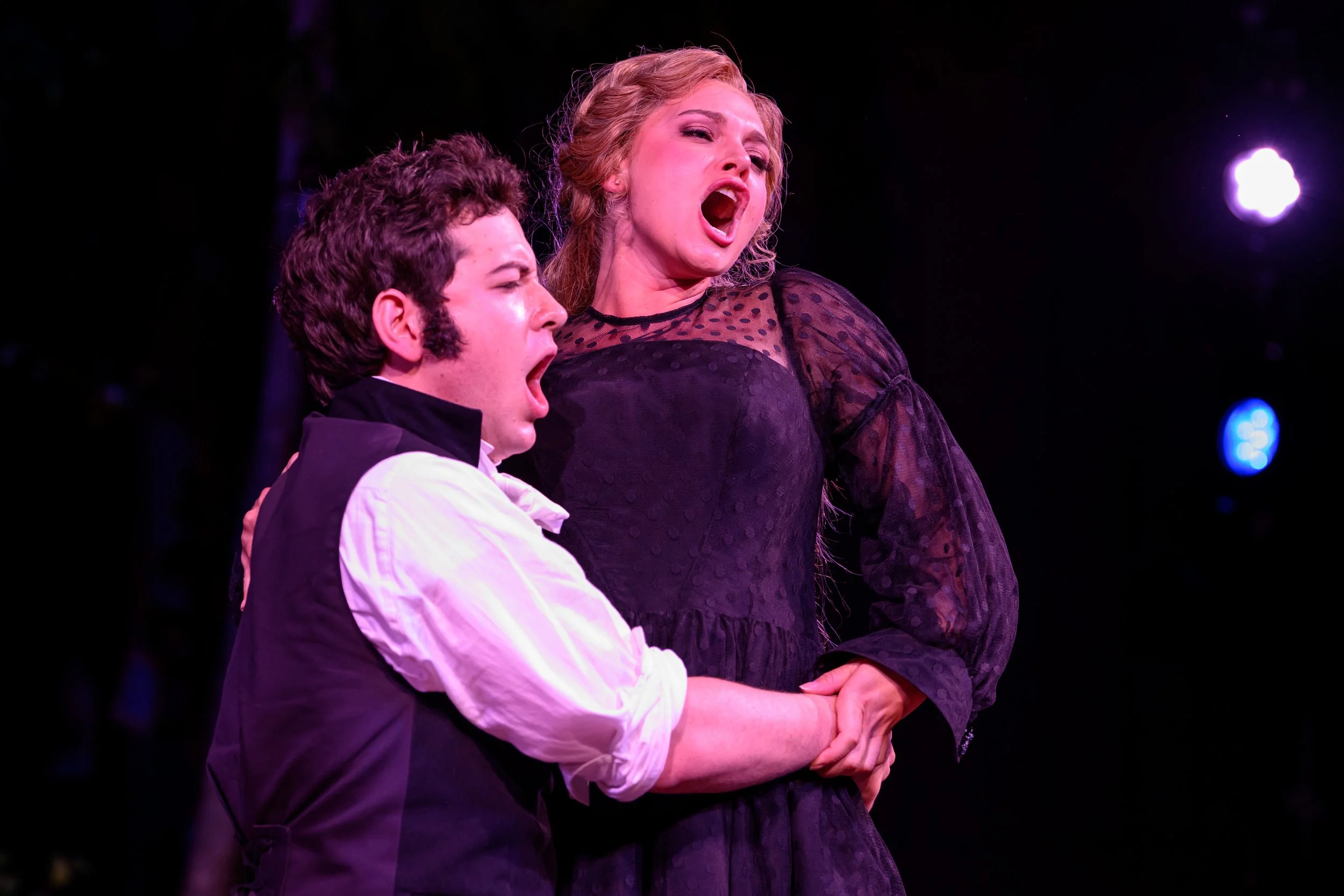
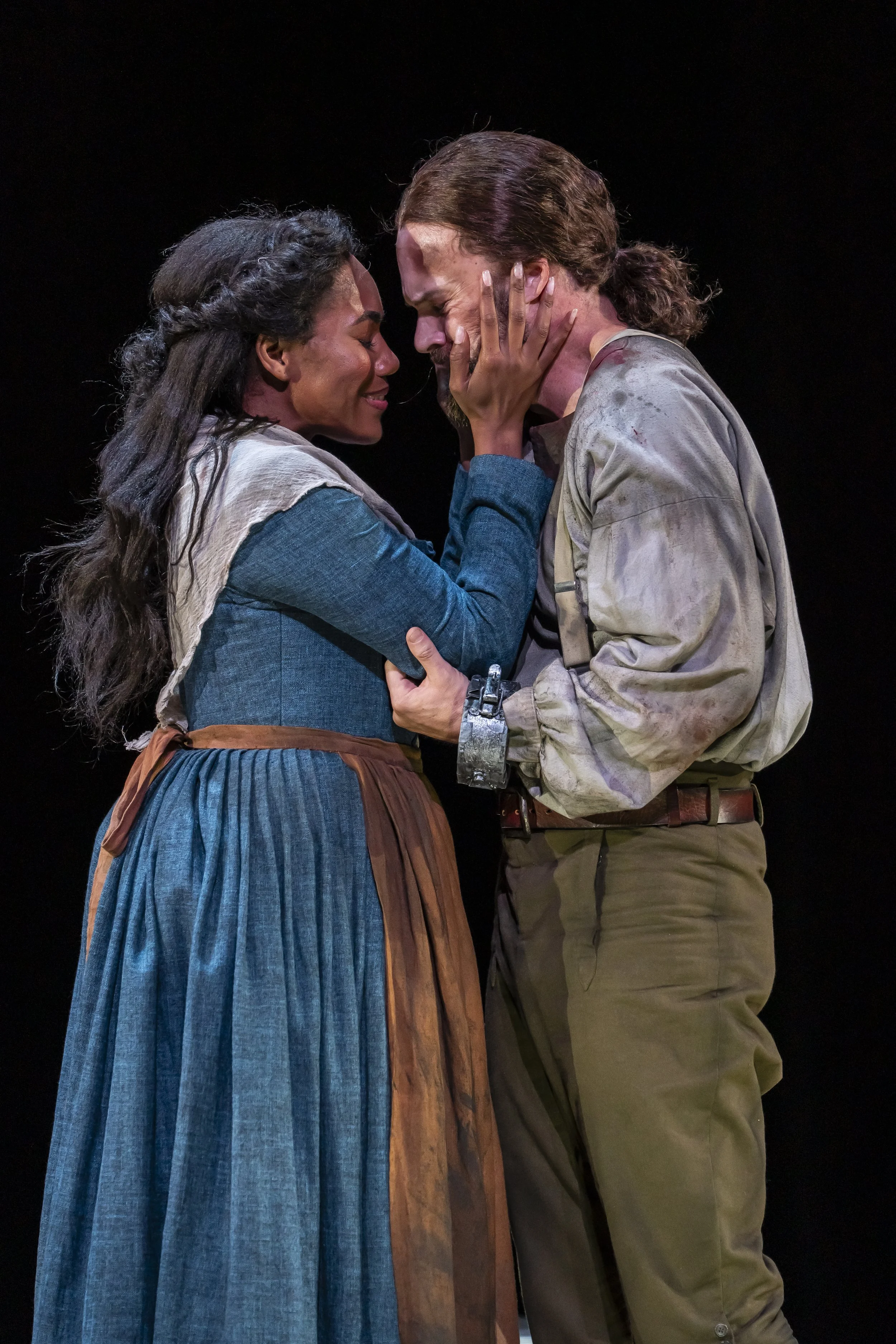
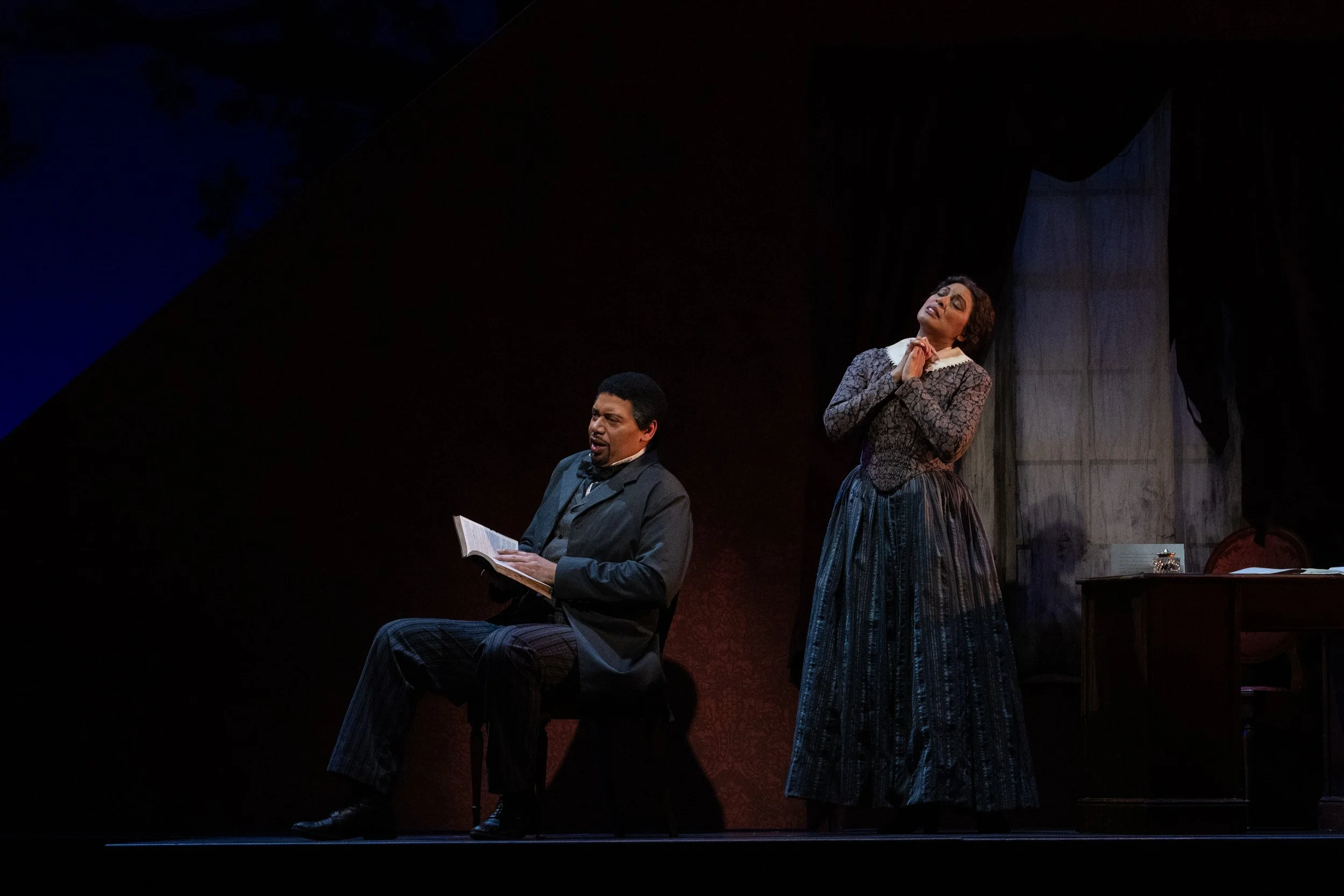
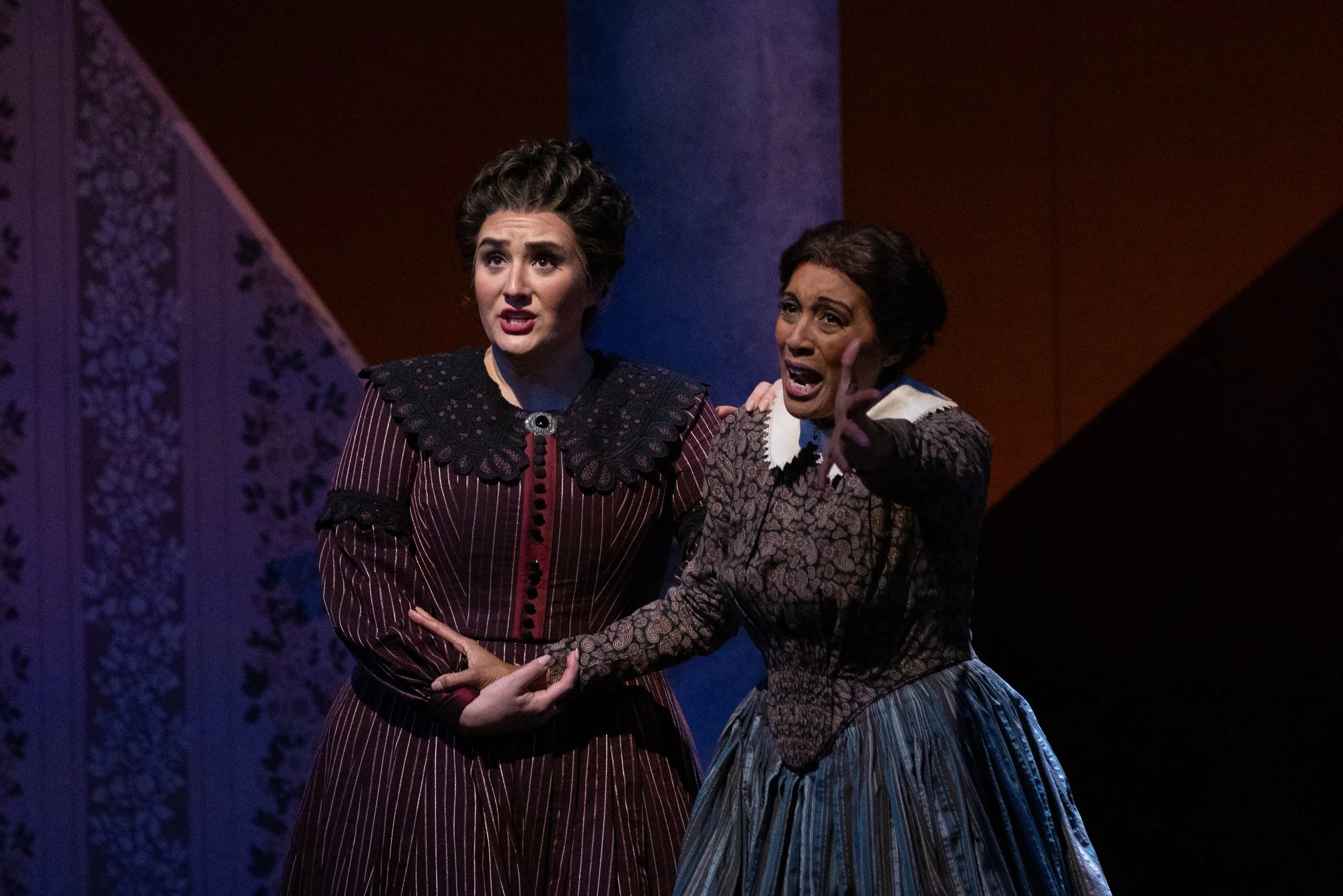
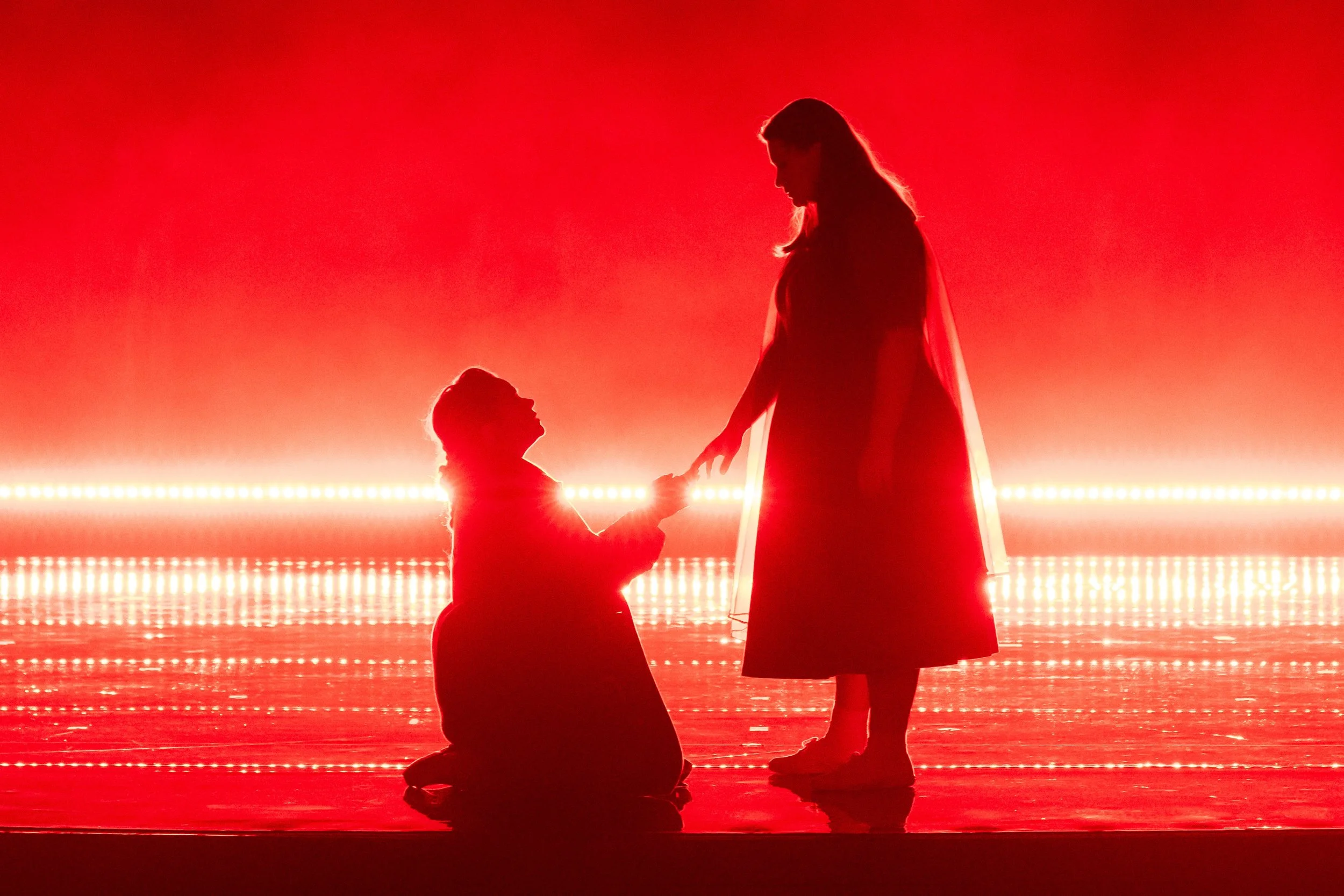
Aspasia (Brenda Rae) and Sifare (Meredith Wohlgemuth) sing together of their love for each other. Photo by Dominic M. Mercier; courtesy of Opera Philadelphia.
This is a challenging opera to stage. The nature of opera seria probably does not fit especially well with the nature of this drama. The dramatic tension between characters is regularly broken by extended arias, allowing the singers to display their wares to the enjoyment of the audience but not necessarily to the impact of the story. I wasn’t moved strongly by the opera until Costanzo’s Farnace repents of the error of his ways, a touching scene.
And then there was the ending, which seemed entirely appropriate to my wife but left me feeling the message of the opera had been blunted. Yes, I’m not sure I would have liked any of these characters; they were royalty who likely considered everyone else something lesser. And yes, opera seria was used as propaganda for rulers in Mozart’s era. Still, seeing the capability of humans, even in those circumstances, to be worthy of redemption and love in threatening situations was good for the human spirit. Other directors have played it this way as well. However, seeing Marzio demonstrate Rome’s power and ruthlessness violently, while in essence truthful, diminished the hopeful impact of seeing human values I like affirmed. But then, “Succession” didn’t end prettily either.
Overall, I thought Mozart’s opera is a good one, a powerful story, if difficult to tell, with compelling music and lots of lengthy, highly enjoyable arias, well worth presenting today. I liked the staging with one caveat. I found Opera Philadelphia’s production to be extraordinary in acting, music playing, and singing. If I were a magician, I would have this group performing together regularly. As an added plus, this felt like attending a brand-new opera, by none other than Mozart. You want to miss that?
The Fan Experience: Opera Philadelphia scheduled performances of Mitridate, re di Ponto for September 9, 10, and 13 in the Academy of Music. The opera was sung in Italian with supertitles shown in English. The opera lasted three hours, including one intermission. Lily Kass, the Scholar in Residence at Opera Philadelphia gave an informative pre-opera talk with questions and answers one hour before the performance.
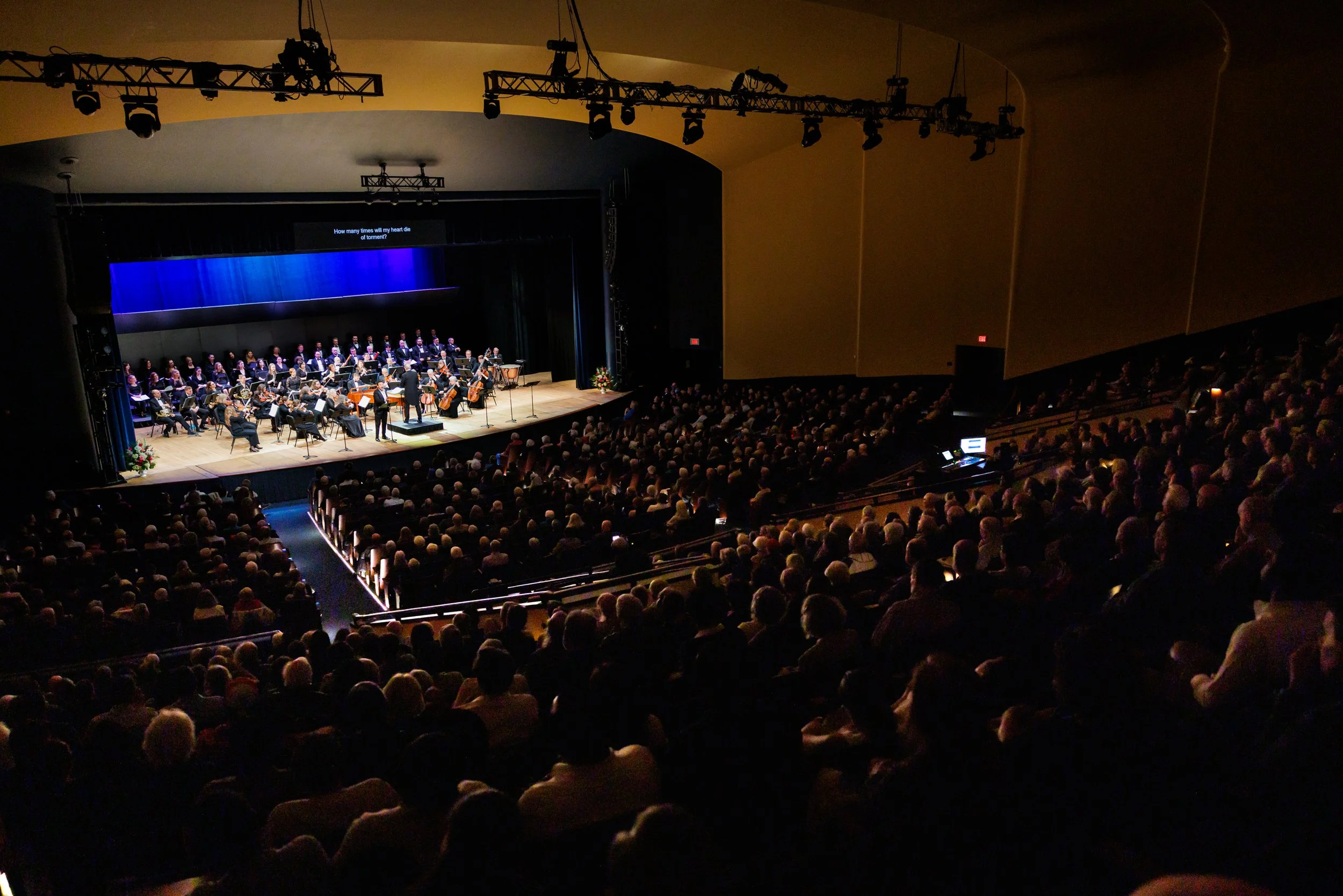
The Academy of Music feels small but seats over 2,000 attendees. For the last two seasons Opera Philadelphia used pay-your-own pricing which has led to sellouts and an influx of new opera-goers. Remaining seats can be limited for almost any production. Get your tickets as early as you can. OP’s next production will be Suddenly Last Summer on October 22, 23, 25.