
As a longtime fan of Washington National Opera, there were many side issues on my mind as I made the slow trek from Tysons to the Music Center at Strathmore in Bethesda, most notably, WNO’s departure from the Kennedy Center into a nomadic existence, its last opera of the season being a musical, and that being semi-staged for the Strathmore performances. More on that further down, and no, West Side Story had not been turned into an opera, though its composer, Leonard Bernstein was a classical composer who felt that the best parts of the musical were operatic. Even performed by Washington National Opera, the singers wore hidden microphones and sang the vocals in a Broadway style. What was different? Mainly, by employing operatic scale, primarily in the number of performers on stage and the number of orchestra members, WCO’s Artistic Director Francesca Zambello, who created and directed this production, has given this Broadway musical the operatic treatment. Think of the difference between mom’s normal full Sunday dinner and a Thanksgiving feast. My core impression of Francesca Zambello’s productions has never wavered: this artistic director gives good show. And Thursday night’s performance was a dancing and musical feast.
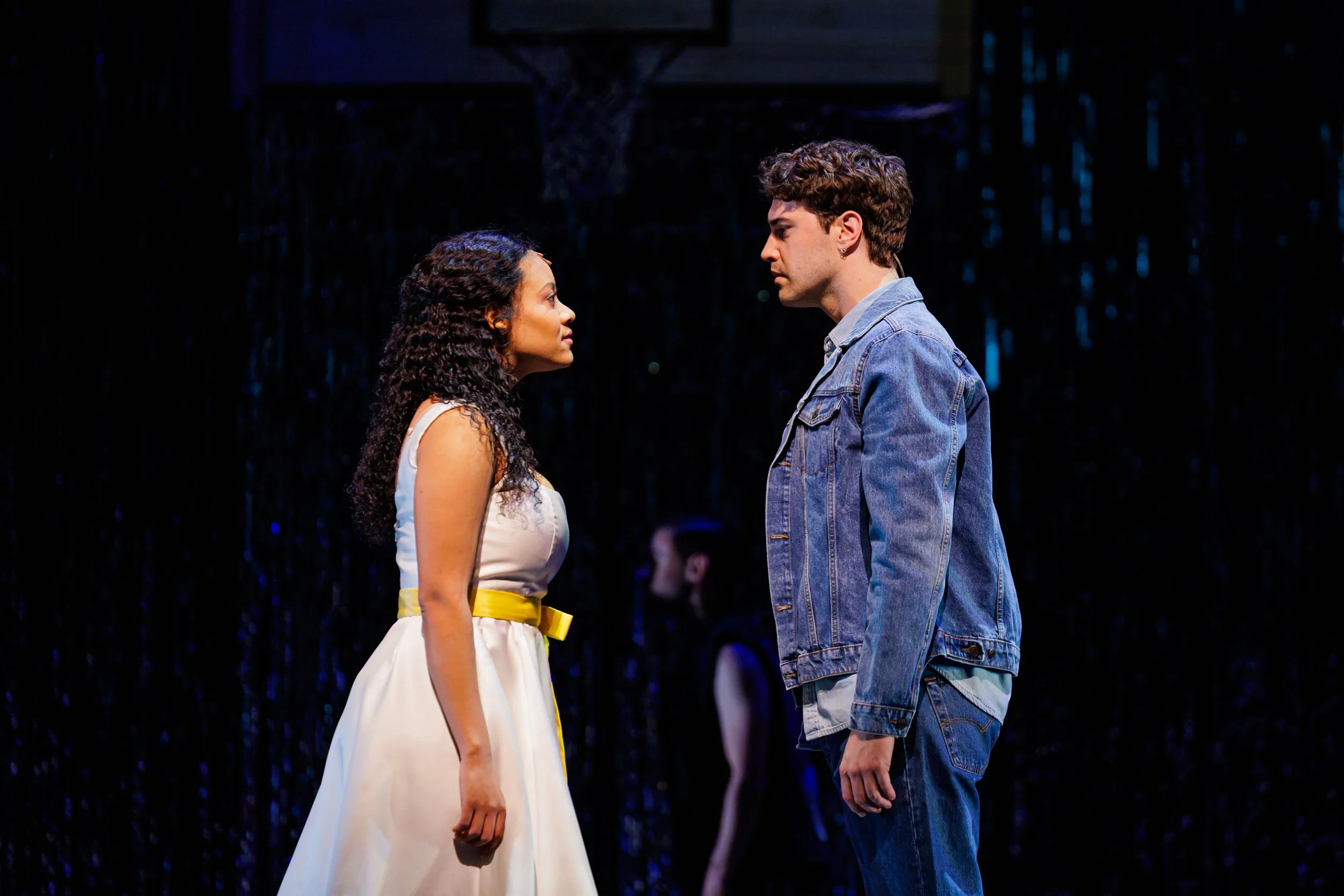
A love-struck Maria (Shereen Pimentel) and Tony (Ryan McCartan) stare into each other’s eyes. Photo by Elman Studios; courtesy of Washington National Opera. (All photos are of fully staged production at The Lyric)
You are probably familiar with the story of West Side Story, which was based on the ill-fated love story in Shakespeare’s Romeo and Juliet. The staged production premiered in DC before its move to Broadway in 1957, and a follow-up film in 1961; there was a remake in 2021 directed by Steven Spielberg. The staged production was a wildly popular hit, and the original film won four Academy Awards, including Best Picture; the remake won one Academy Award and was nominated for six. The music and show tunes have been staples of America’s popular music repertoire. While I could almost sing along on every tune, I have younger relatives who have never seen the staged or the filmed versions. WNO’s production has likely introduced WSS to new, younger audiences as well as its opera faithful.
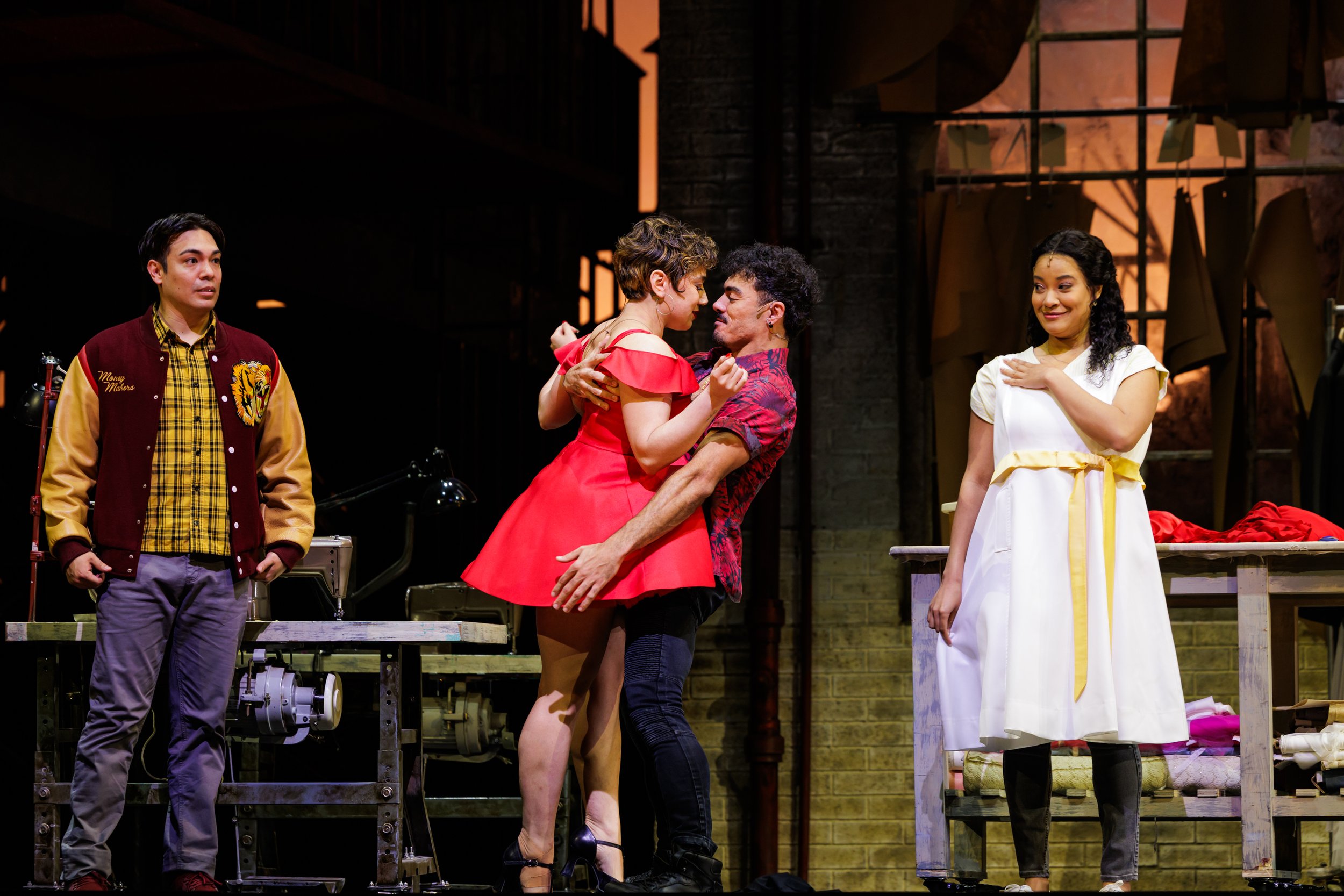
l to r: Chino (Julio Catano-Yee), Anita (Amanda Castro), Bernardo (Yurel Echezarreta), and Maria (Shreen Pimentel). Photo by Elman Studio; courtesy of Washington National Opera.
West Side Story was created by titans of the industry: conceived by Jerome Robbins, based on a book by Arthur Laurents, with lyrics by Stephen Sondheim, music by Leonard Bernstein, and choreography by Jerome Robbins. The team decided on a setting very much in the news in the 1950’s, violence perpetrated by street gangs. In this case, the Jets as a white gang in NYC are opposing the entrance of the Sharks, a gang of Puerto Rican immigrants, into their territory. As they are planning a rumble, Tony in the Jet camp and Maria in the Sharks fall in love and commit to being together despite the disapproval of their families (aka, the Montagues and Capulets). Deadly violence ensues with Tony killing Maria’s brother and Chino, her family-approved suitor, killing Tony. Maria is left grief-stricken, calling out both gangs for their weaponized hatred. Like opera, the music clarifies and intensifies the emotions being felt by all. This production stays true to the sequence of musical numbers in the stage version. (Personally, I liked the movement of the Officer Krupke number to before the rumble in the film version; I didn’t want a comedy routine right after seeing deadly knife fights.)
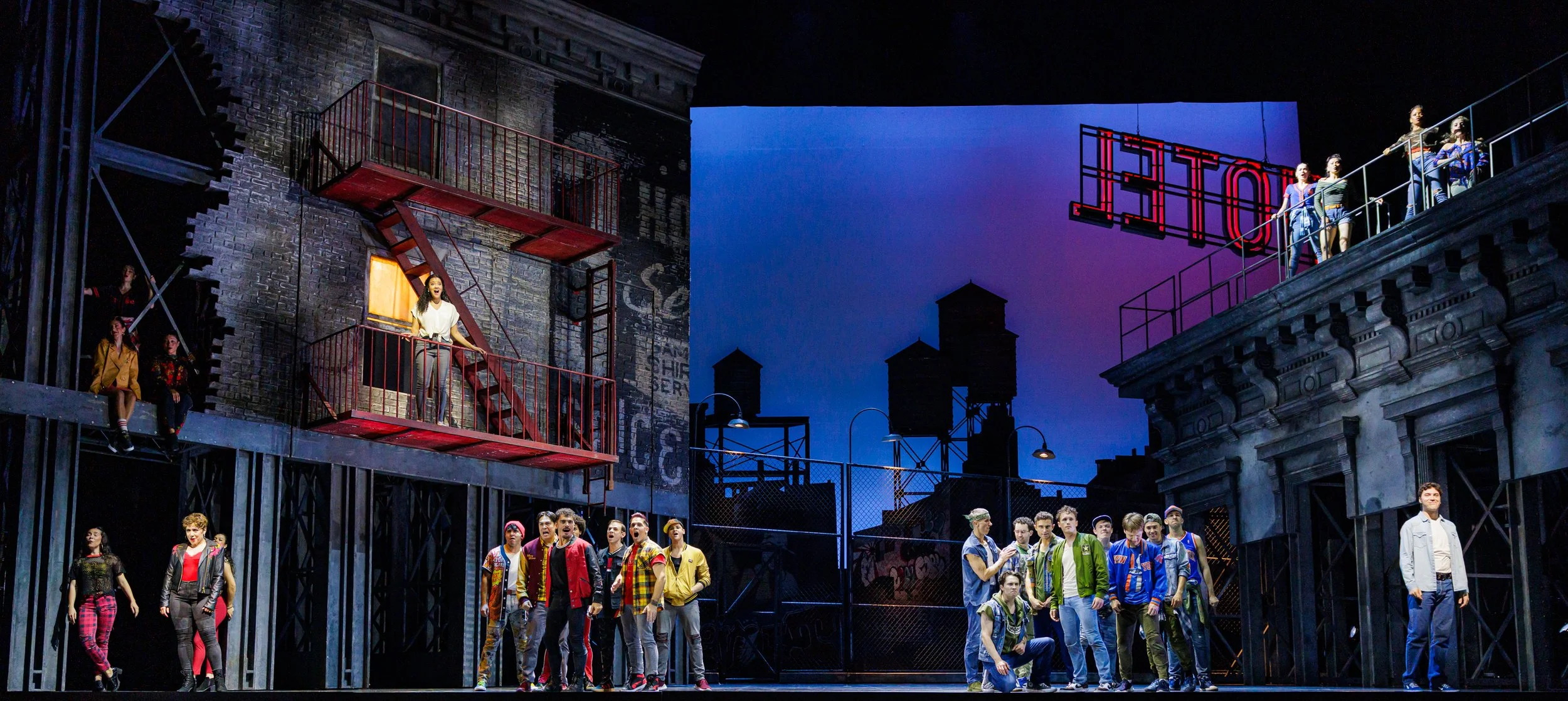
Group scene: Sharks gang to left and Jets gang to right of center, Maria (Shereen Pimentel) on balcony, Anita (Amanda Castro) below in red, with Tony (Ryan McCartan) far right. Photo by Elman Studios; courtesy of Washington National Opera.
WNO opened their run of WSS as fully staged performances in Baltimore’s Lyric Theatre before moving to the Music Center at Strathmore. The stage in Strathmore’s concert hall has excellent acoustics for musical performances but lacks an orchestra pit and the facilities to produce fully staged musical theater. WNO’s semi-staged performance had the orchestra seated at the back of the stage, and while costumes, props, and lighting effects were employed, the scenery that contributes to the interest, beauty, and setting for an opera-style rendering was omitted. For me, the only distracting element was seeing the orchestra behind the performers, attracting my attention away from the performance in front of them; I have attended many concert operas at Strathmore where the orchestra was on the stage and enjoyed seeing the conductor and orchestra playing, but then the singers were mainly standing behind music stands and singing. Though in fairness, I will report that my wife insists it was not an issue for her. (Note: the photos are from the fully staged production in which elements of the scenery can be seen.)
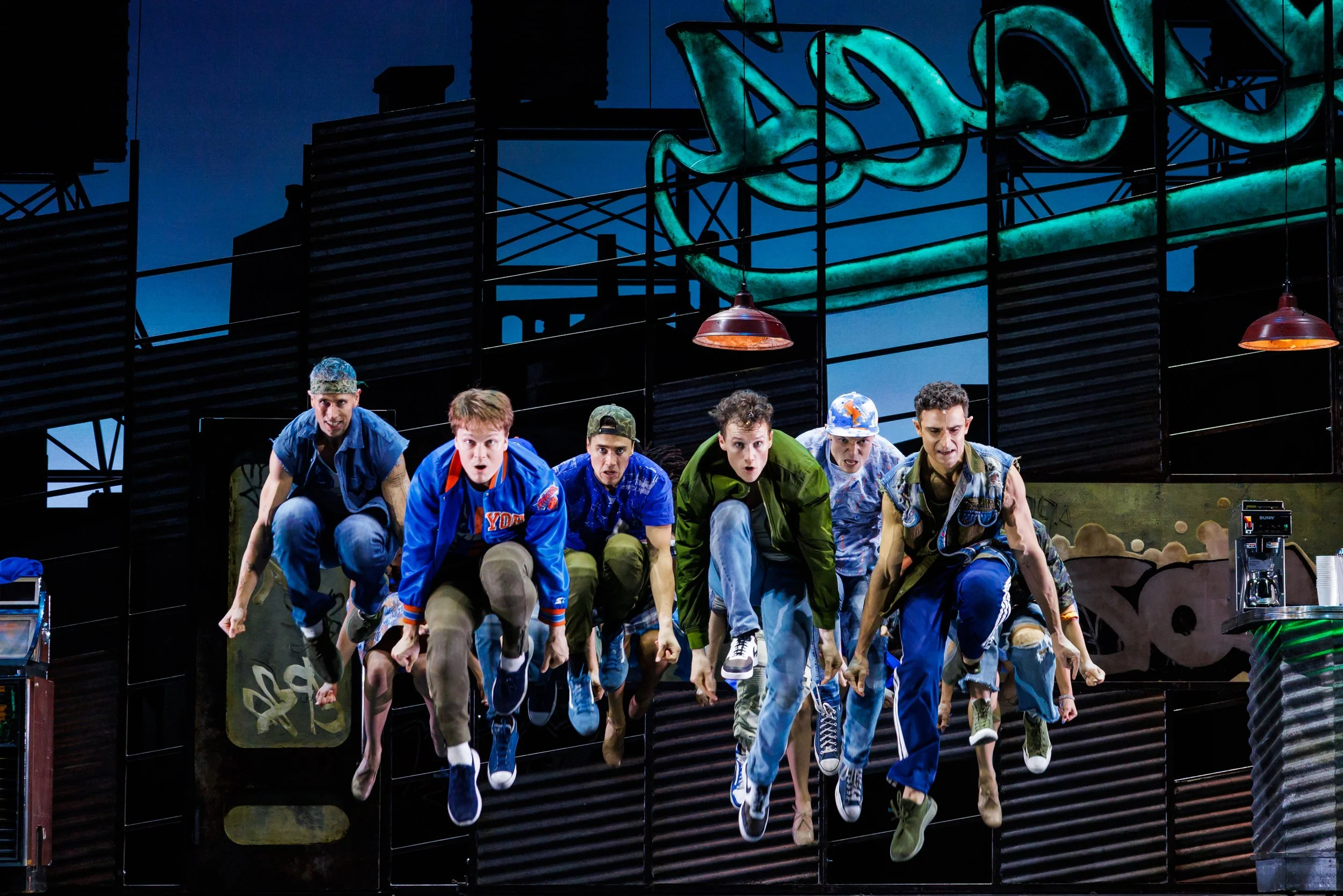
A Jets dance scene. Photo by Elman Studios; courtesy of Washington National Opera.
WNO assembled a terrific cast of 34 performers for this production, too many to single out in a brief report. The principal singers for the roles of Maria, Tony, Anita, Riff, and Bernardo are established performers with impressive credentials, including Broadway experience. Shereen Pimentel fit the role of Maria well, acting convincingly. I thought she needed a couple of numbers to get warmed up. Her performance in the second act was outstanding, easy to see why she was selected for the role, and her acting in the final scene was perfect. Ryan McCartan, who played Tony, is a crooner; he delivered beautiful vocals throughout. If he had been on American Idol when singing “Maria” he would have been complimented for making the song his own. The many duets between Maria and Tony were emotionally effective and were musically quite pleasing. Amando Castro played the role of Anita with verve and charm; her acting, singing, and dancing drew attention to every scene she was in. The roles of Biff and Bernardo were well played by Taylor Harley and Yurel Echezarreta; both sang beautifully, a brooding Riff and a Bernardo having a twinkle in his eye, hiding his deadly intent. It was like they had stepped right out of the movie. I thought that Wynn Harmon, as Doc, in a non-singing role, was especially effective at communicating the gravity of the situation in his appeals to the Jets to have some sense.
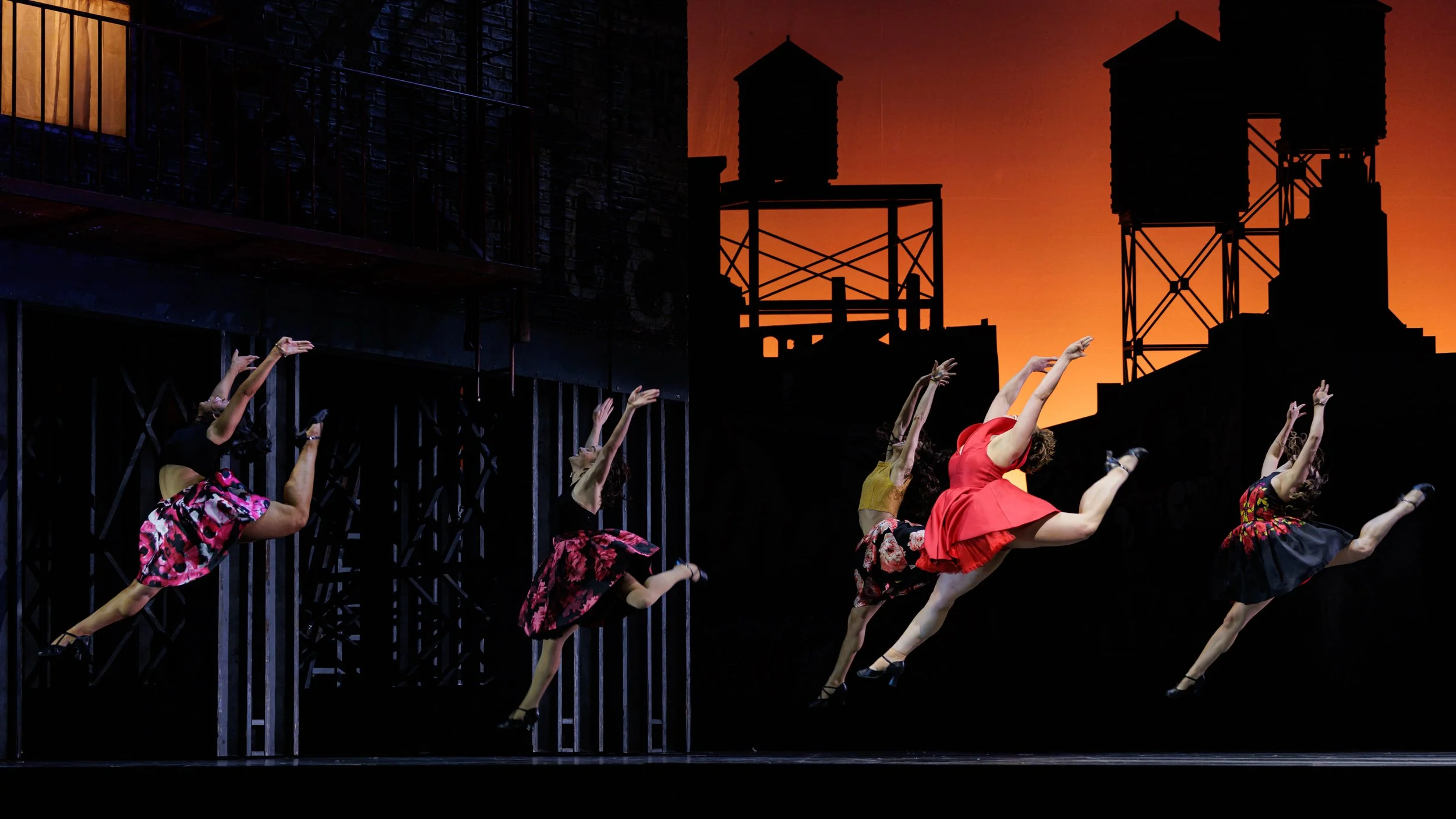
A dance scene with the Shark women. Photo by Elman Studios; courtesy of Washington National Opera.
Director Zambello preserved the Jerome Robbins’ choreography and its impressive dance sequences. Perhaps because I was so familiar with the great and plentiful tunes and music in West Side Story, I thought the dancers were also principal stars of the show. As a group, they brought energy and impressive physicality to the roles; their ability to dance in unison seemed flawless, and their control was impressive, dancing on what seemed like not much more than half the stage. This group was exciting each time on stage with several members being impressive in singing assignments as well. The dancers/singers’ rendition of “Cool” was a highlight of the opera for me. Tip of the hat to Choreographer Joshua Bergasse. Add on kudos to Associate Choreographer Kiira Schmidt Carpenter, Costume Designer Jessica Jahn whose costumes helped bring the story to life, and to Lighting Designer A.J, Guban, whose effects helped us focus our attention to the right spot.
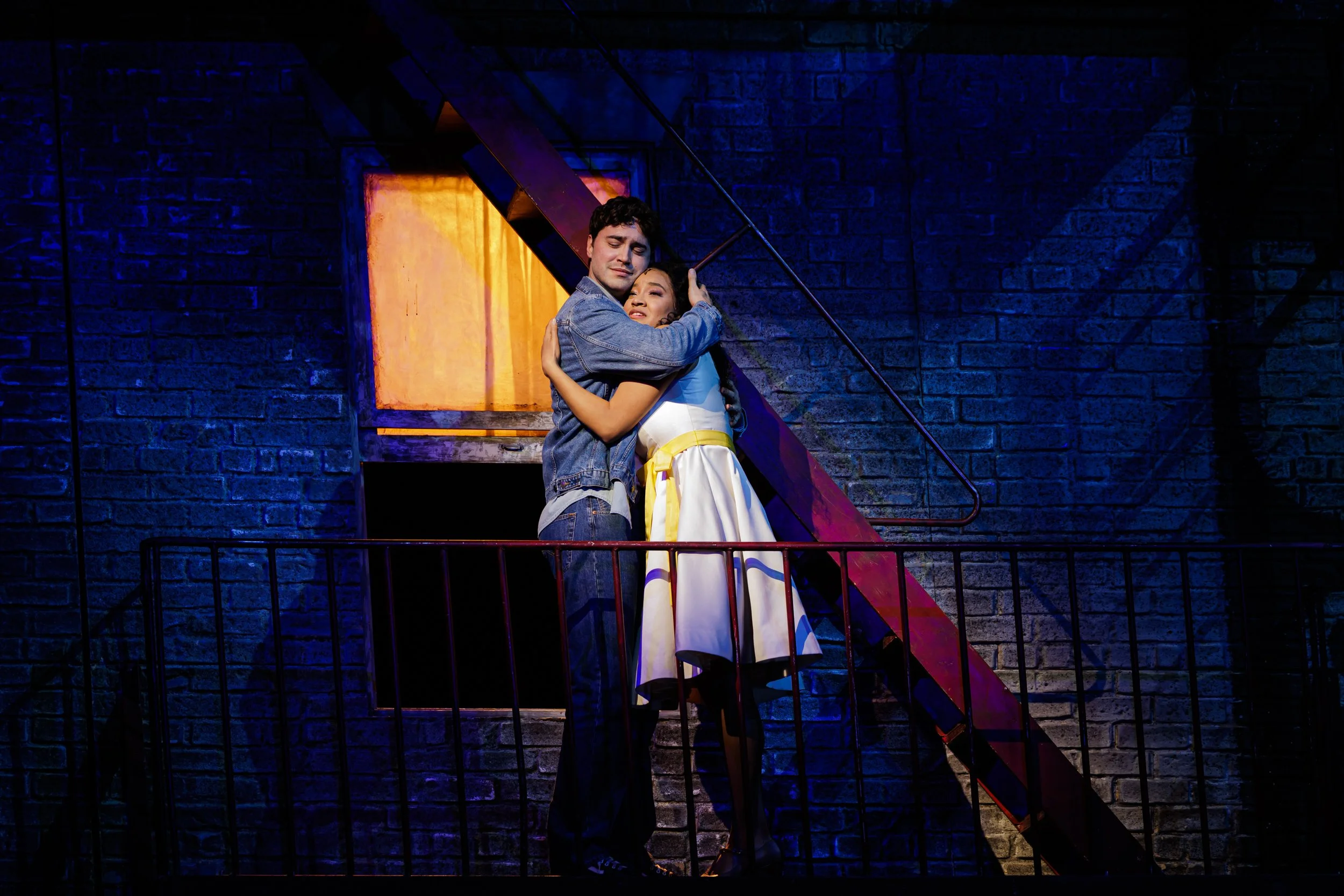
Tony (Ryan McCartan) and Maria (Shereen Pimentel) embrace on the balcony. Photo by Elman Studios; courtesy of Washington National Opera.
The Washington National Opera Orchestra played Bernstein’s score well, keeping pace with a story having a lot of fast-moving action. From where I sat, I thought the microphones for Tony and Maria were a little too hot for my ears, causing the vocals to push the music too far into the background for some numbers. I most appreciated the music when few performers were on stage and the vocals were shared. When the orchestra was the centerpiece, they shone. Perhaps my response was influenced by opera where, if there is a sound imbalance, it is the orchestra overshadowing the singers. Interestingly, my wife, while not sharing my opinion, did say at intermission that the singing reminded her of how much she enjoys the direct, natural, unamplified sound of voices we hear attending opera.
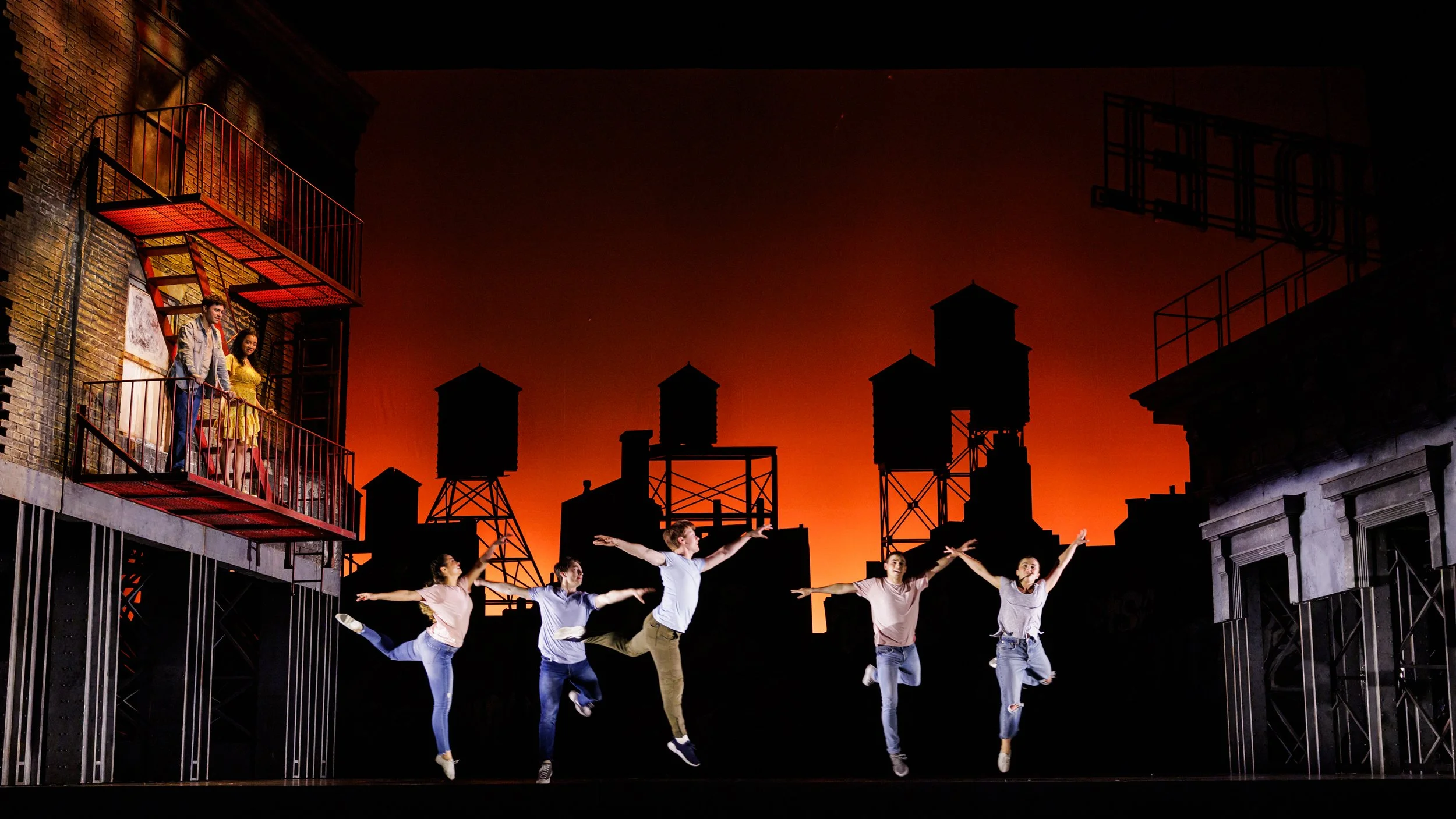
While a group of Jets dance, Tony (Ryan McCartan) and Maria (Shereen Pimentel) look on. Photo by Elman Studios; courtesy of Washington National Opera.
WNO’s semi-staged production still deserved a ‘not to be missed’ ranking, and the audience concurred by giving the performers an enthusiastic standing ovation. Even without the scenery, the rest of the feast was intact and importantly, the performance was highly engaging and effective in delivering WSS’s and WNO’s messages. Maria’s ending admonition as she brandished Gino’s handgun rings in my ears even now as she declared that she loved both sides, but now she had learned to hate. Given the divisiveness of our times, Director Zambello wanted to remind audiences viscerally where unrestrained prejudices could lead, with the hope “that we can challenge ourselves to think broadly about ways in which we arbitrarily dismiss the experiences and opinions of those who are not like us”. In a beautiful statement in the program, Jamie Bernstein said her father wanted the listeners to decide if a better world was possible.
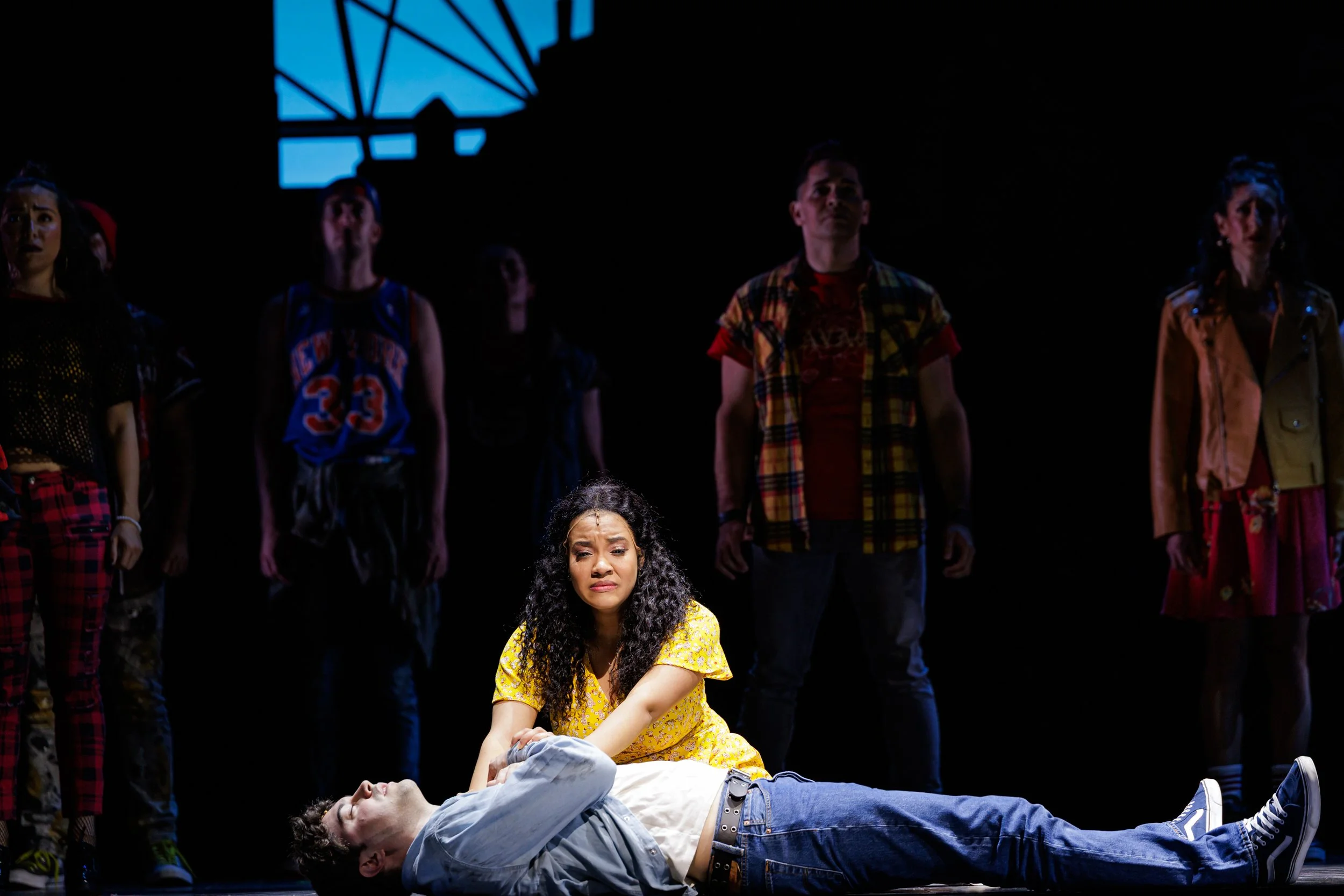
In the final scene, Maria (Shereen Pimentel) mourns over the body of Tony (Ryan McCartan). Photo by Elman Studios; courtesy of Washington National Opera.
As for my personal ruminations, I am reminded that Brother Dave, a comedian I enjoyed many years ago, had a phrase he repeated often: “It’s all in how you look at it”. In that vein, I could remain devastated by WNO being pushed out of the former Kennedy Center and the loss of opera performances in the Opera House…or…be impressed with how WNO has not only survived but flourished with an outpouring of support from their fans. I could be depressed at WNO’s facing a nomadic existence, or I could marvel at the ways the company has used this as an opportunity to reach out to and serve a wider community; Artistic Director Francesca Zambello, General Director Timothy O’Leary, and Music Director Robert Spano have been amazing in setting a course and navigating this new beginning. I could bemoan the fact that I didn’t get to see a real opera as WNO’s last production of a season focused on American operas, or I could revel in getting to see one of America’s truly great musicals live, presented as a feast by a major opera company. Through this upsetting upheaval, one thing has remained constant: Washington National Opera’s artistic director gives good show. After this year’s Crucible, Treemonisha, and West Side Story, I’m upgrading my claim: Francesca Zambello gives great show, while consistently reminding us that a better world is possible. It’s up to us.
The Fan Experience: Washington National Opera scheduled fully staged performances of West Side Story on May 8, 9, 10, and 11 in The Lyric in Baltimore and semi-staged performances on May 14 and 15 in the Music Center at Strathmore in Bethesda. The performances were primarily in English with supertitles shown overhead and lasted about 2.5 hours with a 25-minute intermission. WNO’s version of WWS was a co-production with Houston Grand Opera, Glimmerglass Festival, and Lyric Opera of Chicago, performances have appeared at all three venues previously.
And the recently announced 2026-2027 season reveals that Washington National Opera has not lost a step. The season is tagged as “Bold. Forward. Together”, an apt description, beginning with Madama Butterfly at DAR Constitution Hall in November. Hmmm...Artistic Director Zambello chose to go with the Italian Madama instead of the English Madame; what might that mean?
The Strathmore concert hall is a beautiful structure that has outstanding acoustics for concert performances. Strathmore is conveniently located near the Grosvenor Metro Stop on the Rockville Pike. Use of the parking deck is free on evenings and weekends. I have found parking there to be easy in and easy out, though the exit from the parking deck is single lane and exit times vary significantly depending on the level where you are parked. Refreshments and a cash bar are available.