
Anyone remember the old television series, “You Are There”, last broadcast in the 1971-1972 season; Walter Cronkite was the narrator/reporter. Each week, a vignette from an historical event was presented with a reporter from today present to ask questions of the participants, such as asking General Washington how the war was going. In performances in NYC and DC, Opera Lafayette has presented the modern premiere of Jean-Philippe Rameau’s original Les Surprises des l’Amour, not heard since its production at Versailles in 1748. In the “You Are There” spirit, OL performed the opera as you might have witnessed it on opening night with Madame Pompadour, the chief mistress of the king, in charge. There was no reporter present to ask probing questions, but the audience got to experience a performance as its first audience might have witnessed, including Pompadour attending to the king and occasionally moving some of the performers around, who could be a bit unruly. That audience for Surprises were observers not only of the opera, but also, of the (now amusing) seepage of the personalities/relationships of those presenting it into the performance, including the onstage presence of its chief patron, King Louis XV, as though we were there in 1748. This production also served a State purpose: celebrating the Treaty of Aix-la-Chapelle, ended the War of Austrian Succession between England and France in 1748. France to Cupid, come in - expressed in a delightful format, created by the luminaries of its day and presented by the most credible opera company today for reviving the production.
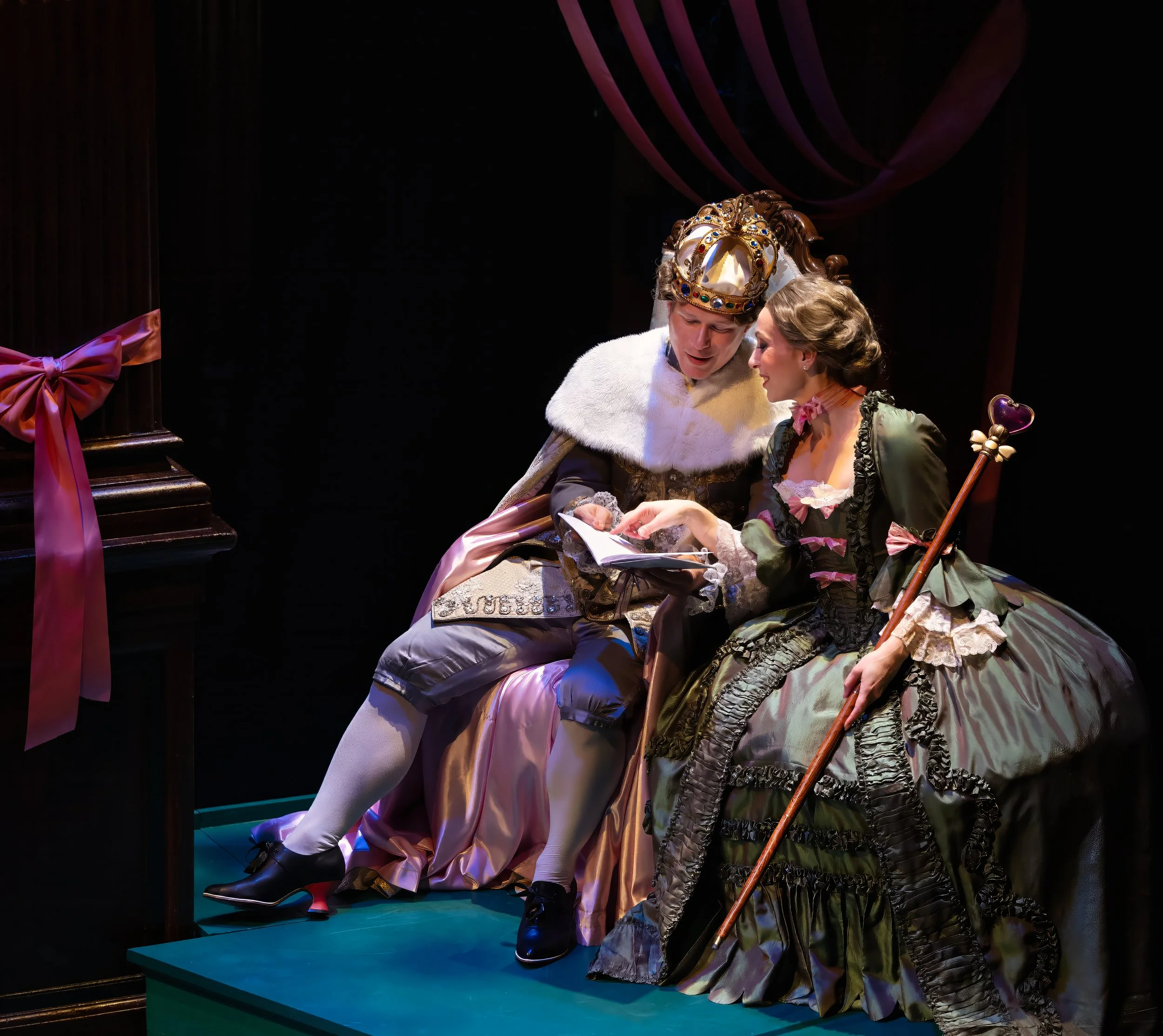
Madame Pompadour (Elizabeth Sutphen) preps King Louis XV (William Townsend) for the opera we are about to see. His seating on the stage made him unavailable for chatting. Photo by Jennifer Packard Photography; courtesy of Opera Lafayette.
In a sense, this was a follow-on to OL’s 2022-2023 season titled “The Era of Madame de Pompadour”, covering the time when she was official chief mistress, confidante, and adviser to Louis XV. If you were somebody or a somebody-wannabe, you coveted an invitation to Pompadour’s productions. Les Surprises des l’Amour was the first offering of her third season and was held in a small theater Louis XV had constructed within the palace specifically for Pompadour’s productions. That the original Surprises is an Opera Lafayette production gives it substantial credence. The company is known for its demanding scholarship in bringing 18th-century French music, singing, and dance to modern audiences; OL is also known for its musical excellence in presenting these works using period instruments. The production is also an addition to OL’s celebration of the 350th anniversary of Rameau’s birth, which will include OL performances of Rameau works through 2033.
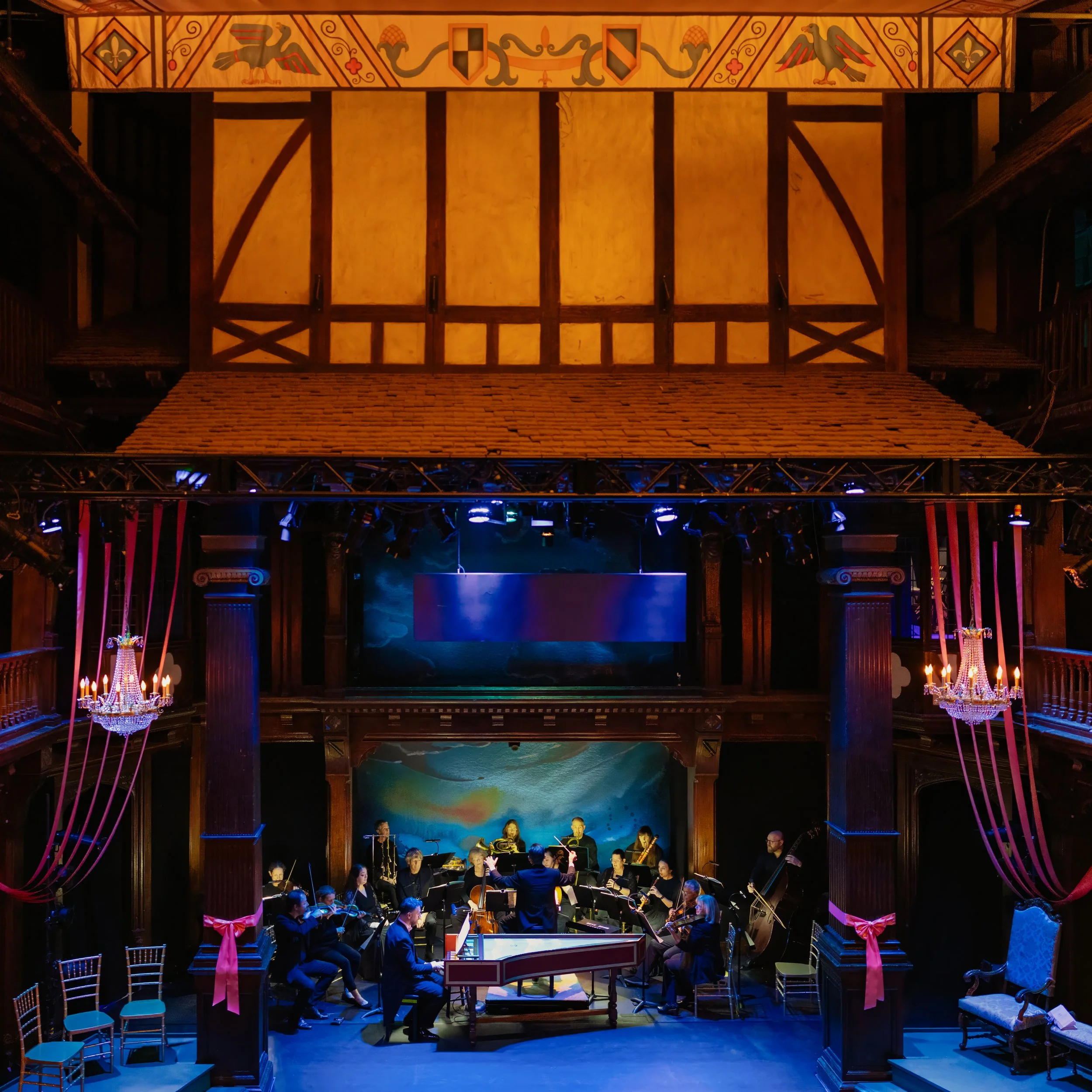
The stage at the Folger Shakespeare Library with Artistic Director and Conductor Patrick Dupré Quigley (in the middle) leading the Opera Lafayette Orchestra. Photo by Jennifer Packard Photography; courtesy of Opera Lafayette.
Rameau later presented a greatly altered, larger version of Surprises at the Paris Opera and did not keep a copy of the original score. OL wanted to allow us to be present with Madame Pompadour for the original in which she sang two of the roles. For this effort, OL relied on renowned Rameau scholar Sylvie Bouissou, who reconstructed the score for the prologue and two acts, from available documents from the period, making annotated guesses when notes in the resources were not clear; the archived libretto was intact. So, this was Opera Lafayette’s version based on high-quality scholarship and expertise. Overall, an impressive achievement that allowed the audience to experience becoming one of France’s hoity-toity in 1748. The small stage of Folger only added to that atmosphere.
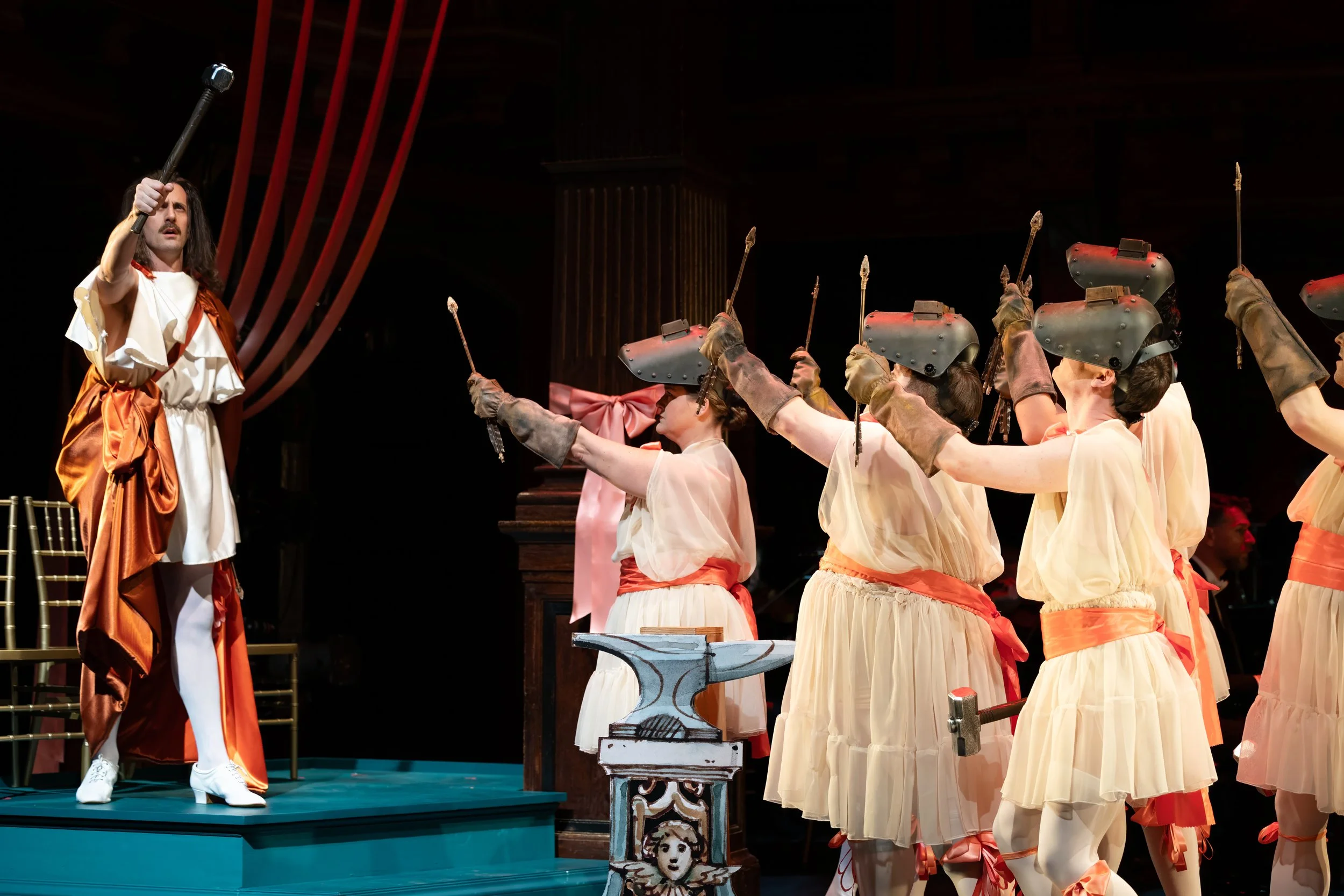
Vulcan (Hadleigh Adams) admonishes the Cyclopes (members of the chorus) to make arrows for war. Photo by Jennifer Packard Photography; courtesy of Opera Lafayette.
Prologue (English names used): Astrea, Goddess of Justice and Peace’ arrives to change the production of weapons of war by the Cyclopes under the direction of Vulcan, God of Fire, to making arrows for Cupid’s bow. Father Time arrives to declare a new age of peace and love – Love 1, War 0.
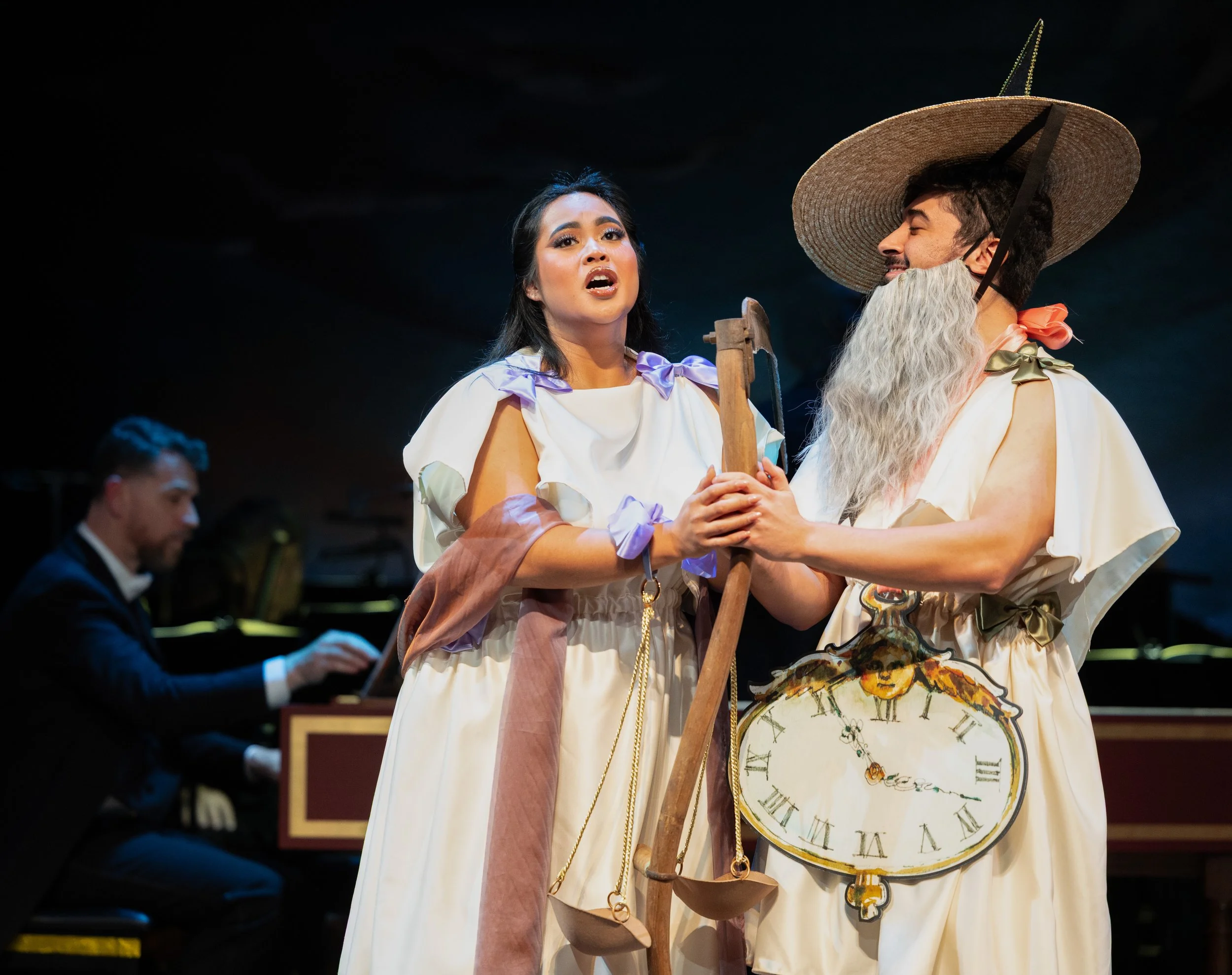
Astrea (Emilie Kealani) conspires with Father Time (Phillip Lopez) to usher in an age of peace. Photo by Jennifer Packard Photography; courtesy of Opera Lafayette.
Act 1, “The Enchanted Lyre”: Linus is secretly in love with Urania, Muse of Astronomy, but she sees those emotions as to be avoided, staying cool with reason only. Cupid places a magic lyre where she will find it, and when she plays it, she feels the stirrings of love, which soon triumphs - Love 1, Reason 0.
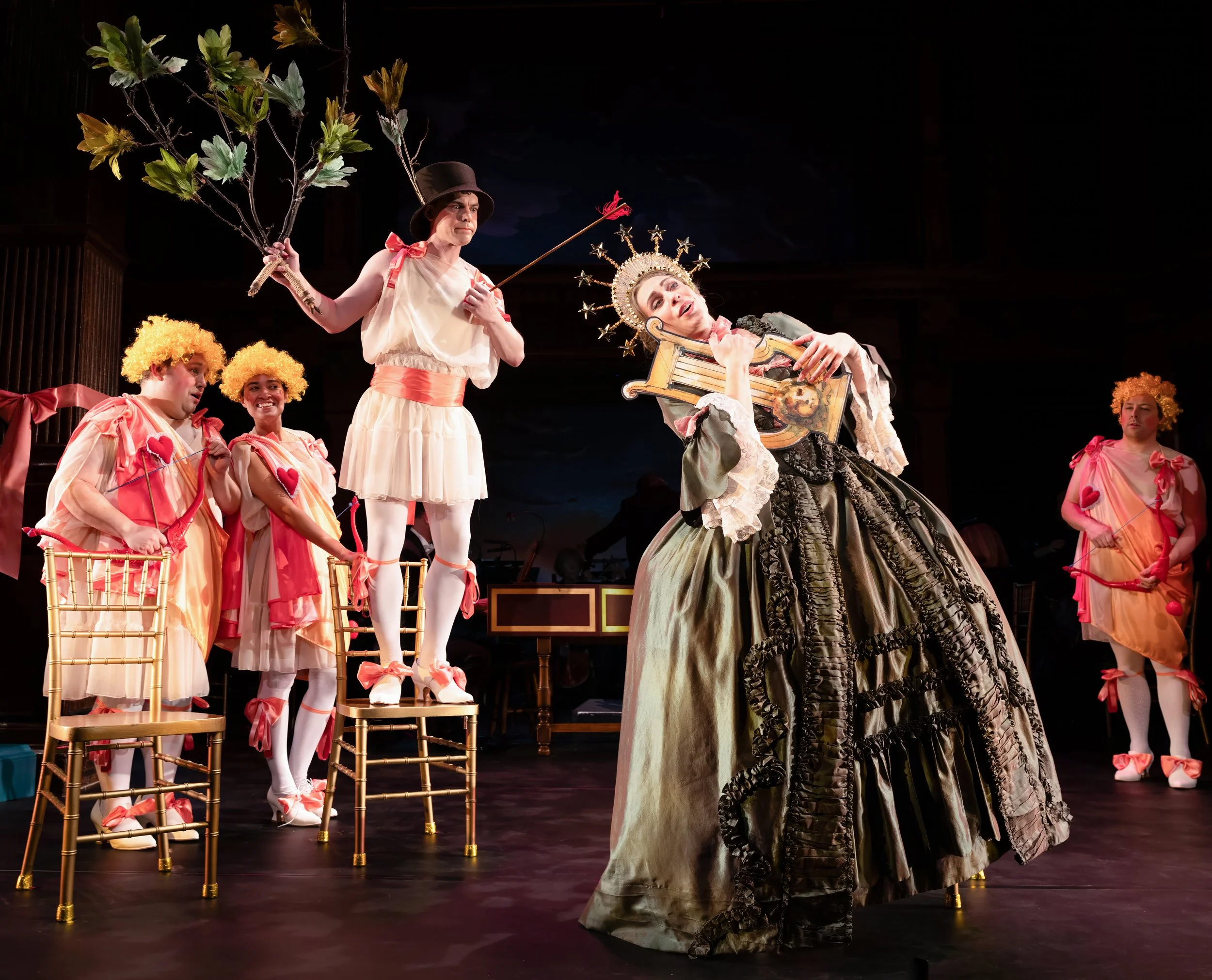
Urania (Elizabeth Sutchen, Madame Pompadour) succumbs to the lyre’s enchantment. Photo by Jennifer Packard Photography; courtesy of Opera Lafayette.
In Act 2, “Adonis”: Cupid must overcome Diana’s, the Goddess of the Hunt’s, indoctrination of Adonis that love means suffering. Cupid succeeds through compelling arguments and to Diana’s dismay, Adonis falls in love with Venus. Diana concedes. Love 1, Fear 0.
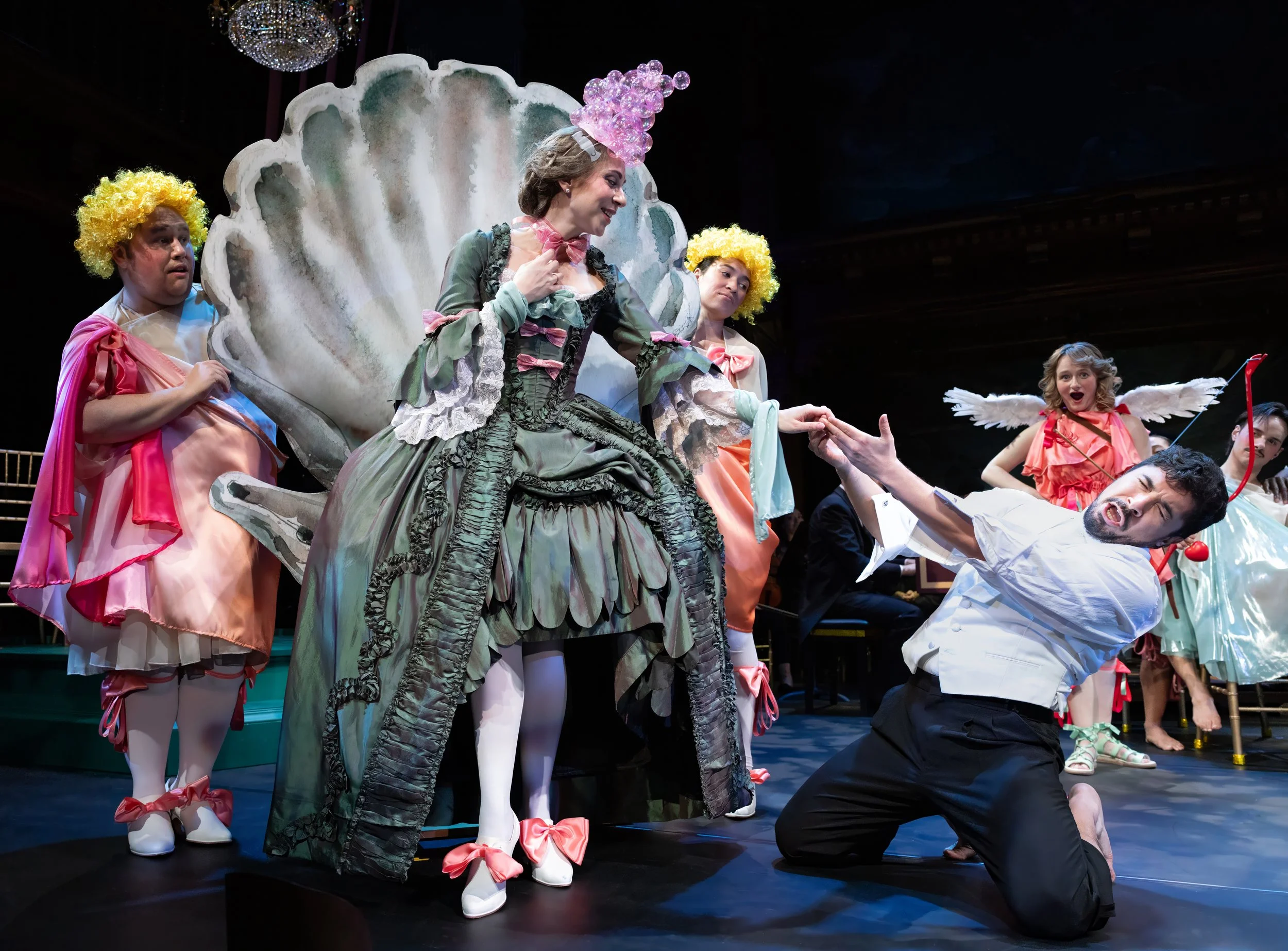
Adonis (Phillip Lopez) yields to his feelings for Venus (Elizabeth Sutphen) while a pleased Cupid (Kayleigh Sprouse) looks on. Photo by Jennifer Packard Photography; courtesy of Opera Lafayette.
As the segments proceed, there is a lot going on to engage the eye and ear. The eight-member chorus gets involved in the action or serves as prop holders for scenery, and the dancers perform every few minutes, all great fun. Director Chas Rader-Shieber has done a masterful job utilizing the small stage of the Folger Shakespeare Library: the king and Pompadour were seated on one side; on the other side, a raised stand for eight chorus members, some of whom play additional roles; and in the backstage sat the orchestra, with Conductor Quigley having his back to the singers and the harpsichordist. In the smallish remaining open space in the middle, four dancers performed extensively and beautifully in each segment, on occasion displaying humorous ego flair-ups; kudos to Choreographer Isaac Lerner. Kudos to the director, as all went well in effectively presenting the drama and comedy, including a few antics of the players. The costumes by Scenic and Costume Designer Jimmy Stubbs fit the play’s period well. Some of the scenic design added to the humor, such as Venus’ first appearance being in front of a large shell, á la Botticelli’s “The Birth of Venus”. Many performers were charged with acting as performers acting out scens, such as Cupid being upset with the chorus interrupting her aria and Adonis taking Louis XV’s crown for a moment. Madame Pompadour sometimes entered the stage proper to move the players about, all believable that it could have happened in the 1748 performance.
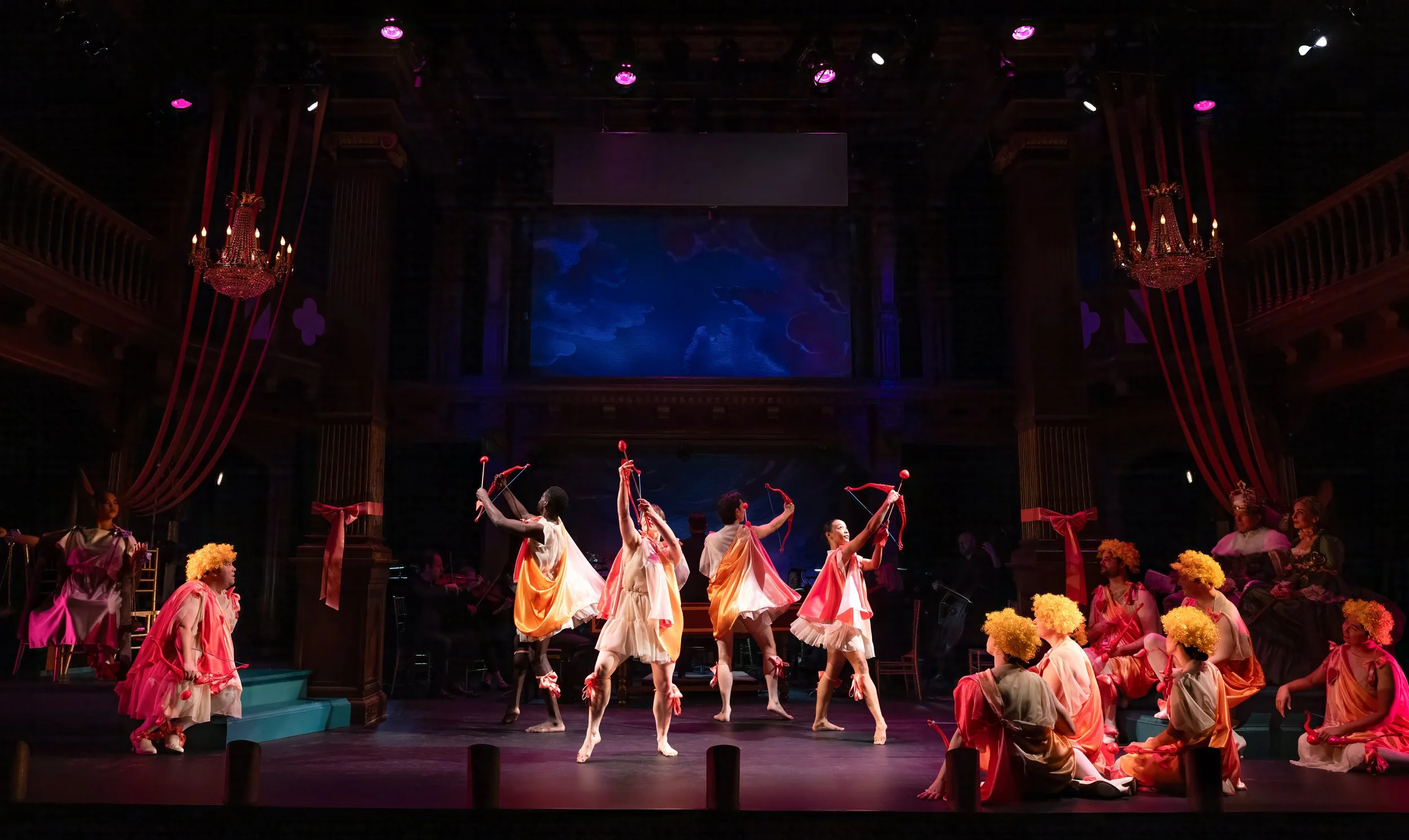
The Dancers celebrate Cupid’s victory. Photo by Jennifer Packard Photography; courtesy of Opera Lafayette.
OL’s excellent cast of five principal soloists each played different characters in at least two of the opera’s segments. Bass-baritone Hadleigh Adams sang a belligerent Vulcan in the Prologue and then sang even more beautifully and impressively in Act 1 as Linus. Soprano Emilie Kealani’s bright coloratura brought charm to two contrasting roles, as Astrea, the voice of reason, and as Diane, the hunter. Bass-baritone Philip Lopez gave two hilarious performances, showcasing a resonant bass-baritone voice: first as Father Time in the Prologue and then as the manipulated Adonis in Act 2. Playing two variations of Cupid, as Un Plaisir in the Prologue and Amour in Acts 1 and 2, was soprano Kayleigh Sprouse, who possesses a distinctive voice with an endearing quality and acting acumen that made her the perfect Cupid. The standout performer in all of this was Madame Pompadour as played and sung by soprano Elizabeth Sutphen, who even played Pompadour while singing Urania and Venus with a beautiful sound and expert craftsmanship. The opera rotated around her, and she was its assured, bright center.
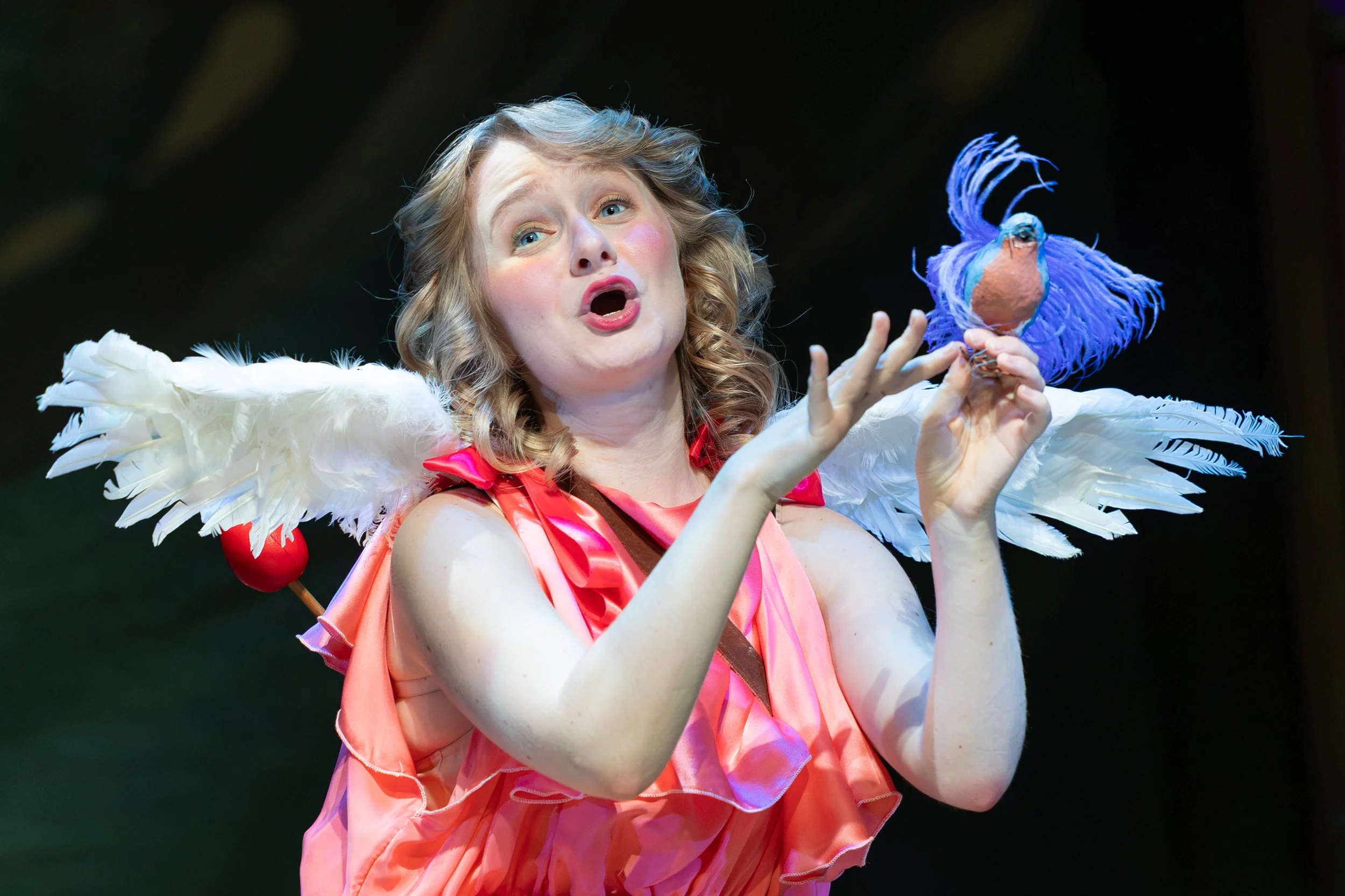
Cupid (Kayleigh Sprouse) prevails and love conquers all. Photo by Jennifer Packard Photography; courtesy of Opera Lafayette.
The 19-piece Opera Lafayette Orchestra performed beautifully under the direction of Conductor Patrick Dupré Quigley, bringing forward Rameau’s music that included lively rhythms and music that could remove the barriers to love. Conductor Quigley is, of course, Artistic Director Quigley who get credit for bringing this marvel together. The 8-member Opera Lafayette Chorus, in the small theater, sounded like a much larger group, especially noticeable when upstaging Amour in her first aria of Act 1, quite funny with Amour’s response. The Chorus was a highlight of the performance. Another highlight was the four-member dance, who offered some humorous antics and much beautiful, impressive dancing throughout the opera.
Opera Lafayette’s Les Surprises des l’Amour was a recreation of a 1748 performance as authentic as history and outstanding scholarship can make it. It was a production played for cultural enrichment, good fun, and good feelings. It worked.
The Fan Experience: Opera Lafayette scheduled performances of Les Surprises des l’Amour for Novermber 9 in the Kaye Playhouse of Hunter College in NYC, and November 13, 14, and 15 in the Folger Shakespeare Library in DC. The opera was sung in French with English supertitles shown. The performance lasted a little over an hour and a half with no intermission. A 30-minute pre-opera discussion was held between Artistic Director Quigley and Rameau scholar Sylvie Bourssou one hour before the performance.
The Folger Shakespeare Library is an interesting place to visit for its display of books and artifacts from Shakespeare’s era. The building has a food and drinks facility inside and a gift shop. It does not have a parking garage, and on street parking in the area can be limited and problematic. Patrons are advised to use public transportation with a metro subway stop four blocks awary. My wife and I managed to get a close by but expensive parking spot from the DC parking company SpotHero.